

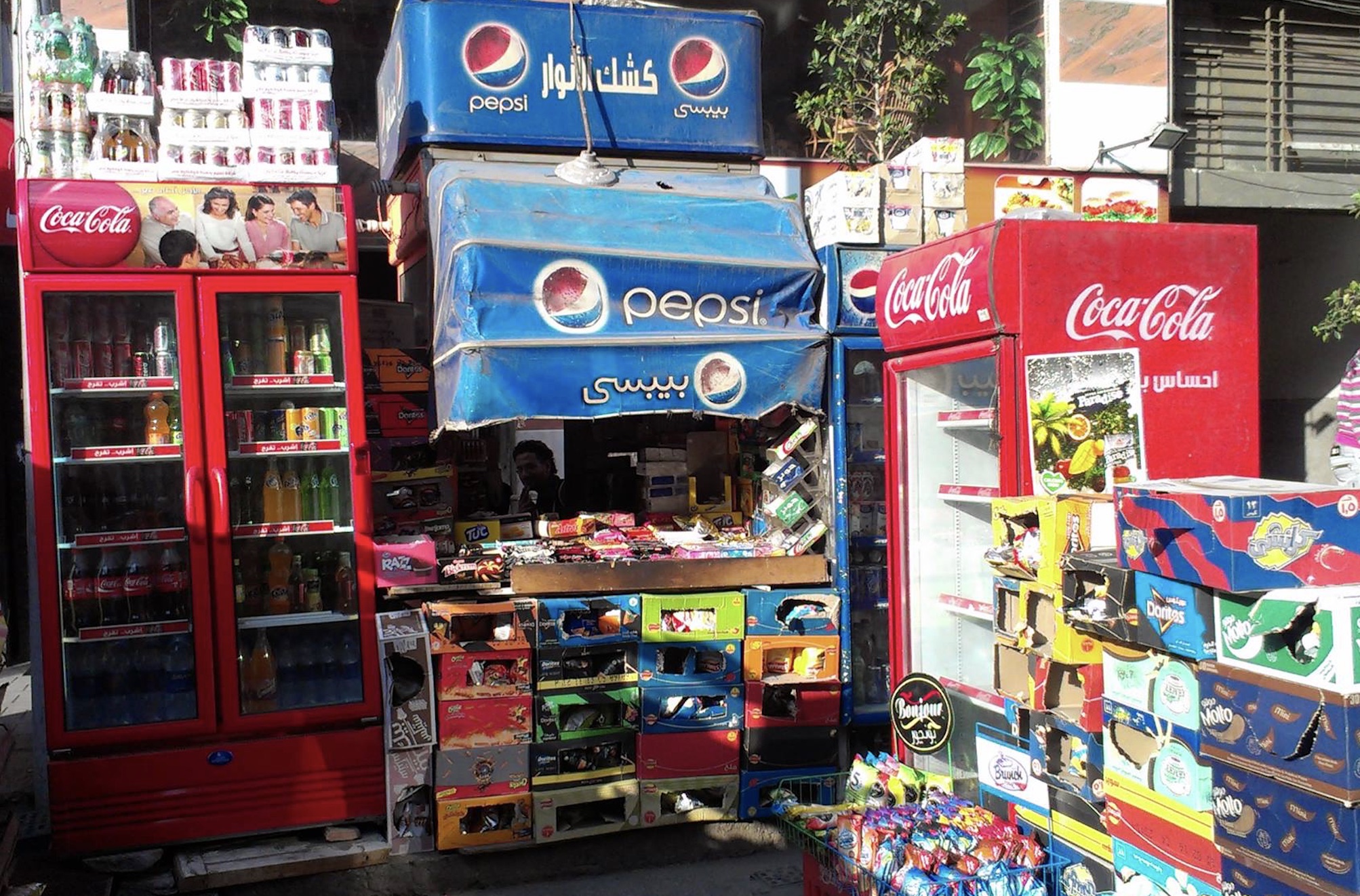
Attached to the average Egyptian are beliefs and convictions – a favorite football team, political affiliation, and the like. While the myriad of differences parallel the chaos that is Cairo, there is one place where everything is put aside for Egyptians of all doctrines: the koshk. A compact carryall of all essentials is a small kiosk that sits as a cultural staple for Egyptians. Branded with Pepsi and CocaCola logos, no rivalry or competition inhabits the koshk area. Rather, goods stacked to the ceiling and piles of boxes spilling out onto the streets – the koshk is a happy place. It is believed that the oldest koshk dates back to the 1930s, under the rule of King Fouad I and King Farouk. The term, ‘koshk,’ is derived from many origins, where in Persian the word ‘kushk,’ means a palace, while its Turkish origins, the kiöshk, means pavilion or palace. The French translation of ‘kiosque,’ means a small roofed stall that sells f newspapers, confectionery, and much more. Every corner in Egypt has a koshk – where streets have become synonymous with the vibrant element and the radiance to which people…

The Relationship Risk: The Dating Experience with Strict Parenting
“At first, I asked for things – outings, clothes – that were mostly met with disagreement. When I got older, I learned that if I wanted to do things, I couldn’t ask for them [from parents]. So I lied about basically everything,” says Salma Aamer, 22, an psychology alumna from the American University in Cairo (AUC). Children of strict households often find themselves becoming crafty adults, some going as far as creating entirely different personalities that are only present around their parents or other authority figures in their families. Strict parents, often referred to as ‘helicopter parents,’ are known to pay close attention to their children’s behavior, typically taking on responsibility for their successes and failures. Among the restrictions of helicopter parents are romantic relationships. Egyptian culture leans towards collectivism, meaning that the needs of the group are emphasized over the needs of the individual, leaving less room for individuality and difference in opinion. According to a study titled ‘Parenting Style, Individuation, and Mental Health of Egyptian Adolescents’ published by the Journal of Adolescence in 2006, the main parenting style used in Egypt is the authoritarian style. The authoritarian style…
Middle Eastern Media Leaders eSummit to Kick Off March 15

Now, more than ever, with war erupting in Ukraine and multiple geographical pockets seeing systematic violence, worldwide media is playing a significant role in keeping mass audiences updated, safe, and mobilized. It is particularly important for media leaders to emphasize the role of media outlets, and ensure a positive participation of press and journalism in outlining regional development Accordingly, Egyptian Streets is proud to support the World Association of News Publishers (WAN-IFRA) in the upcoming third edition of the Middle Eastern Media Leaders eSummit, to be held virtually from March 15 to 17. WAN-IFRA, a knowledge hub and a prominent global resource for media leaders, editors, production executives and journalists, supports over 3,500 organizations worldwide. Its prime focus is on providing worldwide outlets with key tools to achieve and improve media sustainability, innovation as well as press freedom and journalism. At the upcoming summit, top leaders of the news media industry in the MENA region are joining forces to tackle trending such as Artificial Intelligence (AI) in the Newsroom, Audience, Data and Digital Subscription, all estimated to be pivotal to the 2022 media environment as per the Journalism, Media, and…
Egyptian Heritage Sites Aren’t Party Venues
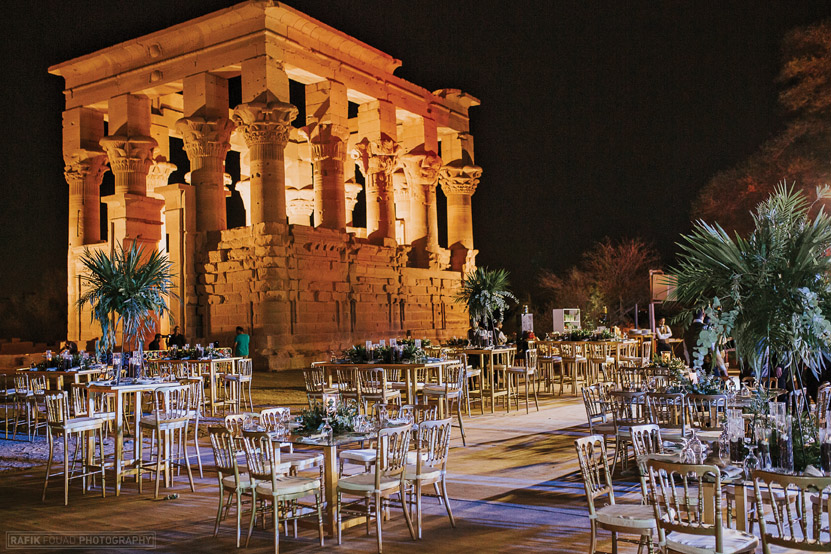
Neon lights bring alive the eyes of statues, and the opaque shadow of a column falls over the dancefloor. It’s a grand sight, perhaps for all the wrong reasons: drinks are half-melted at the base of a limestone ram, a bored child picks their nail into the crevices of an already worn set of hieroglyphs, and a once grand place of worship is reduced to little more than a glorified rave site. That is what it means to party at a temple. I’ve always been one to argue that historical sites are legacies designed to be experienced; they are the lingering remnants of a world no one can truly picture, battle-scarred and time-eroded. Visitation should not be limited, in any capacity – or so I thought. When I first heard of historical sites being used as venues for elaborate parties and weddings, I was loath to believe it. I had my concerns about artifact trade, about strangers chipping off chunks of pyramid and pawning them off for a cold drink of something sour, all the typical hand-me-down worries we inherit from our parents. Still, I didn’t imagine there would come…