


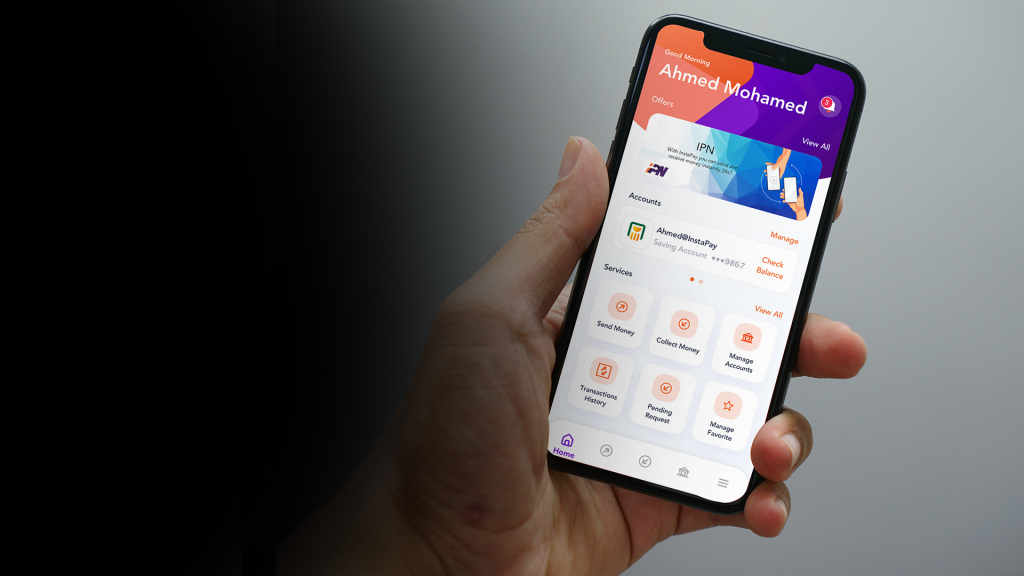
From 2018 to 2025, financial technology in Egypt has shifted from being a convenience to becoming an essential economic infrastructure.
Started in 2020, several firms in Egypt employed digital financial tools like mobile wallets and digital payments.
According to a 2024 report published by Visa titled Value of Acceptance: Understanding the Digital Payment Landscape in Egypt, 53 percent of Egyptian Small and Medium-sized Enterprises (SMEs) have adopted digital payments in the past two years.
Additionally, 77 percent of SMEs believe that digital payments are essential to their company’s expansion.
The Central Bank of Egypt (CBE) and Egypt’s Financial Regulatory Authority have expanded access to financial tools, increasing financial inclusion to 71 percent of eligible citizens by mid-2024, with growing participation from women and youth.
Also, under the CBE’s strategy to make Egypt a technological hub, the number of financial services companies grew from 32 to 177 which attracted EGP 37 billion (USD 800 million) in investments between 2017 and 2022.
The turning point came with the launch of the Instant Payment Network (IPN) in 2022, known as InstaPay. By linking all banks through a single compatible system, IPN eliminated the frictions that once dictated money transfers in Egypt.
InstaPay and the Normalization of Speed
Before the Instant Payment Network (IPN), interbank transfers in Egypt were constrained by limited banking hours and manual processing, which delayed payments and disrupted business cash flow.
With the launch of InstaPay, transfers became instant and available 24/7, making funds immediately accessible for everyday use and business operations.
Beyond speed, InstaPay introduced predictability: individuals and businesses could manage cash flow and acquire assets with confidence, knowing money would arrive instantly rather than being delayed by banking hours, a benefit that was initially offered free of charge before modest transaction fees were later introduced as usage scaled.
As a result, rent, supplier payments, salaries, and personal transfers no longer depend on bank schedules, making financial planning far more reliable.
In particular, InstaPay’s reliability changed how small businesses operate, especially those run by young entrepreneurs who build their brands online from the start, as 85 percent of Egyptian SMEs now accept digital payments to improve operational efficiency, strengthen financial resilience, and reduce reliance on cash-based transactions.
Habiba Ismail, a 17-year-old entrepreneur who has been running her online beauty, cosmetics, and personal care business “TwentyFourSeven” for four years, explains the difference.
“A few years ago, starting a brand meant having a factory, renting a physical space, and dealing with many costs that made it almost impossible for someone my age,” she says.
“Now I can handle everything from home, and even after four years, I’m still able to run the entire business online because the digital world made it so easy.”

Instant transfers are crucial to that ease.
“Many people do not carry cash anymore,” she adds. “Being able to receive payments instantly through transfer apps saves a lot of time. I no longer have to wait days for a bank transfer because everything happens within seconds now.”
Cutting the Hidden Costs of Cash
For existing local brands in Egypt, the impact of digital payments is crucial, as 26-year-old Youssef Hussein, owner of a local clothing brand TELA, points out the everyday difficulties caused by cash.
“Online transactions save local Egyptian brands a lot of money because they eliminate much of the everyday hassle that quietly drains resources,” he says.
“When customers pay digitally, business owners aren’t losing time or profit to cash handling, missing change, or end-of-day counting chaos.”

Hussein views the shift to online financial tools as an important structural step to help young entrepreneurs.
“For small brands that already operate on tight margins, these tools can be the difference between surviving and thriving.”
Credibility, Data, and the Formal Economy
Beyond efficiency, InstaPay has introduced a crucial element many informal businesses lacked: documentation. Digital transactions create records, and records increase visibility.
For entrepreneurs, this visibility becomes proof of income, transaction history, and financial consistency that can aid in massive partnerships.
“Digital payments level the playing field for local brands in Egypt by making them appear and operate like real businesses without needing big-business infrastructure,” Hussein explains.
“Once you’re online, you can sell beyond your street, your neighborhood, even your city. Suddenly, you have data, records, and proof of income that help with long-term planning..”
The significance of the InstaPay economy lies in its potential to redistributes economic power.By empowering young entrepreneurs, women‑led businesses, and small local brands to compete on speed, and access, digital payments become strategic for growth and inclusion in Egypt’s SME sector.
InstaPay’s economic redistribution is subtle because it does not depend on slogans or campaigns, but it occurs each time a business operates without cash risk, and each time someone enters the market without asking for permission.
Financial setbacks?
However, the system’s instant nature also comes with limitations.
Because InstaPay and the Instant Payment Network (IPN) settle transactions immediately and irreversibly once they are successful, users cannot cancel or reverse a transfer after it has gone through, even if it was sent to the wrong recipient.
According to official IPN FAQs, a successful transaction cannot be reversed, meaning senders must be careful to enter accurate recipient information every time. To help reduce such errors, recent updates allow users to share a QR code or payment link that auto-fills beneficiary details to lower the risk of mistakenly sending funds to the wrong account.
Ensuring that InstaPay is used legitimately for commercial purposes and not for fraud involves identity verification and regulation. The system operates under licensing and regulatory rules set by the Central Bank of Egypt (CBE), which mandates secure onboarding linked to verified bank accounts and mobile numbers.
Additionally, compliance with customer data, authentication, and transaction processes is necessary to ensure that only authenticated and traceable users can conduct transactions on the network.
InstaPay must be licensed as a Payment Service Provider (PSP) by the CBE, requiring users to complete registration and link verified bank accounts during the onboarding process. Licensing ensures that transactions are securely authorized and associated with legitimate identities instead of anonymous accounts.
In this fashion, InstaPay tries to align with Egypt’s young demographic and evolving digital culture by providing new opportunities for entrepreneurship and business development.





Comments (0)