

Regarded as one of the longest and most passionate poems ever written, the Great Hymn to the Aten is an ancient Egyptian poem that praises Aten, the ancient Egyptian deity of the Sun, as the sustainer of all life and of all creation.
The poem’s verses flow gently, echoing the daily journey of the sun across the sky. As the sun moves from horizon to horizon, it awakens the earth and brings life to every living thing. Even when dynasties could rise and fall, the sun rose each morning and wheeled across the sky with precision.
And during times when the state of the world became too uncertain to bear, and where so much could change without warning, the ancient Egyptians often turned not to the chaos of the earth but to the order of the skies. The daily journey of the sun across the sky mirrored a cosmic cycle that reaffirmed the stability of the universe.
For the Egyptians, looking to the sky became both a spiritual and psychological practice. Today, in our own unpredictable age, that ancient perspective feels newly relevant, even for designers seeking to bring deeper meaning into the objects and experiences they create.
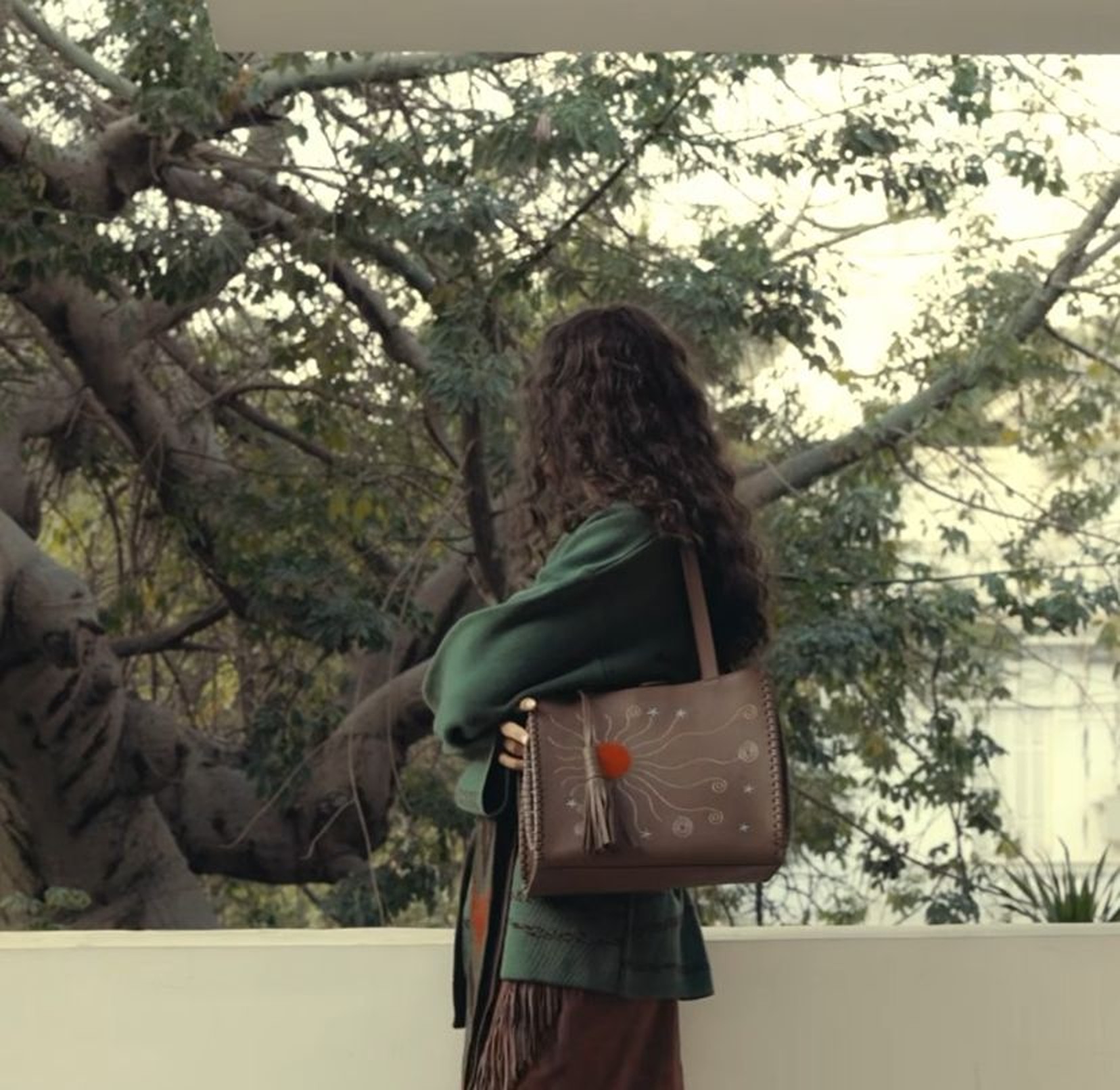
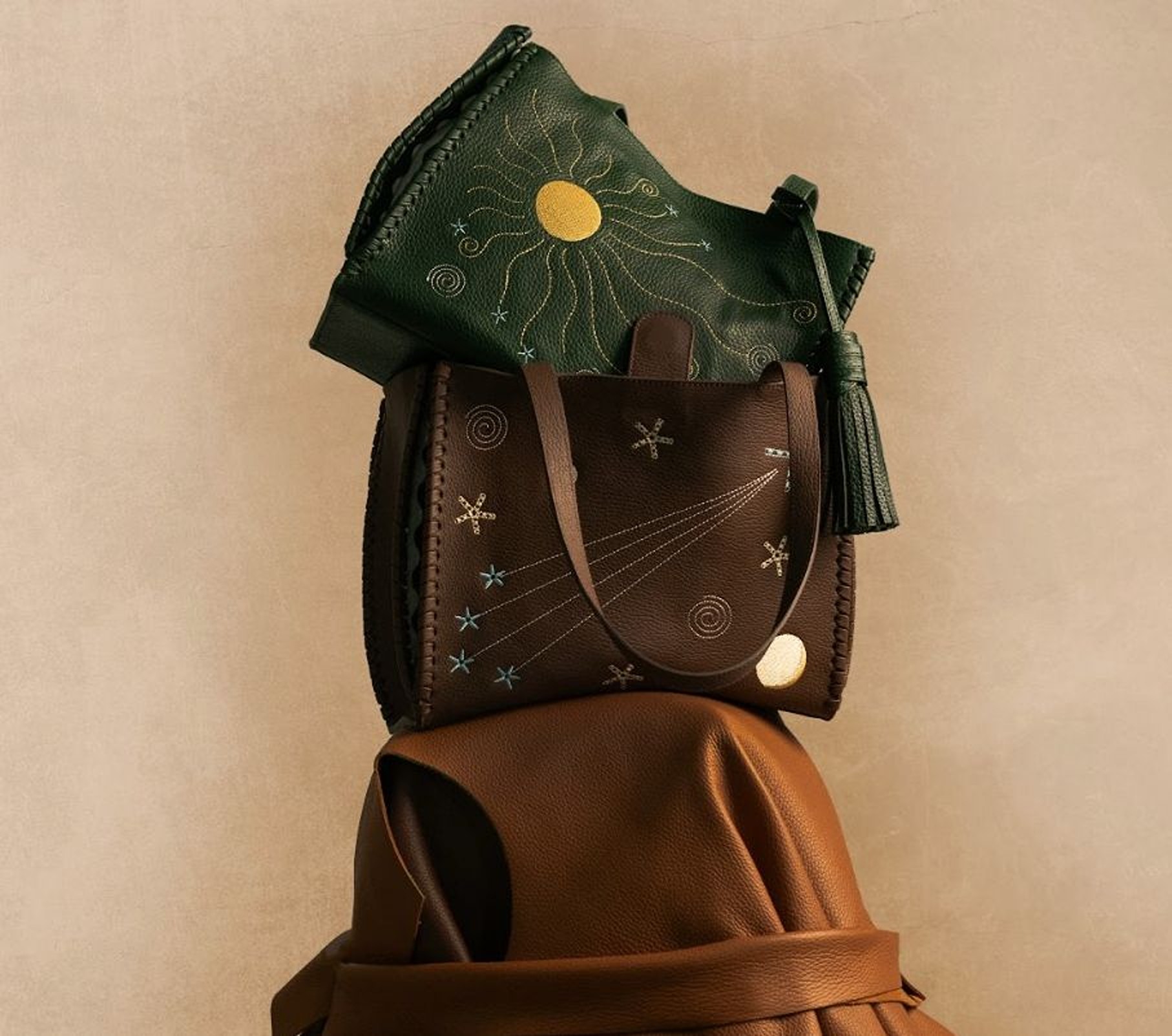
A new generation of Egyptian designers is revisiting these ideas not as relics of history, but as living concepts that can shape contemporary design. One such example is Falak by Rebel Cairo and Nuniz Cairo, a design that draws from ancient Egyptian cosmology to reflect a modern world defined by change and contrast.
“We balance honoring ancient Egyptian philosophy by focusing on ideas rather than imagery,” explain the founders of Nuniz, Nadia Zarkani and Carole Nathan.
“Ancient Egyptian philosophy was rooted in rhythm and duality, concepts that still resonate deeply today.”
Rather than treating heritage as merely a visual motif, the collection bag approaches it as a philosophical foundation and an exploration of how ancient ways of understanding the universe can still guide creative expression today.
Beyond Imagery
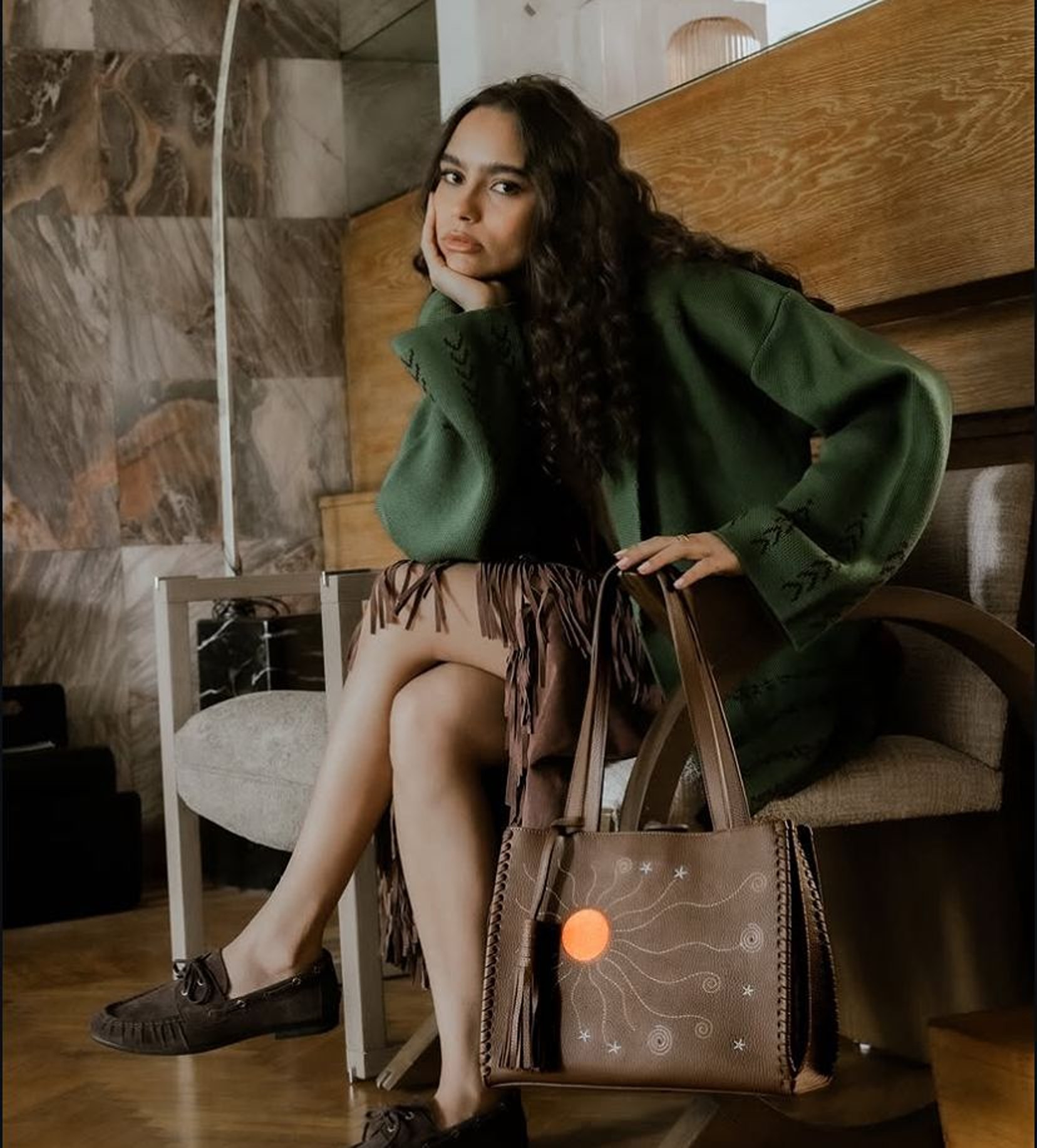
Wearing jewelry or carrying certain bags can evoke a sense of connection to a specific time, place, or culture. It can link a person to their homeland, or even transport them to an ancient era.
At the core of the design process was the idea of creating a connection to a concept, rather than relying on clichéd visuals. It begins by asking: how can the wisdom of the ancient Egyptians help us find a sense of certainty amidst life’s turbulence?
The name Falak, which refers to the celestial sphere in Arabic, captures the philosophical foundation of the collection.
“Falak speaks to a sense of harmony and alignment,” Zarkani and Nathan say. “The idea of celestial balance, day and night, light and darkness comes directly from how ancient Egyptians understood the sky as a guide for life.”
In moments when life feels overwhelming, people often seek grounding and stability through rituals and meaningful objects, precisely the kind of experience this bag collection aims to offer.
“We hope Falak becomes something personal for each wearer,” they explain. “Beyond its appearance, it’s designed to move naturally with daily life, to be held, relied upon, and lived with. And that connection comes from sensing the thought and craftsmanship behind it, and knowing it was made with purpose.”
To give the craftsmanship a personal and meaningful touch, Nuniz used techniques such as hand-finishing, precise embroidery, and structured weaving, which are often considered challenging. These techniques reveal that true harmony and order arise from careful attention and dedication, not from taking the easy path.
The craft itself becomes a symbol of the ancient philosophy. Just as careful effort can transform complex techniques into a beautiful design, life’s challenges, when faced with care, can lead to something equally rewarding.
“We live in a world defined by contrasts,” they add. “This theme reflects transition, resilience, and balance, ideas that feel especially relevant as we navigate the complexity, change, and uncertainty of modern life.”
Reclaiming Egyptian Design
For contemporary Egyptian designers, telling their own cultural stories has become an essential act of reclamation and identity. For centuries, interpretations of Egyptian culture have often been shaped by external perspectives, reducing a complex and multifaceted heritage to easily recognizable, yet oversimplified visual clichés.
This process of cultural appropriation involves the use of elements of Egyptian design and symbolism by other cultures without understanding or respect for their deeper meanings. Foreign depictions of Egypt often miss the intricacies of its cultural context, turning sacred symbols and motifs into mere aesthetics, devoid of their original significance.
Zarkani and Nathan see design as a way to reclaim that narrative and to restore the cultural and historical depth often lost in outside interpretations.
“No one understands the nuance of this culture better than those who live it,” they explain.
“External interpretations often flatten rich histories into clichés. When Egyptian designers tell their own stories, the narrative becomes more honest, layered, and contemporary.”
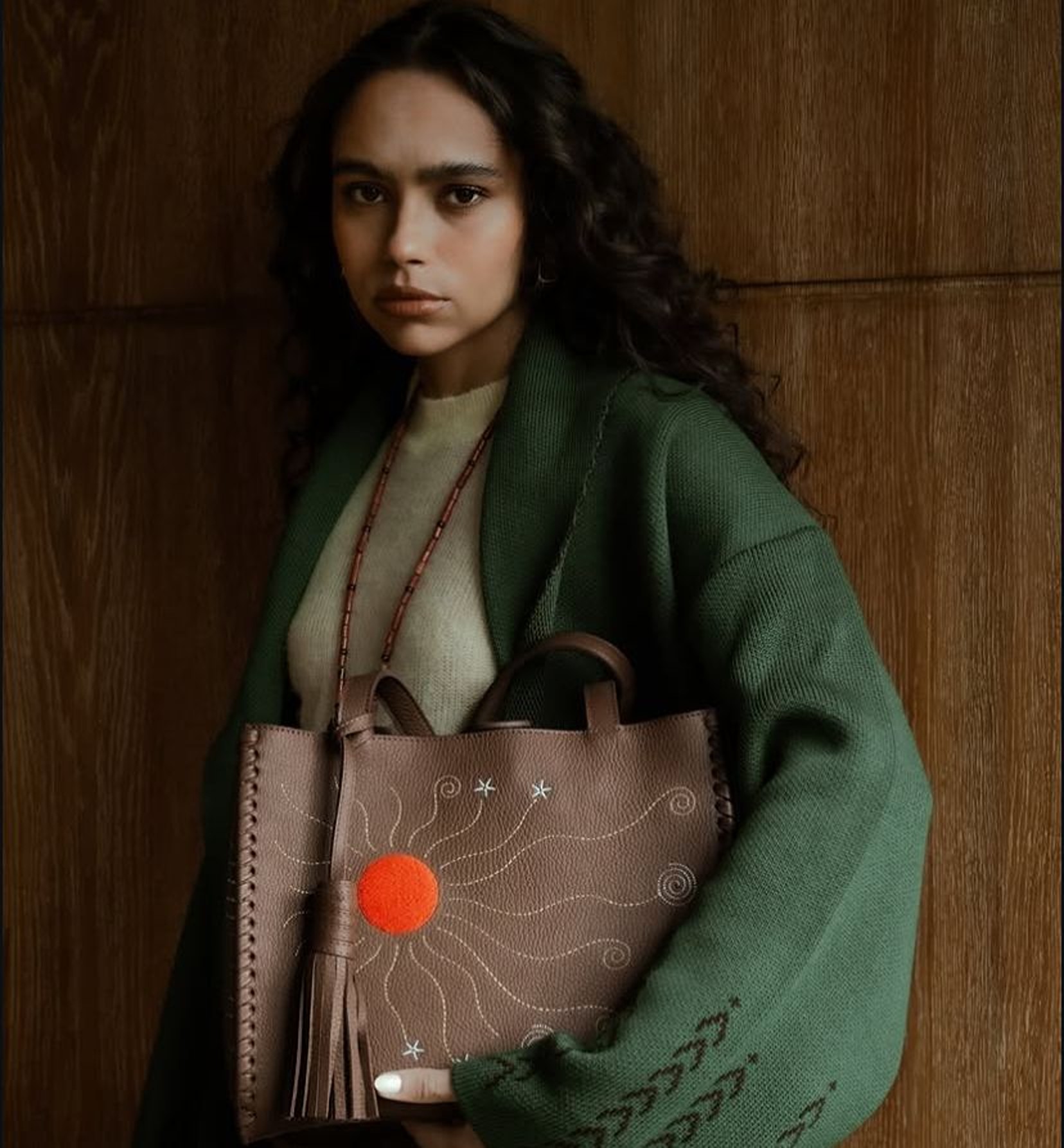
In a world increasingly drawn to heritage maximalism, the spotlight is on designers who can transform tradition into pieces that feel both personal and contemporary. Beyond trends, it is a question of translating stories, rituals, and symbols into wearable forms that resonate today.
As the cost of luxury continues to climb, it is not just aesthetics that matter, but also authenticity and a deep connection to heritage. For Nuniz, reclaiming the narrative means ensuring that Egyptian design continues to grow and adapt, while maintaining the integrity and richness of its roots.
“As Egyptian brands, our heritage isn’t just a point of reference,” they explain.
“It’s at the heart of who we are and shapes the way we see the world.”






Comments (0)