


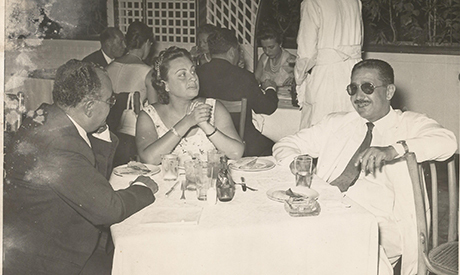
I returned to my family home in Liguria this year to celebrate Easter—a day that, for most Italians, is synonymous with gathering. As dozens of relatives sat around a table laden with colourful vegetables and roasted meats, a scene from a book came to mind and lingered.
It unfolds like this.
It is Easter in a small town in southern Italy. The grandmothers wake up at dawn, pulling down jar after jar of preserved tomatoes from the pantry, gathering vegetables from the fridge and herbs from the garden, carefully preparing every component of the feast to come.
They work through the morning, barely pausing for breath, so that by the time prayers are over, the large wooden table groans under the weight of dishes—enough to feed a small village. The family sits down at one o’clock and will not rise before five, drifting to the living room to lounge on sofas, sip hot coffee and nibble on sweet treats. In the evening, dinnertime will come around, and this beautiful torture will repeat once more.
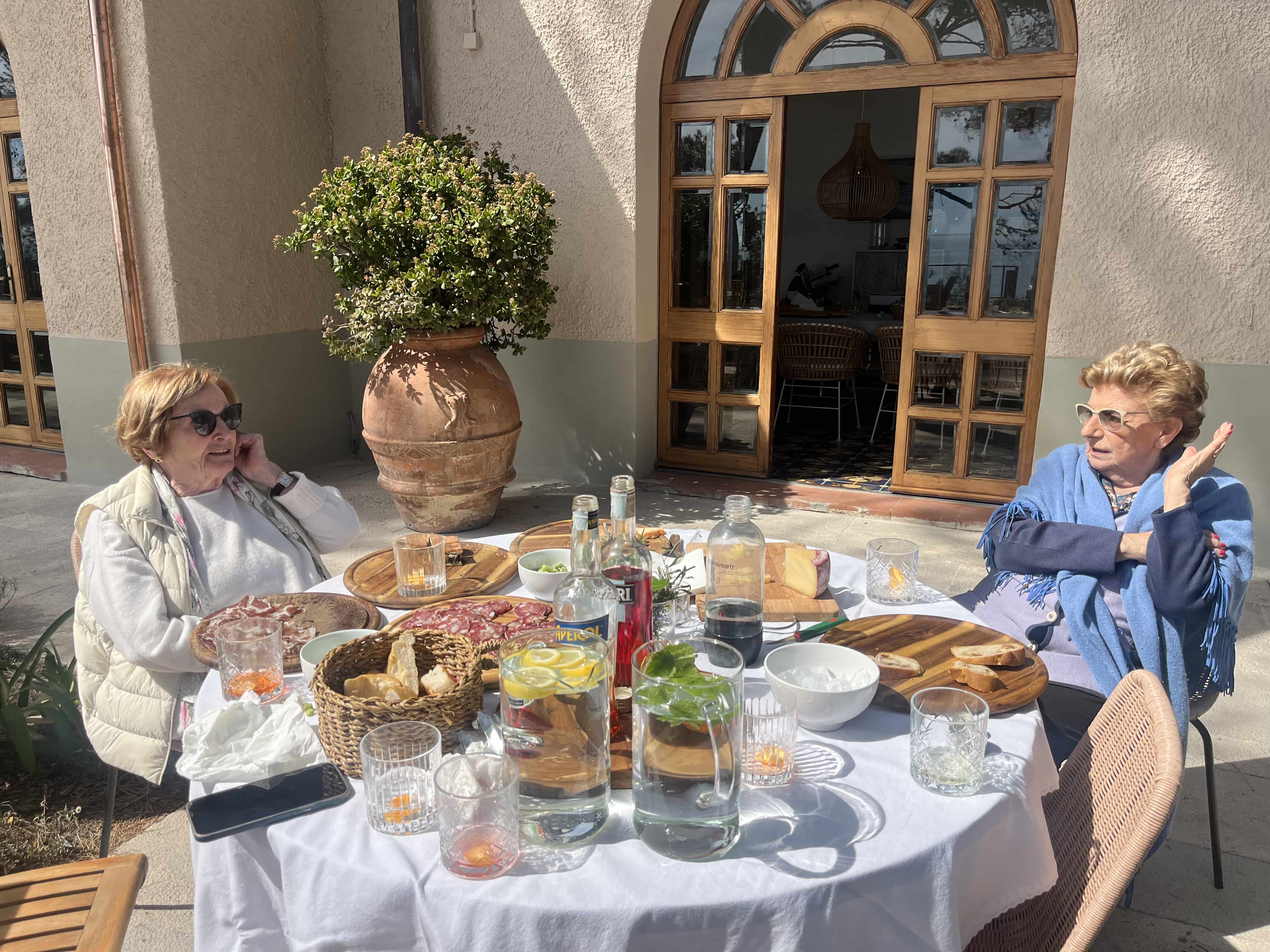
The scene—titled Sittat al-Bahr al-Abyad (Women of the Mediterranean)—comes from a book that is part memoir, part narrative history, by the Italian–Egyptian writer Riccardo Farid Mancuso. He pauses only to note that, in this picture, “Italian” could just as easily be replaced with “Egyptian,” and nothing would change.
Mancuso’s book, Nuss Sa’idi wa-Nuss Khawaga (Half Upper Egyptian, Half Foreign, 2024), gathers dozens of tales like his own. Stories of singers and architects, writers and dancers, whose lives across time effortlessly criss-crossed the Mediterranean. More than just a collection of tales, it is a meditation on shared identities and blurred boundaries, on the inadequacy of neat definitions.
When I first read it, the book hit close to home. As an Italian living in Egypt, I was reminded that my experiences were not only my own. They form part of a longer, collective legacy that stretches across space as well as time. The scene Mancuso describes is the same one I lived in Italy this Easter; it is the same one my friends in Egypt live every Eid and Sham el-Nessim.
There is something intangible that ties people of the Mediterranean together.
Perhaps it is our instinct to prioritise family and food above all else. Perhaps, it goes deeper: an unquestioning warmth and generosity, an unprompted reflex to pull up another chair, to make a stranger feel like family.
When I was eight years old, because of an opportunity at work that my mother couldn’t turn down, my family moved from Milan to London. I remember the initial trauma of dislocation, the way moving to an unfamiliar country forced me to come to terms with my own foreignness. Differences as banal as the cartoons I watched after school felt intrinsic, made me vulnerable.
It’s difficult to describe this particular kind of disorientation. It felt a bit like coming home on a day like any other and finding the furniture replaced, shuffled around. I found myself constantly bumping into things, fumbling at what I had thought to be straightforward.
Children, fortunately, are made of rubber. I came out of the experience unscathed, more resilient, and lucky enough to have two homes instead of one. But it took time for me and London to come to terms with each other. It took time for me to learn its rhythms, its curves and its corners, to carve out my own little slice of a city I now love.
Aged twenty-two, because of an opportunity at university that I couldn’t turn down, I moved again, this time from London to Cairo to study Arabic for a year. Maybe there’s some truth in that common epithet that says practice makes perfect or maybe this time felt different because it was a choice. Whatever the case, it did not feel like a dislocation.
Moving to Egypt, despite many difficulties and frustrations, in many ways felt like coming home.
A Shared History
It is not just a feeling, though. Italians and Egyptians share more than a handful of cultural precepts; they share a history. And that makes a difference.
Relationships between Egypt and the Italian peninsula date back centuries. Trade with Italy’s maritime republics can be traced as far back as the fourteenth century (see Marta Petricioli’s excellent book, “Oltre il Mito”, for a full and detailed history). By the mid-nineteenth century, something more permanent began to take shape: the emergence of a distinct Italian community in Egypt.
At a time when Italy’s economy was fragile and hopes for the survival of the newly unified state were slim, Italians began to leave in large numbers. Many fled westward, crossing the Atlantic and giving rise to the well-known Italo-American diaspora. But others travelled south, across the Mediterranean.
Egypt was the obvious destination. Under Muhammad Ali Pasha and his successors, the country was rapidly industrialising, its economy expanding through ambitious projects like the Suez Canal and, later, the Aswan Dam. The demand for both skilled and unskilled labour drew in foreigners from across the world, Italians chief among them.
By the early twentieth century, Italians had become one of the largest foreign communities in Egypt—outnumbering even the French and British colonial powers—second only to the Greeks. They built schools, churches, cultural institutions, and social clubs of their own, yet they were never entirely separate. The vast majority were part of the masses, the ordinary working class. They lived alongside Egyptians and, over time, became woven into the social fabric.
Their presence left traces in the most unexpected places. The Italians of Egypt were the lead architects of some of Egypt’s best-known mosques (including Abu al-Abbas Mursi and al-Qa’id Ibrahim in Alexandria, as well as over 250 others), owners of Downtown Cairo’s iconic café Groppi’s or Maison Bajocchi, the oldest jewellery business in Egypt. Italians are even credited with introducing pasta to that unlikely amalgamation that has now become Egypt’s iconic national dish: koshary—itself a layered reflection of the country’s many influences.
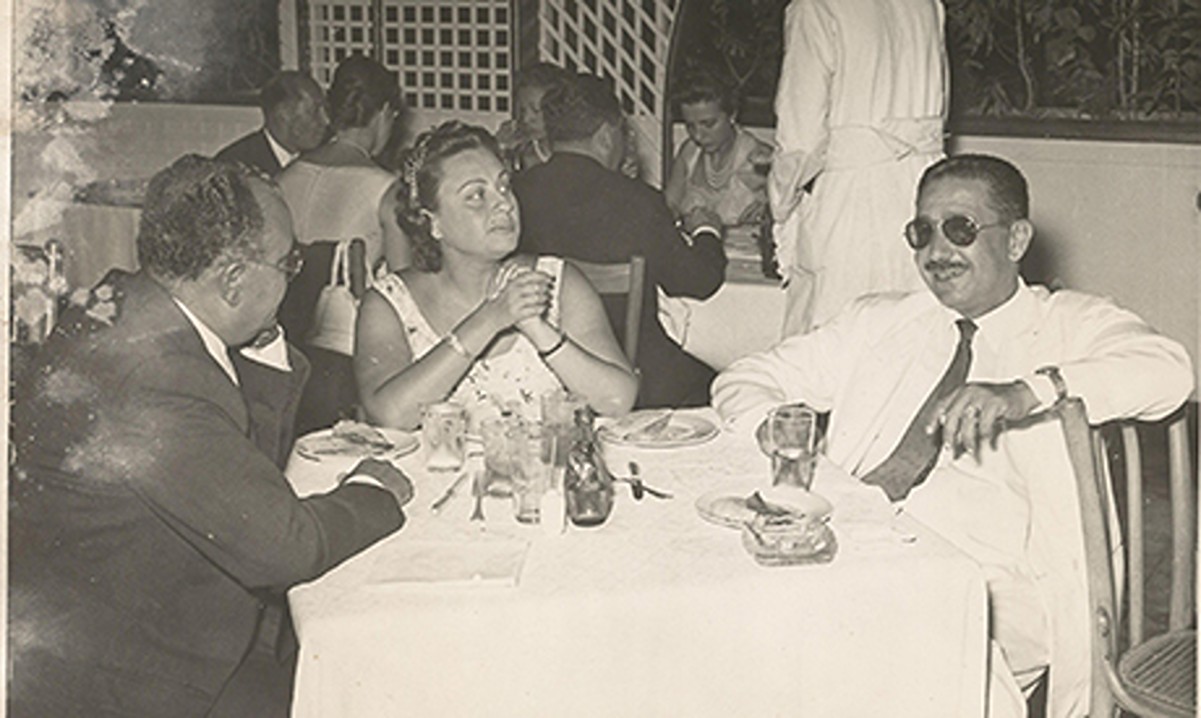
The community began to decline after World War II. In the years that followed, Egypt moved toward independence under Gamal Abdel Nasser. Suspicion toward European communities grew, fueled by their association with colonialism and, increasingly, with the newly founded state of Israel. Many Italians were either pushed out by economic marginalisation or pulled by a desire to help rebuild their homeland after Mussolini’s fall.
Yet their memory lingers. Even today, Egyptians often recall the Italian presence with a certain fondness. One of my closest friends here likes to spin tales of the Italian nonna who lived next door when she was growing up in Alexandria. She recounts how this elderly woman, born elsewhere, had become a pillar of the neighbourhood, wholly part of the city she called home.
The Mediterranean, in this sense, has never stopped moving. If the flow once carried Italians south, today it predominantly runs in the opposite direction. Egyptians now form one of the largest foreign communities in Italy, particularly in the northern regions I come from.
The relationship between the two countries has not always been smooth, yet the connection endures. Italians continue to travel to Egypt in large numbers; the two countries remain bound by trade, diplomacy, and a long history of exchange. It is not something abstract—it is something lived, something tangible, something I encounter daily.
It is in this sense that the past does not feel distant, but present—embedded in gestures, in habits, in the easy familiarity between strangers.
Even now, every time I am treated like family by people with whom I share no blood but with whom I share a history, I am reminded:
kullina nās al-baḥr al-abyaḍ.
We are all people of the Mediterranean.





Comments (0)