


I never thought my hips would become storytellers. In a quiet studio in Bangsar, with the faint scent of oud incense in the air and the rhythmic heartbeat of the tabla echoing through the floor, I found myself swaying, undulating, unlocking and locking muscles I never knew I could command. I am a Malaysian girl who was born from monsoons and nasi lemak mornings, not exactly the image people expect when they think of belly dancers. Yet there I was, moving to a rhythm that felt ancient and oddly familiar.
It was my Egyptian husband who first paused in disbelief. “Where did you learn that?” he asked, half-teasing, half-intrigued, the first time he saw me dance in our living room to Mohamed Mounir’s Ya Teir Ya Tayir. He was raised among the classical lines of Arab music, yet here I was his Southeast Asian wife, mimicking isolations with surprising precision. A trained instructor once told me I could go pro if I ever wanted to. She said I had “the gift”, an instinct to move with the music, to let emotion guide form. I laughed it off. But part of me knew what she meant. It wasn’t about performance. It was about belonging, to myself, to joy, to the rhythm of something greater.
Still, the moment I tell people I belly dance, the same look flashes across their face.
Somewhere between curiosity and discomfort. Because somewhere along the way, belly dance became sexualized, especially in the eyes of the West. Hollywood draped it in fantasy and allure, stripping it from its roots. Yet here in Egypt, raqs sharqi is not just performance. It’s part of weddings, women’s circles, memory, and healing. The hip scarf isn’t always about seduction. Sometimes it’s just about home. There is a quiet sanctity in the way Egyptian women dance among themselves. At weddings, you’ll see grandmothers and granddaughters alike, laughing, clapping, hips swaying in celebration, never solely for the male gaze, but for joy, for community. There’s no choreography, no perfection. Just rhythm and inheritance. Watching them, I saw a heritage passed down, not through words, but movement.
When I started dancing, I didn’t know what I was seeking. I was a Subang Jaya singleton at the age of 15 and adjusting to a body language I could barely pronounce, customs that danced between warmth and overwhelming. But the music called to me. Something in the maqam, the rise and fall of the notes when Fayrouz’s voice called me home, wrapped itself around my spine and gently shook me awake.
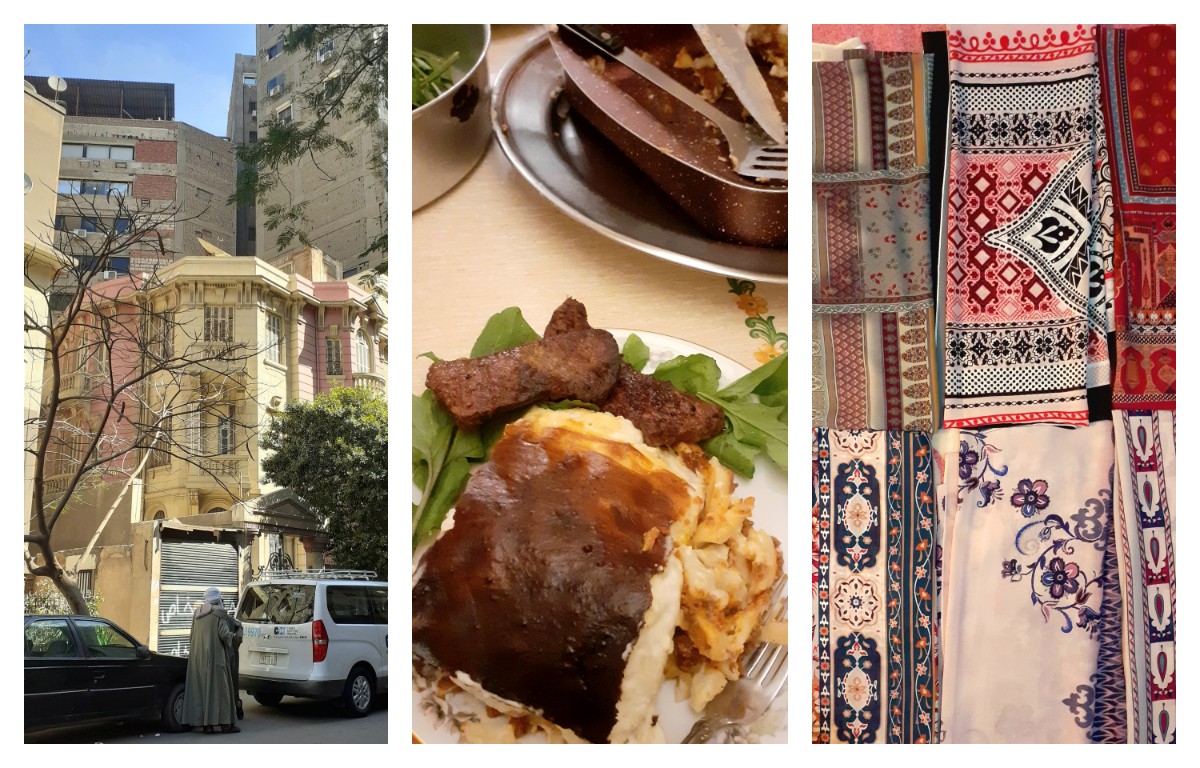
What surprised me most was how healing it was. As someone who has struggled with digestive issues, I began to notice that belly dancing softened something inside me, literally and emotionally. The core engagement helped ease bloating. The postures realigned my body after hours spent hunched over my laptop. And beyond the physical, something in the movement unlocked a happiness I hadn’t touched in years. A kind of embodied euphoria. I’d dance barefoot in the privacy of our home, sometimes while making mahshi or waiting for angel’s hair for koshari to finish cooking. Just fifteen minutes of figure eights and shimmies, and I’d feel lighter. More alive.
People often think of belly dancing as flirtation. But few ask what it gives back to the dancer. What it teaches us about our bodies, our self-worth, our place in the world. For me, it became a quiet rebellion. A way to reclaim my body, not to perform it, but to honour it. To find softness in my strength. Fluidity in my control. Of course, there were awkward moments too. Once, I mentioned it in a casual conversation and saw someone
raise their brows and smirk. Another time, a friend whispered, “Oh, I didn’t know you were that type.” That type? I wanted to say, the type that moves joyfully? The type that studies an ancient cultural form with respect?
Egypt taught me that raqs sharqi is layered. Yes, there are professional dancers who perform in hotels and cabarets. But there’s also the quiet version, the woman in her apartment dancing to Umm Kulthum alone in the kitchen without the whole world having to see her. The mother who is teaching her daughter how to shift her weight as this is tradition. The friend who sends you a video of her latest hip-drop just to make you smile.
And then, there is me. A Malaysian woman with Egyptian roots by marriage. Learning a new rhythm, not just with my body, but with my heart. Belly dance became my translator, a way of understanding Egypt without speaking a word. It taught me about timing, tension, and release. About letting go. About taking up space gracefully.
I may never perform publicly. I may never tie a glittering scarf around my hips in front of a crowd. But I will dance in my living room. In the quiet. In joy. I will move to the rhythm of this country I’ve come to love, not just through language or food, but through the language of hips, shoulders, breath, and beat.
And when the drum calls again, I will answer, not as a performer, never as a tourist, but as a woman who remembers what it means to feel the music ripple through her and say, this, too, is heritage.
This entry is a top ten place winner of Egyptian Streets’ 2025 “Timeless Tales: Cultural Heritage Writing Competition,” in partnership with FairTrade Egypt and Bibliothek Egypt. Entries featured first-person narratives of Egypt’s cultural heritage through Ancient Egypt, Coptic, Islamic, Jewish traditions, and tangible/intangible expressions. Winners were celebrated at Bibliothek Egypt in October 2025, with 13 top stories published on our platform.


Comments (0)