


“Shemal, yameen. Ehna E-Masryeen!” (“Left, right, we are Egyptians!”) a group of Egyptian fans chant outside Seattle’s iconic Pier 58 stadium.
I joined the thousands dressed in red-black-and-white marching from the Central Waterfront to Lumen Field. We were going to war, but it wasn’t a military campaign. We had traded combat fatigues for football jerseys, battle drums for tablas, and helmets for pharaonic headdresses. We, fans of the Pharaohs, were an army of the Egyptian National Football Association.
As an Egyptian-American, my parents taught me everything about being Egyptian. They taught me how traffic lines on the road are merely suggestions, how the best communication is done with the hands, and how the secret ingredient in molokhia is the shah’ah (a symbolic gasp).
On the night of June 26 in Seattle, during the matches of the 2026 World Cup, standing shoulder to shoulder in a sea of Egyptians chanting “Masr,” (“Egypt”) I understood my parents had given me an Egyptian identity. But, it took marching among thousands of strangers, singing until my voice gave out, to actually feel it.
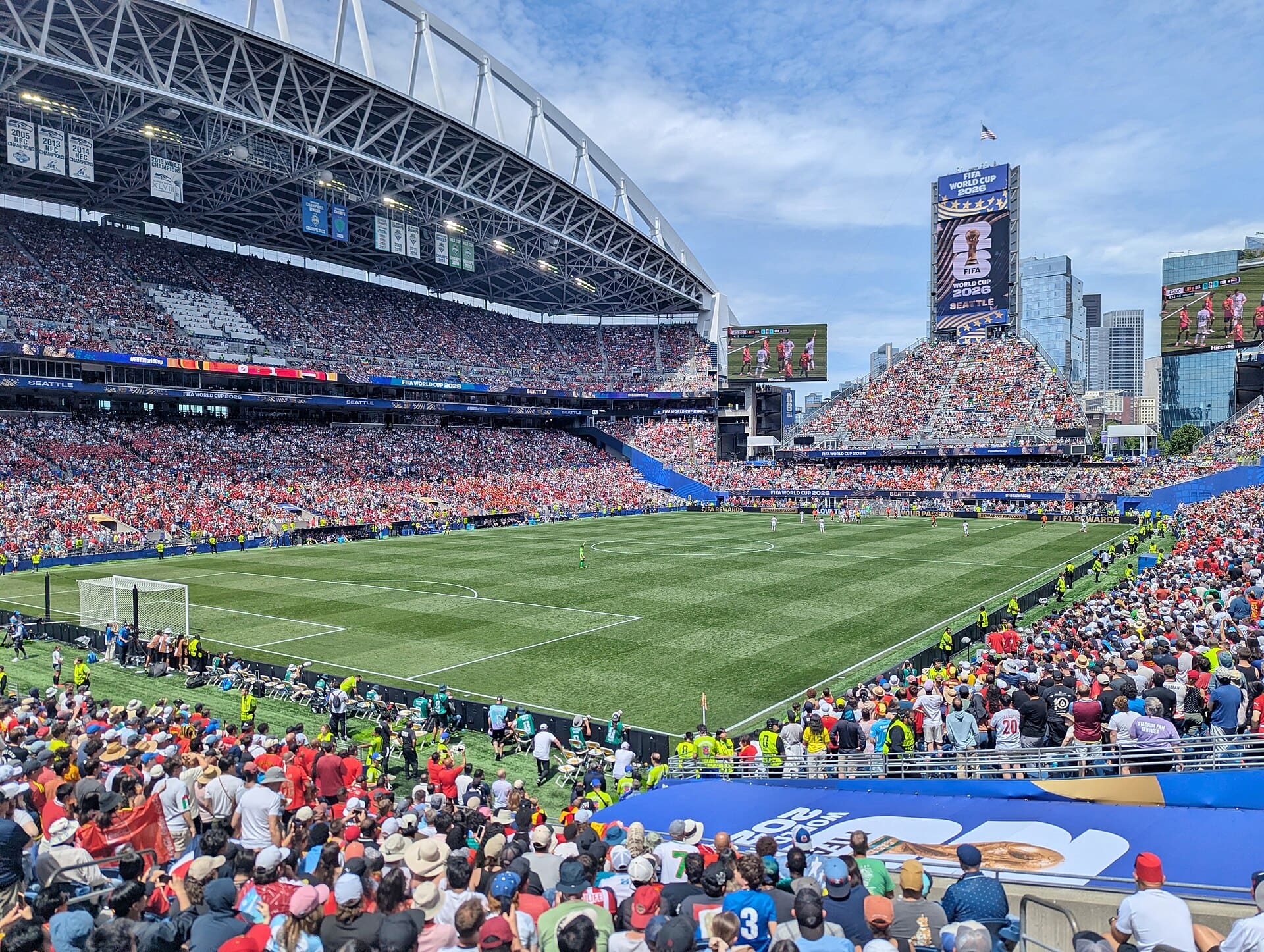
That was the day of Egypt’s final Group Stage match, a hurdle the Pharaohs had never cleared. Only one team stood in the way: Iran. “Masr” was the name on everyone’s lips.
Like the Nile, we flowed through Seattle’s historic Pioneer Square to flood the stadium. Inside, we took our seats. Dribbling the ball up and down the lime-green pitch, the players were like brand-new action figures released from their plastic packaging– fresh and on display for our wholehearted adoration.
Kick-off began.
The crowd on the opposite side of the field roared. The football, which looked like a miniature Chiclet from my seat, bounced inside Iran’s goal. It was only four minutes into the game, and Egypt had scored. I took a deep breath and bellowed out the lowest octave I could muster, “Gooooooooaaaaaaaal!” My wife and I jumped up and down. But the trouble with unexpected ecstasy is the promise of a future fiasco. Ten minutes later, Iran smashed the ball into the roof of our net. And just like that, our state of bliss evaporated.
The remaining 75 minutes felt like someone had hooked 100-volt electrodes to my fingers and toes. Every Egyptian corner-kick, counter-attack, and header was a zap of exhilaration. Every dispossession and yellow card was a shock of torture. When the final whistle blew, the game finished in a draw, 1-1, which was enough for Egypt to advance to the Knockout Stage.
The Pharaohs surpassed their previous World Cup performances and made history. We celebrated like champions. Descending the stadium steps, I heard Egyptian fans singing the first line of Bob Azzam’s classic song Ya Mustafa, “Chérie je t’aime, chérie je t’adore. Como la salsa del Pomodoro.”
I joined in for the second verse, created by the Egyptian football fans, “Hela-hela-ho, hela-hela-ho. Montakhabna mafeesh zayyo!” (“There’s nothing like our national team!”)
“Aussie! Aussie! Aussie!” A man in the back of the pub shouted.
In unison, the entire pub rumbled, “Oy! Oy! Oy!”
It was a week after the Iran game, and Egypt was officially in the Knockout Stage. I was at an English pub in Santa Monica, surrounded by fans of Australia’s football team, the Socceroos. Everyone except me was wearing Australia’s yellow jersey. Floating in a soup of yellow lentils, I was the single piece of diced tomato with my red Egyptian football jersey. I had nowhere to hide.
While I waited to use the bathroom sink, an Australian fan stood behind me. “What do you reckon of the footy so far, mate?” He said with a smirk, “Looks like the whistle-blowers have been givin’ Egypt a bit of a leg up.”
“Australia has bigger problems than the referee,” I said. I tossed my paper towel into the bin and yelled “Masr!” before running out of the bathroom.
This game, like the Iran game, had Egypt tied with Australia, 1-1. But the Knockout Stage required a winner. Clinical in their penalty kicks, Egypt scored four straight goals to win the game. I erupted with joy. The rest of the bar was silent.
Two young men approached me and introduced themselves as Omar and Ahmed. They arrived in the USA one month ago to start an international studies program. “I can’t believe you’re comfortable cheering next to all these Australian fans,” Omar said.
“Me neither,” I replied.
“Wear your jersey to work,” my wife said. It was Monday morning, and Egypt was about to face the reigning 2022 World Cup champions, Argentina.
“I can’t,” I said. “What would my patients think about a doctor walking in a football jersey covered in pyramids and pharaoh faces?”
“Everyone knows the World Cup is on,” she replied, “this is a once-in-a-lifetime moment.”
One hour later, I was standing in my clinic wearing my white coat over my Egypt jersey. Between patients, I checked my phone to read messages from friends and family.
“It’s 4:00 AM in New Zealand, and we are up and watching,” my cousin said.
“My teams are out, I’m Egyptian now. Masr, Masr, Masr!” a friend texted in the group chat.
Coworkers shouted game updates, and even a patient emailed me his thoughts:
“Watching the game now. It would be great if Egypt can hold for another 30 minutes.”
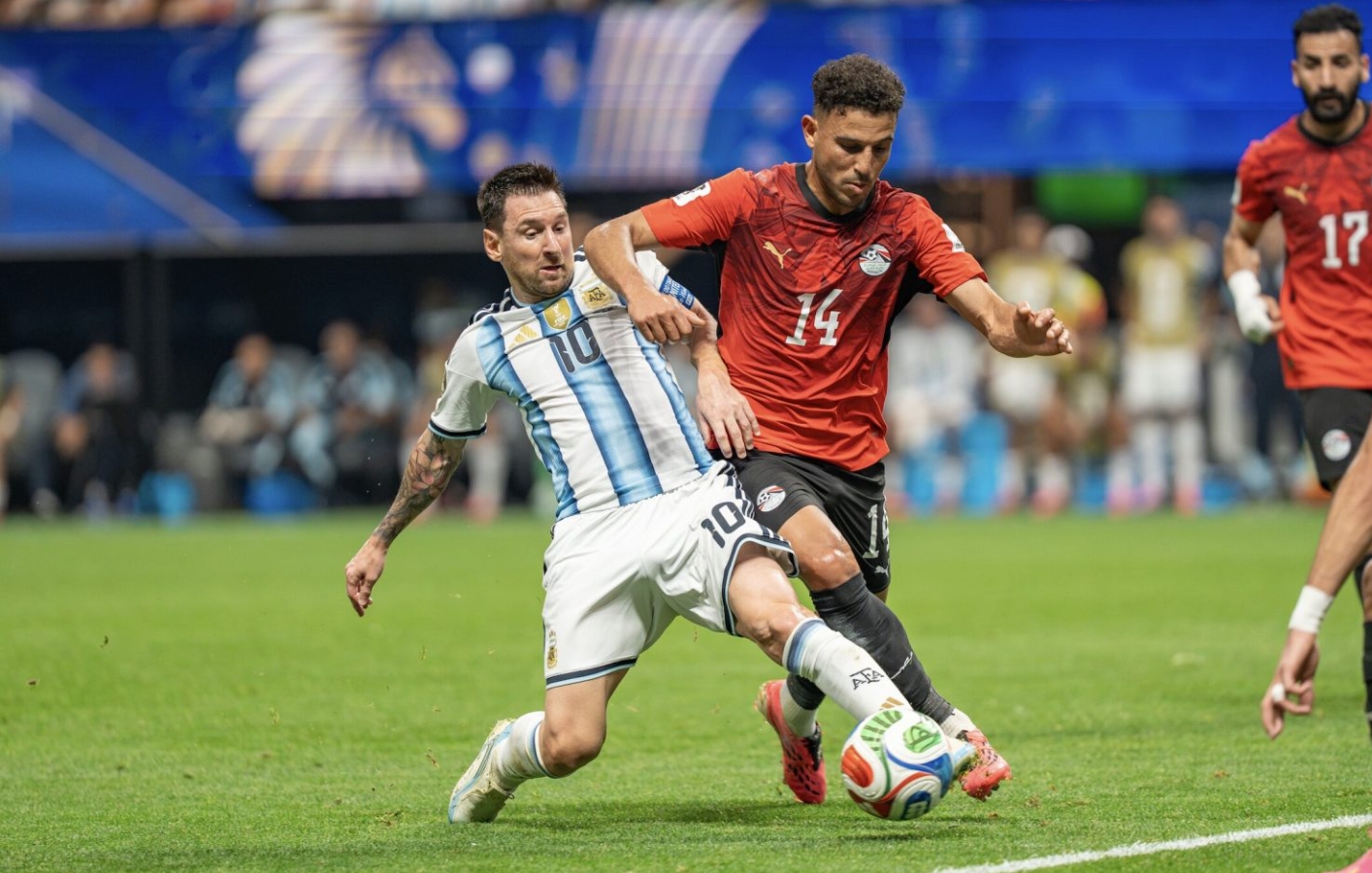
In the end, Egypt suffered a controversial and close loss to Argentina. My cousin lamented, “At least we made the great Messi cry.”
Ironically, the one Egypt match I couldn’t watch was the one everyone else watched for me. My wife convinced me to wear the jersey, my friends updated me between patients, and my coworkers reported the score. None of them were Egyptian.
One month ago, I marched through Seattle feeling like the newest recruit in Egypt’s 100-million-strong Pharaoh army. Now I understood that my wife, friends, and coworkers were marching beside me. My parents taught me how to be Egyptian. Yet, it took thousands of fellow Egyptians and the people who cared enough to cheer with me to make me feel Egyptian.
“Masr!”
Clap-clap-clap-clap.
“Masr!”
Clap-clap-clap-clap.
“Masr!”
The opinions and ideas expressed in this article are the author’s and do not necessarily reflect the views of Egyptian Streets’ editorial team. To submit an opinion article, please email [email protected].




Comments (0)