


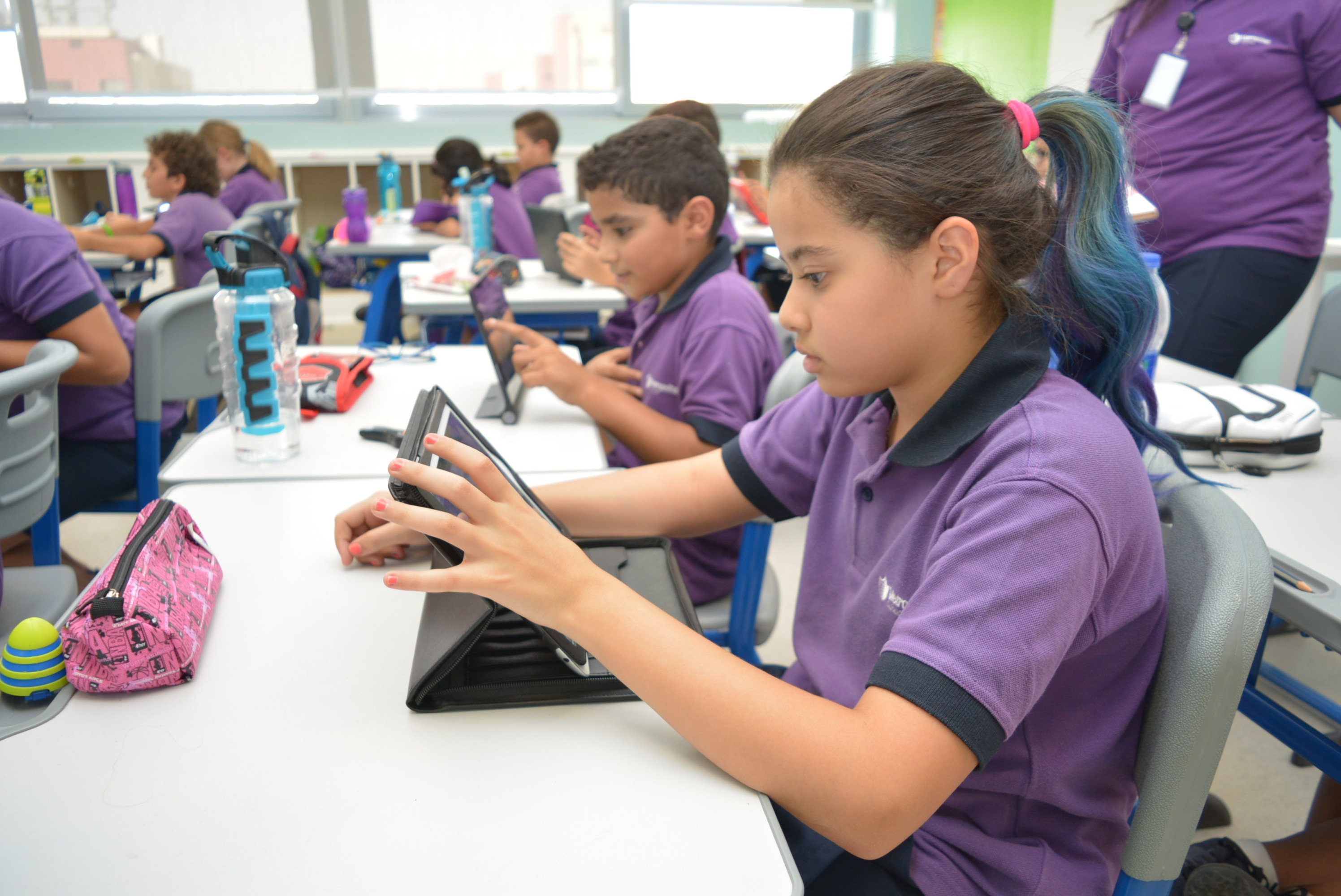
You can belong to a country without necessarily knowing its mother tongue. For third-culture kids, who grow up navigating different cultural environments, identifying with Egypt does not necessarily mean speaking its language.
They may be surrounded by people, but still feel disconnected from the conversations happening around them. They can sit at a family gathering, listen to everyone speaking, understand the laughter, recognise the jokes, and yet struggle to find the words to take part.
They can love the country they grew up in, feel a strong sense of belonging to its people, and hold its traditions close to their hearts, while still being unable to express that connection in the language everyone expects them to speak.
The recent remarks by Prime Minister Mostafa Madbouly, who described declining Arabic proficiency among students in international schools as a challenge to national identity and national security, deserve a more nuanced conversation.
The concern itself is understandable. Arabic is not simply a school subject. It is a language through which generations have communicated, preserved traditions, written literature, expressed humour, and understood one another. Protecting it and ensuring that younger generations have the opportunity to learn it should absolutely be a national priority.
Yet Egyptian children who cannot speak Arabic proficiently are not necessarily rejecting their identity. Many of them have simply grown up in a globalized world that has made English considerably more necessary to their everyday lives.
We cannot discuss Arabic proficiency among Egyptian children without discussing the world they have grown up in.
Ron Darvin, professor of language and literacy education, argues in his research that the English language is connected to social class, inequality, and power in an increasingly globalised world. He argues that English is not simply a tool for communication; it can also act as a form of social and economic capital, influencing how individuals are perceived, the opportunities available to them, and their position within society.
When a child spends most of their educational life thinking, reading, writing, debating, and learning in English, it is hardly surprising that English eventually becomes the language in which they are most comfortable expressing complex thoughts.
Children cannot be expected to acquire the same vocabulary, writing ability, reading comprehension, and expressive confidence in languages that occupy vastly different positions in their daily lives.
We should be asking why that imbalance exists before making the child responsible for it.
Social Class and the Inequality of English Speakers
People’s attitudes towards English are often shaped by their socioeconomic circumstances, educational experiences, and access to resources.
Those from more privileged backgrounds may have greater opportunities to develop their English skills and feel more confident using the language. In contrast, individuals from less privileged backgrounds may experience linguistic insecurity and feel that their English is not sufficiently legitimate or acceptable.
Although English is often presented as a universal language that connects people across cultures, access to learning and using it confidently is not equal for everyone. In many societies, individuals from upper- and middle-class backgrounds have greater access to high-quality education, private language lessons, international experiences, and environments where English is regularly spoken.
These advantages allow them to develop their language skills from an early age, giving them a significant advantage over individuals from working-class backgrounds who may not have access to the same resources.
As a result, English can reinforce existing class divisions by creating a distinction between those who possess the linguistic skills valued by employers and educational institutions and those who do not.
People who speak fluent English, particularly varieties considered prestigious or standard, may be perceived as more educated, professional, or capable. Meanwhile, individuals who speak English with different accents or less fluency can experience judgement, discrimination, or a lack of confidence.
However, English also represents an opportunity for social mobility, particularly for people from working-class backgrounds. Many individuals recognise that learning English can provide access to better employment opportunities, higher salaries, further education and the possibility of working internationally.
In an increasingly globalised economy, English proficiency is frequently considered an important qualification, meaning that those who do not speak it may find themselves excluded from certain professional and educational opportunities.
Singapore recognised early on that English would be an important instrument for participating in the global economy. Rather than treating English as an undesirable foreign influence that needed to be pushed aside to preserve national identity, the country made it a central part of its educational and economic development.
English became the principal language of instruction and a common working language across its multicultural population. At the same time, Singapore maintained a bilingual education policy, requiring students to learn English alongside a designated mother-tongue language.
The philosophy was not that English had to lose its importance for local languages to survive; rather, the country sought to make both languages valuable for different reasons.
English provided access to international markets, scientific knowledge, global businesses, and professional opportunities. Mother-tongue languages helped preserve cultural heritage and maintain connections to family and community.
A country does not have to diminish the value of one language to recognise the economic and social value of another.
Egypt could adopt a similar mindset. We should want Egyptian children to master Arabic because it connects them to their society, heritage, literature, and communities.
But we should also want them to master English because it connects them to international opportunities, attracts investment, strengthens our workforce, and allows them to compete in a global economy.
Why should these ambitions be treated as competing interests?
A generation that speaks English fluently is not necessarily a generation that has abandoned Egypt. It could be a generation with the potential to represent Egypt internationally, attract foreign investment, participate in global research, establish international businesses, and introduce Egyptian culture to the rest of the world.
The opinions and ideas expressed in this article are the author’s and do not necessarily reflect the views of Egyptian Streets’ editorial team. To submit an opinion article, please email [email protected].





Comments (0)