


Cairokee, formed in 2003 by childhood friends Amir Eid, Sherif El Hawary, Tamer Hashem, Sherif Mostafa, and Adam El Alfy, did not garner admiration and fans through music alone as the cover art matters just as much, acting like a second voice alongside the songs.
The band rose to prominence across Egypt and the Arab world after the 2011 Revolution, as protest anthems like Sout El Horeya (Voice of Freedom) and Matloob Zaeem (A Leader Wanted) became popular. Over time, they have grown into a fully independent, self-managed band, gaining popularity nationwide.
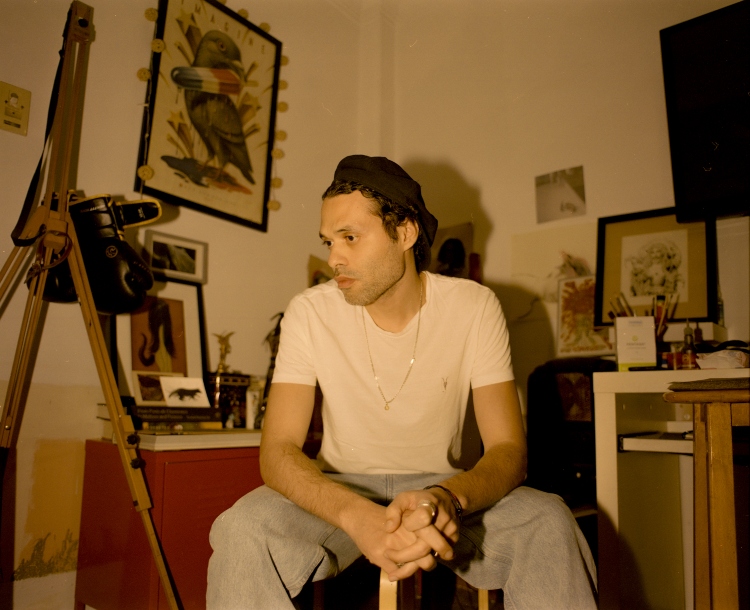
That same independent spirit runs through their visuals. The artist behind some of Cairokee’s most iconic album covers is Muhammad Mustafa.
His work enters the conversation at a point that feels almost natural, according to him, beginning through music rather than album art.
“I actually started when I got involved in the illustrations for the Marboot Beastek (Tied with a rubber band) music video,” which is how he met Eid and became friends, he told Egyptian Streets.
From there, the first album cover he worked on became a starting point for a much larger creative relationship.
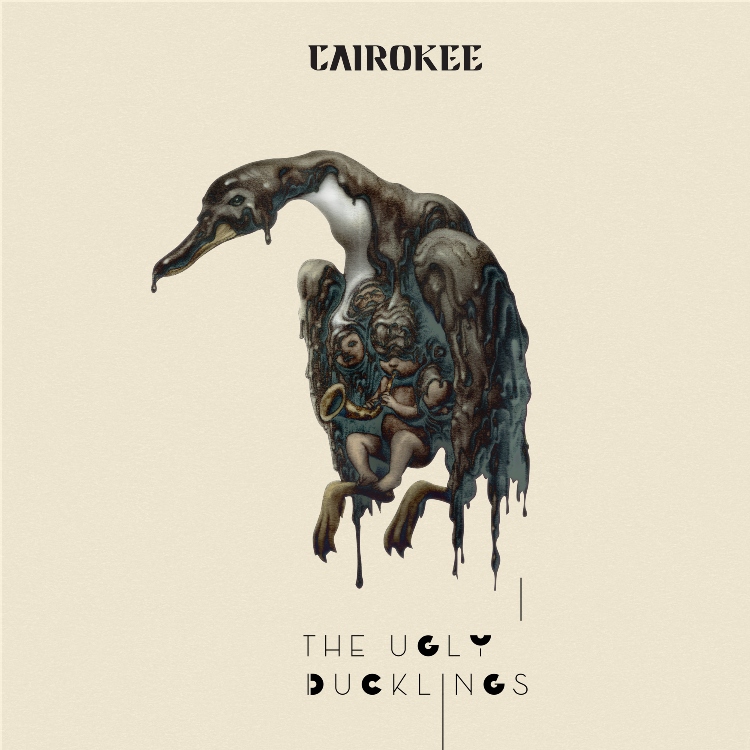
He described the album, Abna’ El Batta El Soda (Children of the Ugly Duckling), the first album cover he ever worked on, as “a pretty special project” and “the beginning of a lot of things creatively.”
What keeps Cairokee returning to him, he explained, is trust and creative freedom.
When asked how the band handles the process, he said, “They’ve always given me complete freedom to interpret the music in my own way and come up with the artwork.”
He pointed out that there was “a huge amount of trust” between them, and that the band really resonates with the final outcome, which makes him “genuinely happy.” In other words, the relationship is the shared confidence that his interpretation will land.
When Mustafa described how he creates an album cover, he said the process starts internally, almost immediately.
“I usually feel something almost instantly,” he said. That initial feeling, paired with “the concept behind the lyrics”, begins to take shape visually.
Mustafa then explores different visual directions and sketches ideas that come naturally. After that, he steps back to evaluate, then selects the concept that speaks to him most and develops it into its final form.
For him, the lyrics matter, but not only as literal information. “Definitely. It’s one of the key factors that shapes the concept.”
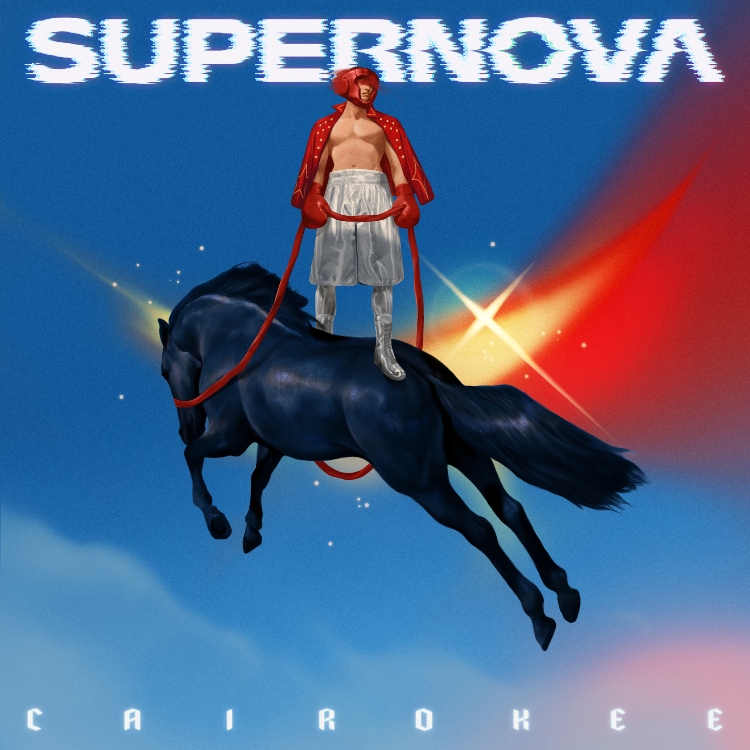
At the same time, he emphasized that creating art for an entire album requires a “more holistic approach,” treating the album as a whole and trying to capture “the very essence of its creative message,” including a “hidden layer that goes beyond the literal words and lyrics.”
He also described a moment of certainty that sounds less like decision-making and more like recognition.
In his answer, he compared it to “tuning into a radio channel,” whereas you try different frequencies, and then suddenly you hear it clearly, “without any noise or interference.”
For him, that is how he knows he has found the right idea.
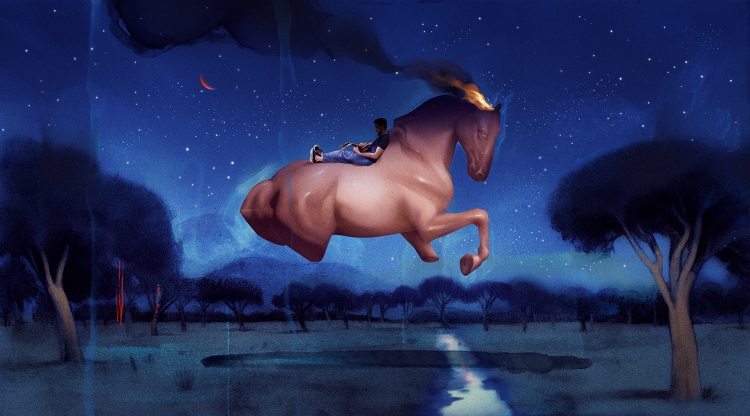
A clear visual “thread” links the album covers Mustafa has created for Cairokee, although it does not rely on a single recurring theme.
He explained that “some consistent keywords run through all of them,” which he described as natural because the songs and styles come from the same artists.
As a result, the connection is rooted more in shared essence than in repeated visual elements.
Illustrators are often asked whether they try to preserve a recognizable style, and Mustafa’s response rejected the idea of forcing originality.
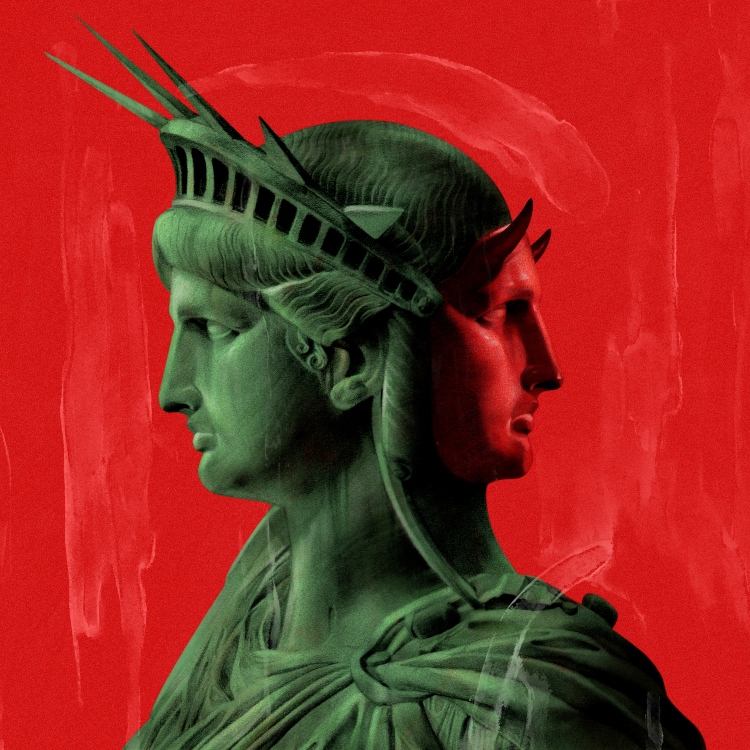
“I’ve never really thought about how to make my style unique,” he said.
Mustafa believed that “every human being has a unique voice, and that it emerged naturally through the process of working and creating.”
In his view, his style evolves through “following my natural preferences, trusting my instincts, and continuously pushing myself to fulfill my creative potential.”
He also stated that any connection to Cairo or the wider Egyptian rock scene is not something he incorporates intentionally.
When discussing his finished work, he avoided the idea of framing it in terms of pride, describing his feelings in a different way instead.
The word “proud” does not really resonate with him.
He said he would replace it with “fulfillment” or “satisfaction,” because those are closer to what he feels when he finishes.
He added that a similar feeling appears in most projects.
“There’s always a new creative challenge,” he said, and if he had to pick one based purely on how challenging the creative process was, he would choose Roma album.
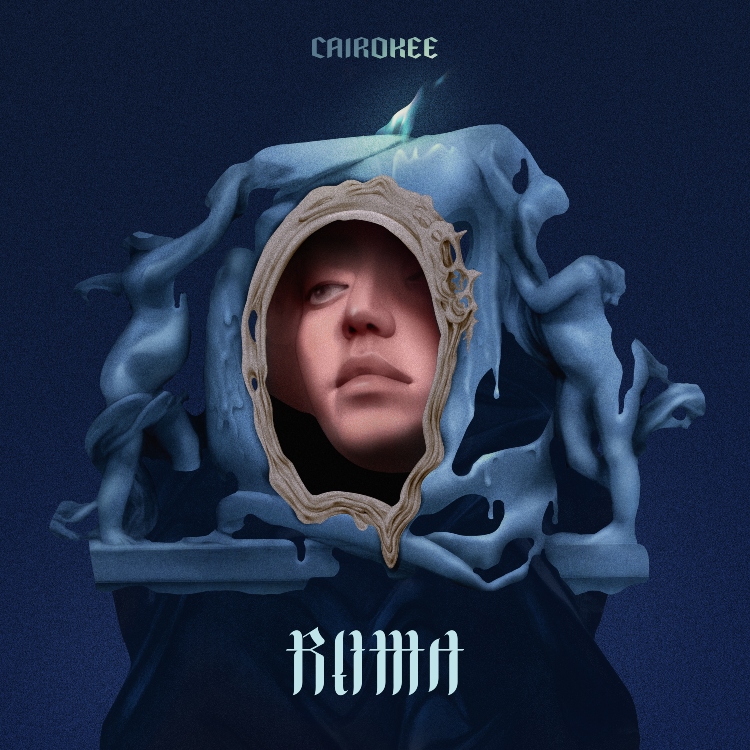
Mustafa also spoke about the purpose of album cover art itself, and said he can not really separate the two art forms, “even hypothetically.”
Visual album art is meant to build “a natural, sentimental portrait of the music.”
When it works, he explained, it adds “another emotional layer” and can become “a beautiful, memorable tribute” that stays with you and becomes part of how you remember the album.
Cairokee’s music has evolved over the years, but the cover art, through Mustafa’s process, stays in that same spirit of emotional translation.
He does not treat the cover as decoration, but as a second memory of the album: an image that arrives when the songs, the lyrics, and the hidden layer underneath them finally align into an idea.
Comments (0)