


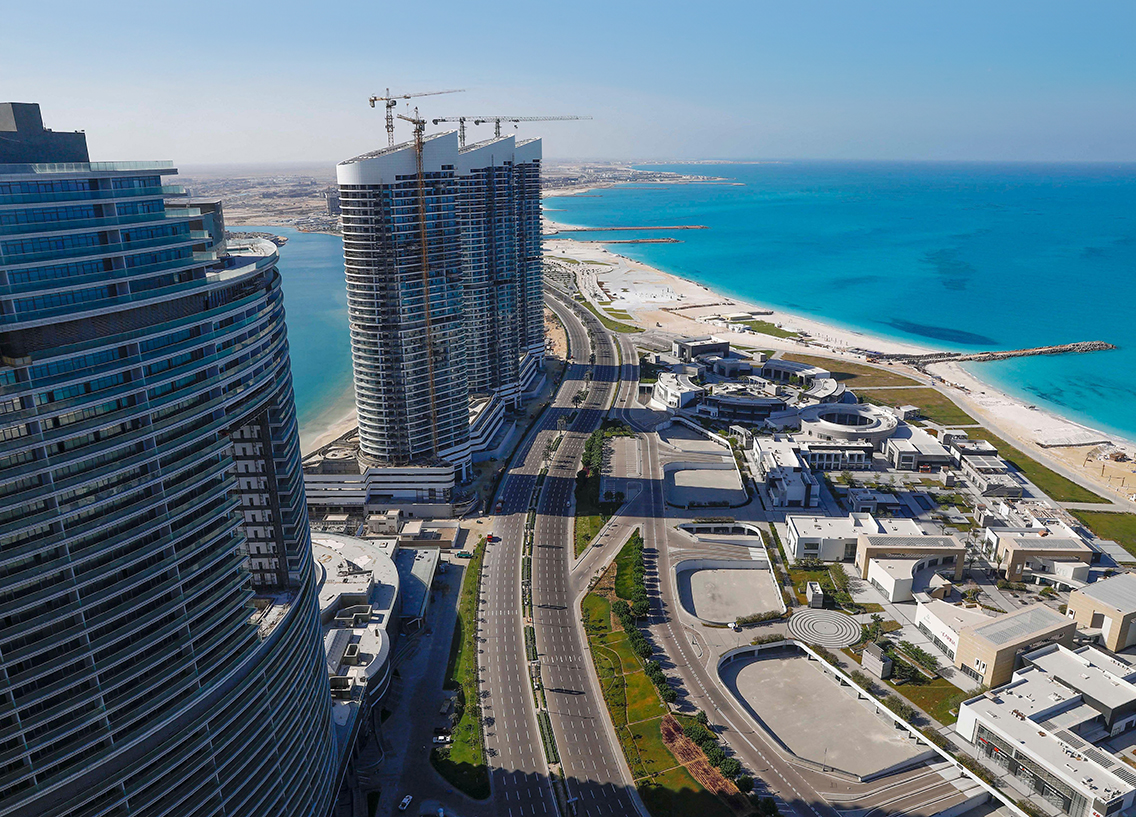
The inaugural Alamein-Africa Forum, held from 2 to 4 October, is bringing together African governments, business leaders, and investors in Egypt, with a focus on strengthening intra-African trade, attracting investment, and turning the continent’s economic potential into tangible projects.
Around 1,500 participants are attending the event, which is designed to become a biennial platform for African economic cooperation.
The forum comes at a moment when African economies are confronting many of the same pressures affecting markets around the world, such as higher energy and fertilizer costs, disrupted supply chains, geopolitical uncertainty, and increasing competition for investment.
Why Alamein?
Situated on Egypt’s Mediterranean coast, the city occupies a strategic position between African, Mediterranean, and European economic networks. Egypt itself sits at the intersection of Africa, the Middle East, and Europe, with transport, energy, and trade infrastructure that gives it an important role in regional commerce.
The Egyptian government is increasingly presenting New Alamein as more than a coastal development. The city is being positioned as a destination for international business, investment, and regional gatherings, and the Alamein-Africa Forum adds an explicitly continental dimension to that strategy.
The forum is taking place alongside the African Union’s eighth Mid-Year Coordination Meeting also being held in Alamein, which is intended to coordinate the implementation of Africa’s continental integration agenda.
The African Union has endorsed the Alamein-Africa Forum as an initiative to be held every two years, with Egypt, the African Union Commission, and Afreximbank among its organizers and partners.
Africa’s private sector is the missing link
One of the strongest themes emerging from the forum is the role of the African private sector.
According to figures cited by Egyptian President Abdel Fattah El-Sisi at the opening, the private sector accounts for more than 70 percent of Africa’s GDP, while around 85 percent of transactions involving African private-sector companies take place with companies outside the continent.
At the same time, more than half of African small and medium-sized enterprises reportedly lack sufficient information about opportunities in neighbouring African markets.
The forum is attempting to address that gap by bringing investors, entrepreneurs, and policymakers into direct contact.
The founding members of the New Partnership for Africa’s Development, including Egypt, Algeria, Nigeria, Senegal, and South Africa, agreed to pursue the establishment of an Alamein Investment Platform by February 2027.
The platform is expected to consolidate private-sector investment pledges and commitments emerging from the forum. Its progress would then be reported at subsequent editions of the Alamein forum.
The trade gap
Intra-African trade has remained at roughly 18 percent of total African trade in recent years, according to figures highlighted at the forum, which is low compared with the ambitions of the African Continental Free Trade Area.
Businesses need roads and ports that function efficiently. They need compatible customs procedures, reliable payment systems, trade finance, common standards, and access to market information.
The African Union Commission’s Mahmoud Ali Youssouf made this point at the forum, arguing that the AfCFTA needs to become a functioning market supported by trade corridors, integrated border posts, harmonised customs procedures, cross-border payment systems, trade finance, logistics, and regional value chains.
On the sidelines of the forum, El-Sisi met with Nigerian industrialist and billionaire Aliko Dangote to discuss potential cooperation between Dangote Group and Egypt in energy, fertilizers, chemicals, and cement.
Dangote has built one of Africa’s largest industrial business groups, with interests including cement, fertilizer, energy, and food. Its expansion across African markets demonstrates the scale that African companies can reach when they invest beyond their home countries.
El-Sisi also highlighted Dangote’s connection to Egypt as an example of the continent’s longstanding cultural and educational links. Dangote is an alumnus of Al-Azhar University in Cairo, a connection the Egyptian president presented as reflecting the deeper ties between African societies.
From South Africa to Chad
The forum has also produced concrete government-to-government agreements.
Egypt signed cooperation agreements with South Africa, Equatorial Guinea, and Chad following discussions covering trade, investment, development, and wider African cooperation.
With South Africa, Egypt agreed to establish a high-level joint committee to oversee political, economic, trade, investment, and development cooperation.
The two countries also agreed to strengthen links between their business communities through a joint business council. Discussions included opportunities for companies to cooperate in infrastructure, energy, transport, and industry.
The discussions also focused on opportunities for Egyptian companies to participate in Equatorial Guinea’s development projects, particularly in infrastructure, construction, housing, energy, pharmaceuticals, and fisheries.
With plans to hold the forum every two years, the next editions will provide an opportunity to measure progress against the commitments made in New Alamein.


Comments (0)