


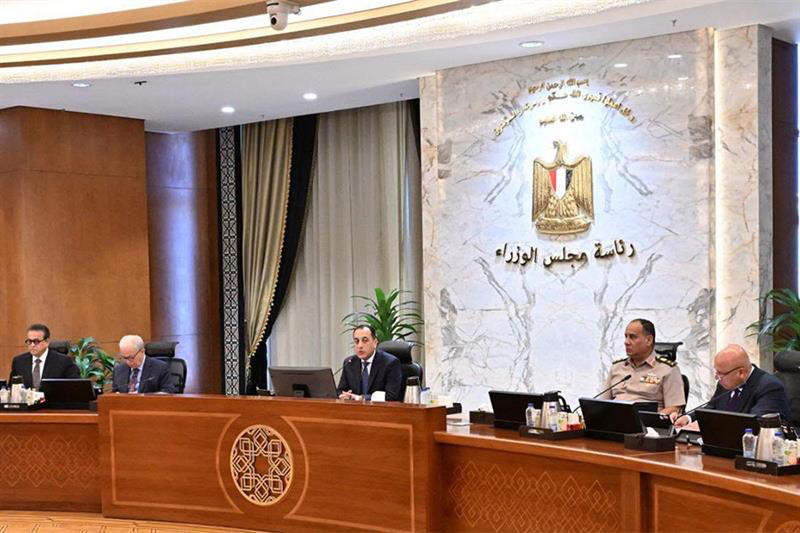
Egypt’s Cabinet said on Wednesday, 28 October, that the government is preparing amendments to the Penal Code to increase fines for false news and rumour-related offences, as part of a broader plan to regulate social media through new digital safety legislation, expanded technical monitoring and public awareness campaigns.
The Cabinet reviewed a report by a committee established under Prime Minister Mostafa Madbouly’s Decree No. 2417 of 2026 to examine measures addressing harmful social media practices and safeguarding Egyptian family values and social cohesion.
Following a presentation by Justice Minister Mahmoud El-Sherif, Madbouly directed the formation of a working group to follow up on the committee’s recommendations. The government has not yet specified the proposed fines or announced a timetable for introducing the amendments.
Proposed Digital Safety Law and Expanded Monitoring
The committee also recommended establishing general rules for digital platforms through forthcoming digital safety legislation, alongside stronger state oversight and measures to address risks associated with online platforms.
Among its proposals is an integrated national system to identify and respond to content deemed in violation of applicable rules, drawing on the Ministry of Communications and Information Technology, the National Telecommunications Regulatory Authority (NTRA) and the Supreme Council for Media Regulation.
The recommendations include upgrading the NTRA’s Content Unit into a national technical centre equipped with automated monitoring systems to detect violations and help identify those responsible.
A proposed operations room would assess detected cases, distinguish individual incidents from organised or systematic practices, and recommend graduated responses based on the severity of violations. These could range from warnings to service suspension or blocking, followed by referrals to the relevant authorities.
The committee also highlighted concerns about the use of artificial intelligence to generate fabricated content that could harm social values or the national economy.
Awareness Campaigns Target Schools, Universities and Content Creators
Beyond legislative and technical measures, the recommendations call for educational, religious, cultural and media institutions to raise awareness of harmful online practices and encourage responsible digital behaviour.
The Ministry of Education and Technical Education would work with educational and psychological experts to develop lessons addressing online risks, prevention and reporting through official channels. The Ministry of Higher Education and Scientific Research would organise awareness seminars at universities.
Al-Azhar, the Ministry of Awqaf and the Coptic Orthodox Church would also be involved in campaigns promoting responsible speech and conduct, while the Ministry of Youth and Sports would organise activities aimed at young people.
The Ministry of Culture and other relevant institutions would offer cultural activities, while the Ministry of Communications and Information Technology and the Ministry of State for Information would launch audio and visual campaigns explaining the risks of harmful content and how to report it.
Other proposed measures include text-message warnings about emerging digital risks and guidance for content creators on their legal obligations and the consequences of repeated violations.
Proposals Follow New Rules on Children’s Social Media Use
The latest recommendations come amid broader government efforts to regulate social media use, particularly among children and teenagers.
In September of the current year, the Supreme Council for Media Regulation and the NTRA announced rules prohibiting platforms from creating or activating independent personal accounts for children under 13. Users aged 13 to under 15 may have accounts only if platforms automatically activate a mandatory safe-use mode that children cannot disable themselves.
The decision also requires platforms to take proportionate measures to verify users’ ages and comply with personal data protection principles.
Following the announcement, Egypt’s National Council for Human Rights called for digital safety measures to balance protection with privacy and children’s rights to expression, participation and access to knowledge.
In a 19 September statement, the council said children’s best interests should remain central to policies governing their use of technology and digital platforms.
The latest Cabinet review signals that Egypt’s approach to digital regulation may extend beyond child protection to broader rules on online content, false news and the responsibilities of social media users and content creators. The proposed amendments and additional measures have not yet been announced as enacted law.




Comments (0)