


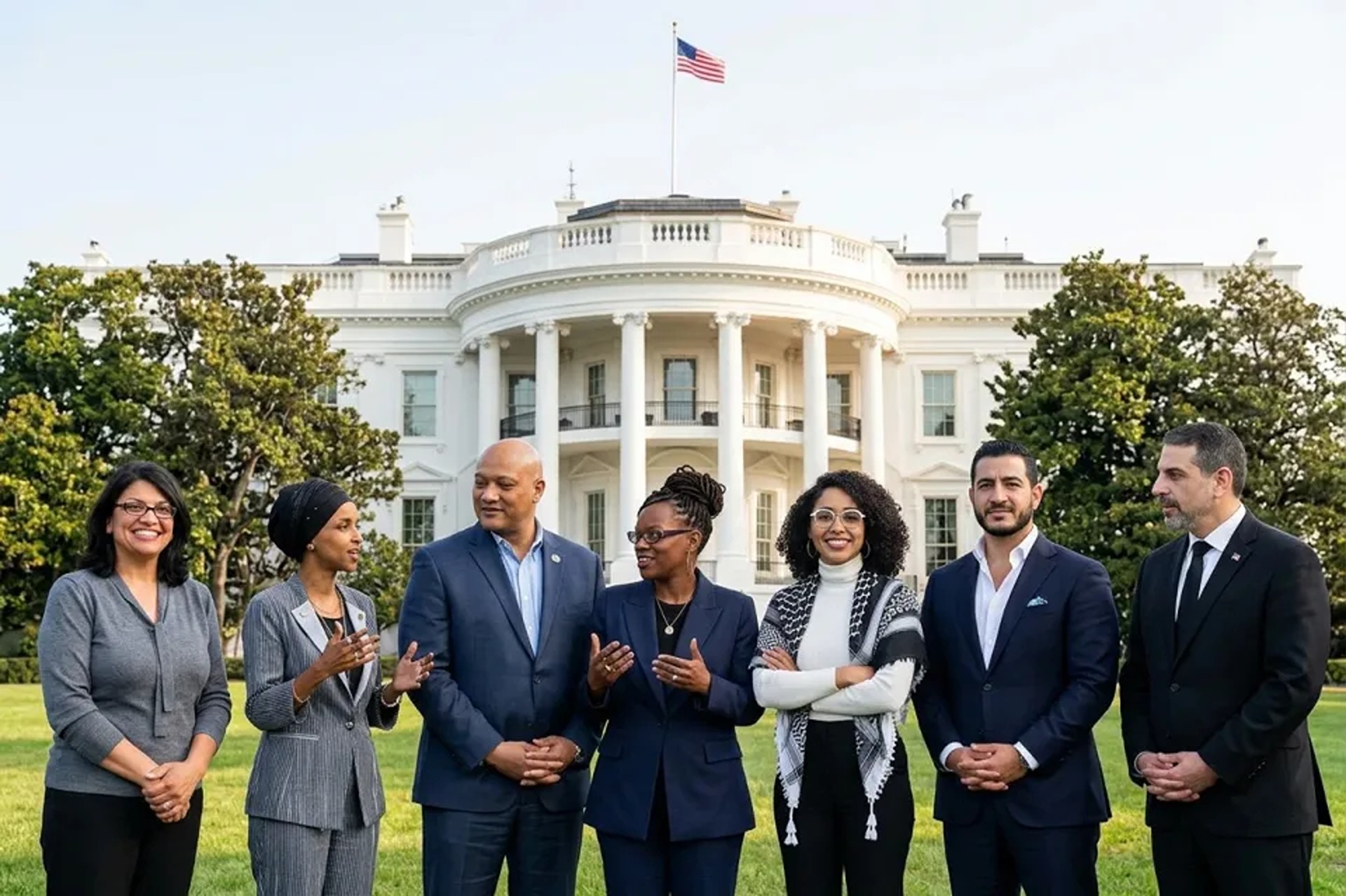
From the first Muslim elected to the US Senate to historic victories in the House of Representatives, seven Muslim Americans have secured their place in Congress, marking a milestone for political representation and challenging a climate of growing anti-Muslim rhetoric.
The victories, comprising six seats in the House of Representatives and one in the Senate, represent a record level of Muslim representation in the US legislature. Most significantly, the election of Michigan Democrat Abdul El-Sayed makes him the first Muslim ever elected to the United States Senate.
In New Jersey, Democrat Adam Hamawy defeated Republican Gregg Mele in the state’s 12th Congressional District, becoming the first Muslim elected to represent New Jersey in Congress.
His experience includes volunteering at Gaza’s European Hospital in 2024, an experience that informed his advocacy on humanitarian issues.
New York also witnessed a breakthrough with the election of Democrat Darializa Avila Chevalier.
A civil rights investigator, doctoral student, and convert to Islam, Chevalier secured her congressional victory after defeating longtime incumbent Adriano Espaillat in the Democratic primary.
The election was not only about new faces entering Congress. Four established Muslim lawmakers also secured re-election, strengthening their presence in Washington.
Palestinian American Democrat Rashida Tlaib won a fifth term representing Michigan’s 12th Congressional District.
Somali American Democrat Ilhan Omar also secured a fifth term, retaining her seat representing Minnesota’s 5th Congressional District.
Andre Carson retained his seat representing Indiana’s 7th Congressional District. First elected in 2008, Carson is the longest-serving Muslim member of the House of Representatives.
California Democrat Lateefah Simon also won re-election, retaining her seat representing the state’s 12th Congressional District in the East Bay.
The Democrats swept the 2026 U.S. midterm elections, achieving a major victory across the country and gaining control of both the House of Representatives and the Senate.
The results reflected widespread frustration with the Trump administration, particularly over the rising cost of living, economic concerns, and dissatisfaction with government policies.






Comments (0)