


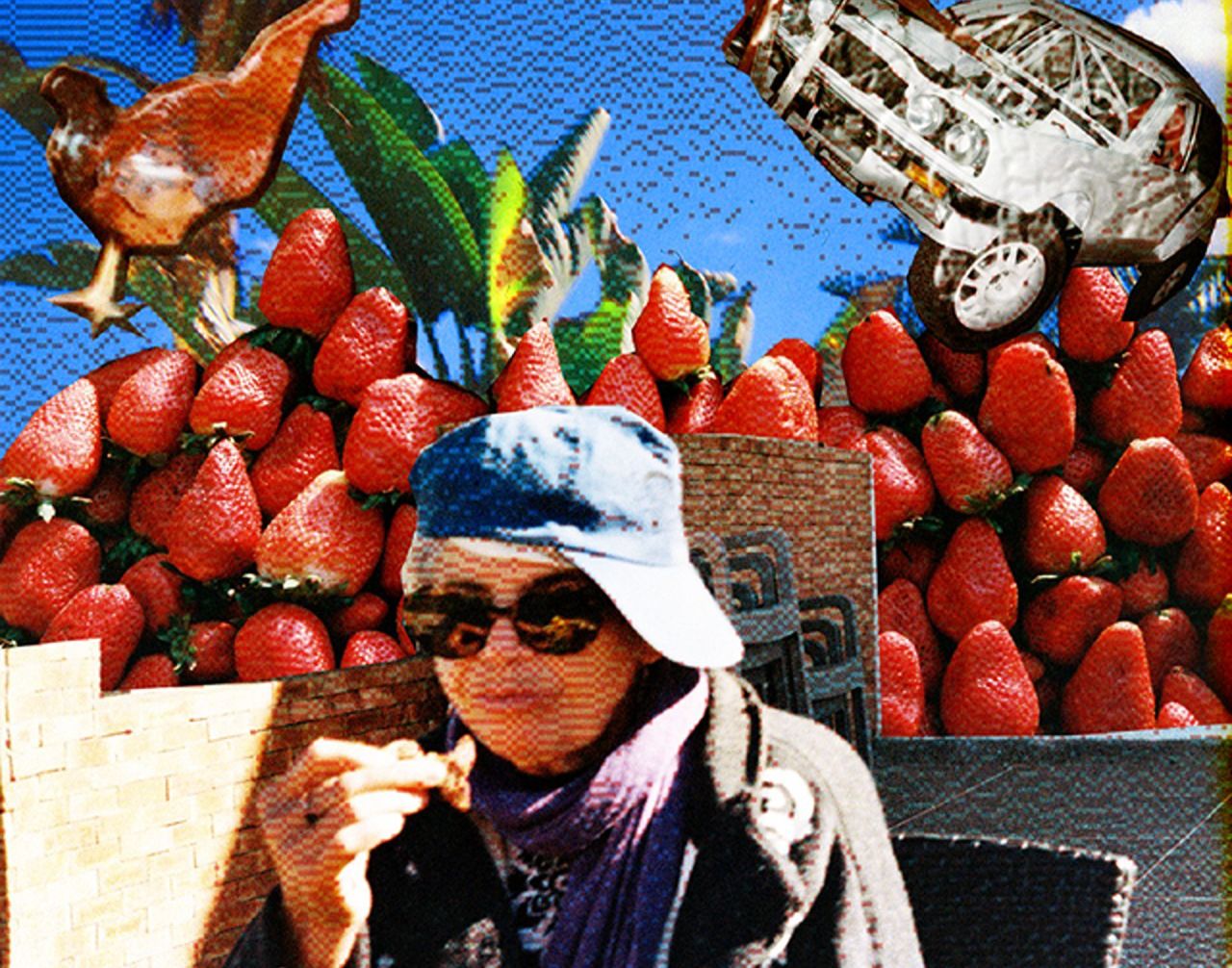
Music has always been a mirror of its time, expressing a shared global emotion that transcends borders and cultures. And with the world today feeling chaotic, uncertain, and undeniably strange, that emotion has taken on a new form. In music and pop culture alike, the mood of the moment is defined by a growing sense of weirdness.
At this cultural moment, weirdness is being celebrated more than ever, channeling the chaos and uncertainty of the world around us, turning it something that feels more real and more authentic than ever before. It feels as though global culture is spiraling down a hole, pulling everyone into a greater sense of realness, whatever that may mean for each person.
This new cultural force reflects the identity of a young generation that is fed up with mediocrity and formalities, and is now chasing cultural expressions that are distinctive, weird, and unapologetically authentic.
In North Africa and the Middle East, where between 38 and 50 percent of the population are younger than 34 years old, the region could not be more vibrant, fresh, or distinctive. It is a place where trends, musical genres, and creative movements are constantly emerging, whether in the streets or in hidden, tucked-away studios that few would ever stumble upon.
Adam Abdelkader Lenox, better known as ZOUJ, is a French-Moroccan-American experimental sound producer based in Berlin, who explores new, eccentric sounds and distinctive genres in his latest mixtape, Sabahu Al Kheir Men Zouj (Good Morning From Zouj, 2025). The mixtape is a patchwork of unexpected collaborations and sonic experimentation, stretching from Casablanca to Berlin, Algiers to Beirut, Paris to Oujda.
Gathering tracks built around his process of learning and experimenting with Raï, a form of Algerian folk music dating back to the 1920s, the mixtape challenges the limits of the genre, pushing it into strange, fresh, and distinctive territories, particularly through an exploration of the latest underground wave of Raï unofficially dubbed “way-way.”
“The region is so young that you can discover a new underground genre every three months; it’s just buzzing out there,” ZOUJ tells Egyptian Streets.
“Now I can finally sleep knowing there’s a way-way rage-rap hyper-pop track featuring an artsy singer from Algeria, two alternative Arabes-de-France producers, and Beirut’s only rage rapper, at least for now.”
Chaotic, Young and Weird
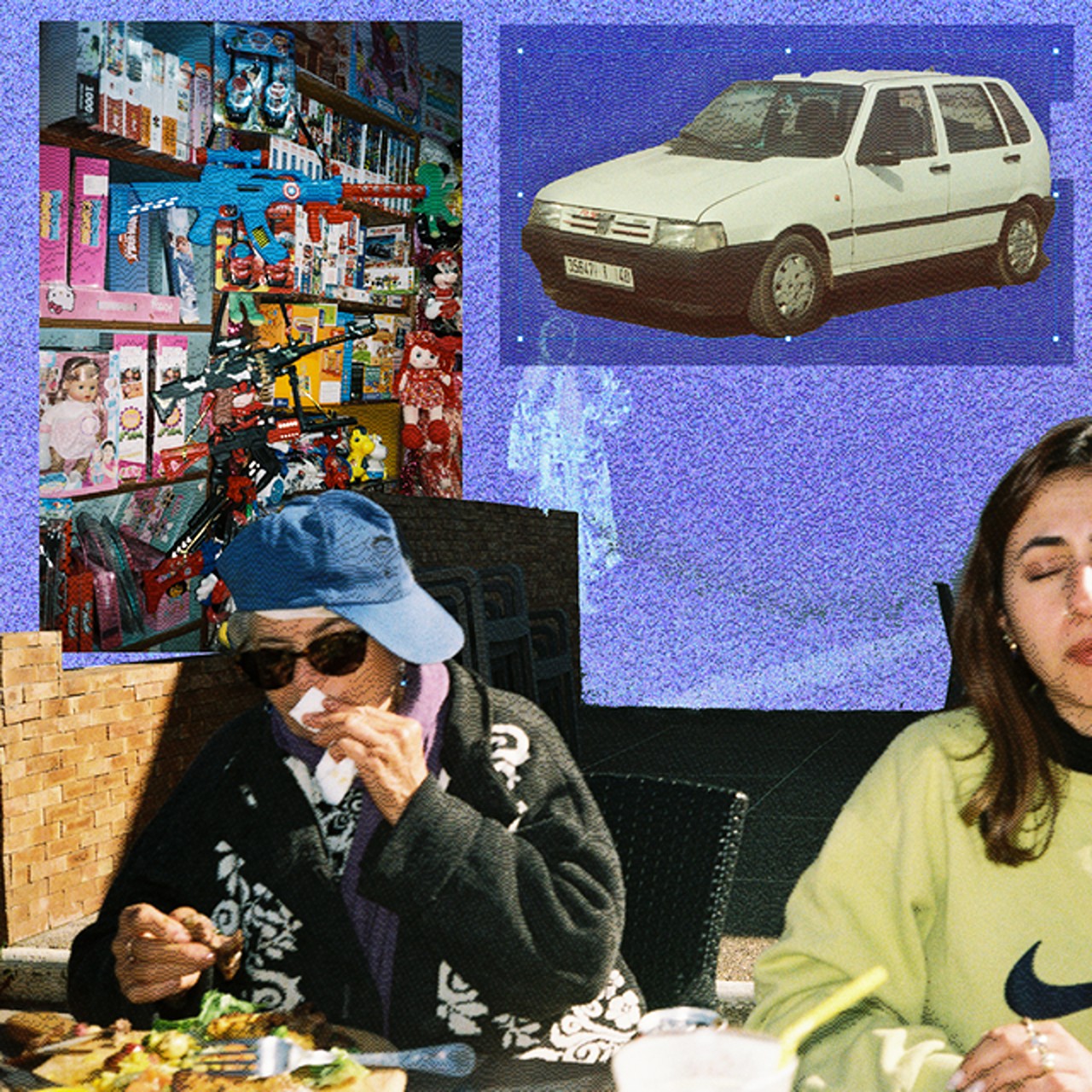
The process of creating this mixtape was just as chaotic and unpredictable as the music itself; a collection of small encounters and stories in which ZOUJ immersed himself in the thrill of beginning with a single sample or technique and watching it evolve.
What struck him most, however, was the secret ingredient behind the “way-way” sound, which is a digital synthesizer from the early 2000s, the Yamaha A1000. After tracking one down in rural Morocco, Adam brought it back to Germany, making it the heartbeat of his production process.
The best way to describe the “way-way” sound is that it feels born from an underground rave, where a rush of emotions floods your senses, moving too fast to grasp in the moment. It is only when the song ends that you can finally take it all in, piece by piece.
Much like the rise of electronica in the early 2000s, it embodies a chaotic sound that mirrors the turbulence of the digital age, where instruments are constantly pushed past the limits of what we think sound can be.
The early 2000s have resurfaced as one of 2025’s most powerful waves of nostalgia; a pivotal era that marked the transition from analog tape to digital audio workstations (DAWs) and software synths, ushering in the lush, synthetic textures that defined electronic music production.
This nostalgic revival is far from random, but it reflects a generational impulse to revisit the roots of the digital revolution. From flip phones to pixelated screens, the early building blocks of the digital world are re-emerging, as today’s youth look back to understand how deeply technology has become part of their everyday lives, and how the future can look beyond it.
Tapping into this wave of nostalgia, ZOUJ’s mixtape cover features a flip phone and pixelated screens, which are visual nods to a global cultural moment, while grounding it in the local soundscape of North Africa. Through his exploration of early digital synthesizers from that era, he revives their forgotten potential, recycling them into something new, alive, and distinctly fresh.
The first step was uncovering the essence of the “way-way” sound, which, to ZOUJ, feels like a post-internet evolution of Raï.
“It sounds spontaneous; they’ll often release a recording straight from a live performance at a cabaret,” he says. “It gives me nostalgia for an era I’ve never lived in, for music that never existed before, but the spontaneity, the humor, and the context in which it lives make me feel the same way I do when I listen to a punk record.”
As he dug deeper into understanding its foundation, ZOUJ discovered that one instrument sits at the heart of the genre: the Yamaha A1000. He likens it to what the guitar is for rock, and without it, the “way-way” sound would not exist.
Yet, the synthesizer is so rare that only a few have access to it, making it all the more elusive and distinctive.
“As I was searching for one, I realized that producers are practically hoarding them,” he adds.
One moment, in particular, encapsulates the chaotic beauty of the mixtape. While in Morocco, ZOUJ embarked on a hunt for the Yamaha A1000. What started as a straightforward plan to record with a local synthesizer player spiraled into a whirlwind of missed calls and last-minute studio commitments.
Flights were changed, and hopes were repeatedly raised and dashed. The local synthesizer would vanish, then reappear out of nowhere, often just before his six-hour cabaret sets.
Between poolside swims in half-abandoned hotels and taxi rides through rain-soaked Marrakesh streets, ZOUJ’s mission teetered between comedy and chaos.
It was a brief encounter, yet it also reflects just how challenging it is to get one’s hands on this new musical genre, almost as challenging as the work of an archaeologist.
It was through this kind of musical archaeology that ZOUJ really got to the heart of the new genres and underground scenes across North Africa.
“Cue me reshuffling my entire life, from flights to hotel bookings and maxing out my credit card, as if I were starring in a reality TV show,” he jokes.
Experimenting and Collaborating
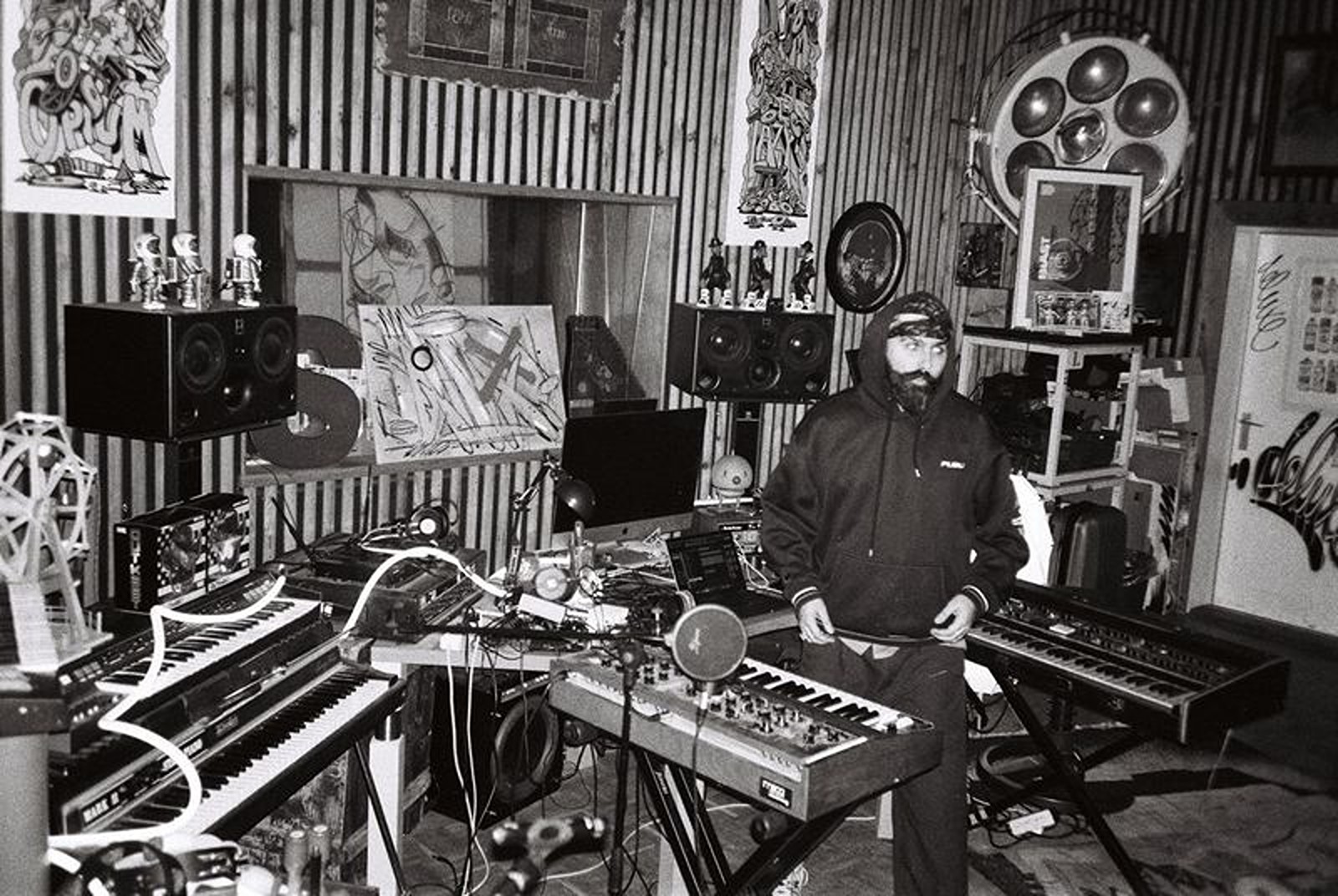
Characterized by a bold, independent, and playful spirit, the mixtape’s weirdness lies in its untamed energy, shaped by underground rave culture and distilled into gloriously messy, chaotic dance music.
It steers clear of typical radio hits or mainstream club sounds, while staying true to Rai’s raw, rebellious, and richly layered roots. Going much deeper and realer than the average radio hit, the lyrics navigate a mix of emotions that are not just sentimental or over-the-top, but often lean into sarcasm and irony too.
It is also a sonic collage that introduces fresh sounds and boundary-pushing artists: Losez from Algiers, known for his musical innovation and experimental trap music; Syqlone from Paris, who transforms North African sounds into experimental electronic hybrids; and Laï, one of the first voices to emerge from Lebanon’s rage-rap scene.
After mastering the fundamentals of the “way-way” sound, ZOUJ was ready to break the rules. Over time, he had built a toolkit of skills that gave him the confidence to experiment instinctively, without overthinking.
“Experimenting, to me, is just asking yourself ‘what if’ and then giving it a try,” he says. “The stars aligned and I managed to bring together a really sweet group of talented artists who are always up for doing something weird, so how could I say no?”
The sub-genre seems to wrestle with itself, folding inward and challenging listeners to reconsider everything they think they know about what makes a “hit.”
“The internet is a wonderful place,” ZOUJ adds, noting how the digital revolution made room for fresh and independent sounds.
After years of measuring success through streams and mass appeal, this mixtape hints at a subtle shift in the musical landscape, where value is no longer in chasing popularity but in seeking out the most unusual, genuine, and boundary-pushing sounds.






Comments (0)