


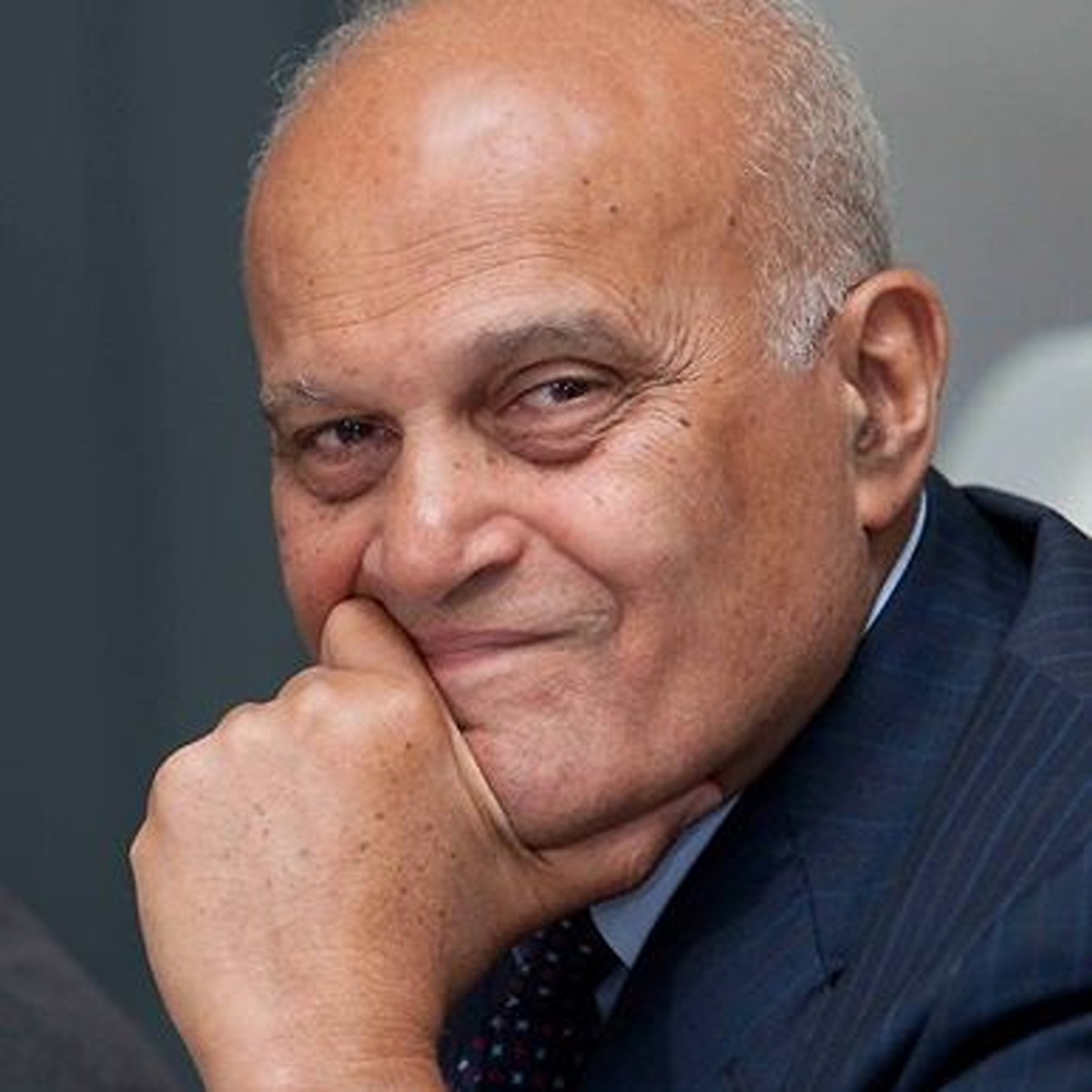
Before Sir Magdy Yacoub performs a heart surgery, he often sees himself already performing it in his dreams while he sleeps. Even when his eyes are closed and his body is still, there is still one thing inside him that remains awake: his heart.
The heart, in his own words, is a noble organ; it serves every other organ and ensures that everything stays alive. And even when he is asleep, his heart keeps him alive in his dreams, helping him practice and visualize his surgeries before he performs them in real life.
In a way, this simple ritual in his dreams captures the true legacy of Sir Yacoub in one message, which is not just to perform one’s work, but to truly live it. His legacy reflects the beauty of having a true mission in life, when someone is fortunate enough to discover it.
When a person carries a true mission in life, they are led by it in every moment, even in their sleep. They are led by an energy that brings their passion to life, just as the heart brings every organ to life.
At 90 years old, Sir Yacoub’s legacy does not end with him. He now carries it forward and passes it on to the next generation at the Magdi Yacoub Global Heart Foundation. He has also reappeared on Egyptian television in an interview with Mona El Shazly to share his story, so that in the years to come, his story may be preserved and live on in someone else’s heart.
Just as he heals hearts, there are lessons in his story and legacy that cannot be forgotten; lessons that deserve to be protected and held forever in our hearts, and in the hearts of all Egyptians.
As he once said, “Medicine isn’t just about repairing hearts; it is about touching people’s lives and giving them the chance to dream.”
Below are some notable lessons that continue to shape the Magdi Yacoub Global Heart Foundation for the years to come.
Serving humanity
“The more you serve humanity, the more you truly feel, ‘Wow, I am genuinely happy,’” Sir Yacoub said in the interview.
At first glance, serving humanity may sound simple. But in reality, it is one of the most demanding callings a person can choose.
To serve humanity means listening, truly listening, to every concern, every complaint, every fear a patient carries. It means understanding not only the disease, but the human being living with it. It requires humility, patience, and the willingness to give without calculation.
For Sir Yacoub, the relationship between doctor and patient is sacred. It is not transactional, and it is not a service purchased like an item from a store.
As he puts it, when a patient asks, “Doctor, can you help me?” and the doctor answers, “Yes,” that response carries the weight of a promise. A promise that ties one person to another, challenging the other’s willingness to honor it, and, even more, their integrity in doing so.
The patient places their life, unconscious under anesthesia, entirely in the doctor’s hands. And that kind of trust cannot be bought.
This philosophy is why, at the Aswan Heart Centre and the new Global Heart Centre in Cairo, no patient pays for treatment. It is entirely free of charge and operates solely on donations. The commitment to accessibility is also what led to the expansion of the Aswan Heart Centre to Cairo, where long waiting lists made it clear that more patients needed timely, attentive care.
It is this attention to the smallest details for patients, and this commitment to serving humanity, that explains why seventy percent of the Magdi Yacoub Global Heart Foundation’s donations come from ordinary citizens, people who give what they can, whether five Egyptian pounds or three hundred.
They give because they trust the foundation’s promises, and they believe those promises will be kept. Above all, they give because they understand that serving humanity means honoring the sacred trust placed in one’s hands.
Believe in your work, and be humble
“I learned from life that a person must believe in their work. And secondly, they must be humble,” Sir Yacoub said during the interview.
Although Sir Yacoub earned some of the world’s highest honors, including being knighted by the Queen of England for his contributions to cardiac surgery, he has never been comfortable speaking about himself as an individual. Instead, he consistently chooses to highlight his team, his students, and the next generation.
It stems from his belief that no achievement belongs to a single person. Every breakthrough, every surgery, every innovation is the product of collective effort.
“The most important thing in my life is that I take pride in the new generation. We exchange ideas. I have seen extraordinary competence. I am proud of them,” he said.
He recalls watching his students perform surgeries for the first time. “When I first watched them perform surgeries, I felt as proud as if I were the one operating. Now, they are better than me.”
Just as he benefited from the guidance of his mentors, Sir Yacoub feels a deep responsibility to mentor those who come after him. “We are here for only a limited time. But the work must continue. The new generation will carry it forward, build upon it, and raise it to higher and better levels,” he explained.
At the Aswan Heart Centre, this philosophy is embodied in what he calls the “Spirit of Aswan,” a spirit of service, continuous self-improvement, and treating one another with kindness and respect. It is this ethos that inspires the next generation to build on Sir Yacoub’s legacy and take it to even greater heights.
“We love and respect our patients, but we must also love and respect our colleagues,” Yacoub emphasized.
The concept of the Spirit of Aswan is evident even in the surgeries themselves, as procedures performed at the centre are named after the city, referred to as “the Aswan Process” or the “Aswan Modification,” to honor and reflect the dedication and spirit of the people of Aswan.
Through the “Spirit of Aswan,” Sir Yacoub’s legacy and knowledge endure, not just as a reflection of him as an individual, but in the spirit of the people who work alongside him and carry his mission forward.
The institution was built with continuity in mind, from the first generation to the second generation, and now the third generation. No work stops, and no knowledge disappears. It is only carried forward.
Innovation should serve real lives
“Science is the search for truth, the complete truth you can never reach,” Sir Yacoub said.
Truth, in his understanding, is something you pursue with devotion, knowing you may never fully grasp it, but still you walk toward it.
And yet, for him, the search for truth is never enough on its own. What use is discovery if it never reaches the hands of the doctors and the patients? What value is innovation if it remains trapped in conference halls, journals, or elite institutions?
He speaks about what he calls the “valley of death,” which is the space between innovation and application. It is the place where brilliant ideas are born and then fade when they are never put into action, and where research is celebrated, but patients never feel its impact.
And this is why the Innovation and Research Center at the Magdi Yacoub Global Heart Centre was never meant to be separate from the hospital. It was designed as a bridge. A living bridge between thought and reality.
Researchers are not removed from reality. They walk the hospital corridors. They understand what surgeons face in the operating room. And they know the patients’ stories whose conditions they are studying.
“Anyone can innovate,” he explains. “But innovation…has to ultimately serve the people and their lived realities.”
He believes that knowledge must travel. It must cross that valley of death, and it must leave the safety of theory and enter the realm of human life.
Never stop reading
“I would read large books from the first page to the last, then read them again. Each time, I would discover something new,” Sir Yacoub shared.
For Sir Yacoub, reading was a journey into the very heart of learning; it was about truly immersing himself in what he read, living inside the words, and absorbing the knowledge until it became a part of him.
The deep and repetitive process of reading allowed the information to go beyond the mind and become part of the heart. The more one reads, the more one’s mind is opened to new ideas and possibilities. Through books, Sir Yacoub was able to travel to places and explore concepts without ever leaving his room.
To open a book is to nourish the heart; it is to awaken its pulse, as each page breathes life into the mind and makes the body feel more present and more alive.
In these lessons, Sir Yacoub places the heart at the centre of everything, whether guided by love or by compassion.
The heart’s emotions shape every part of his life; after all, it is just one organ, yet through its function, it influences every other organ and, in many ways, every aspect of life.


Comments (0)