

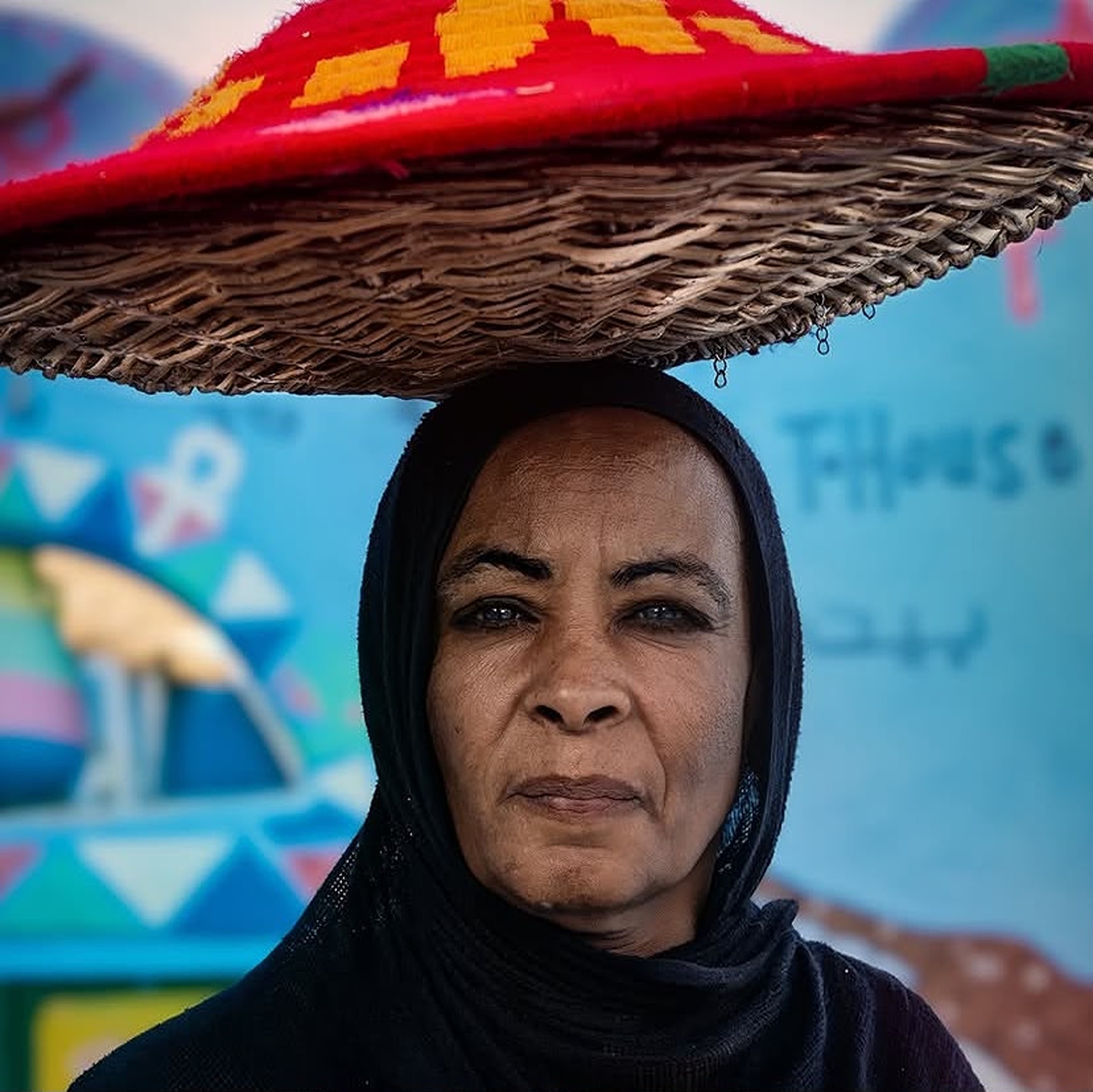
When tourists visit the gentle, sun-kissed beauty of Aswan, one of the most cherished experiences is stepping inside the warmth of a Nubian house. The door is adorned with geometric motifs of crescents and triangles, complemented by a strand of colorful beads that hangs softly against its surface. The walls of the home come alive with striking Nubian art, featuring rhythmic diamonds and geometric motifs in vivid cobalt blue, bright orange, deep black, and white. Nearby, coffee is traditionally served in a dark, matte-clay jug with a rounded base, then poured into a ceramic cup decorated with delicate palm-tree motifs. There is usually a hand-painted clay censer that rests on the right side of the tray, its surface adorned with hand-drawn chevron patterns. Much of this visual language is born from the hands and imagination of Nubian women. Across generations, Nubian women have played an essential role in shaping the homes around them. With clay, straw, color, and imagination, they turn the simplest materials into expressions of beauty and belonging. But, what if these symbols could travel beyond Nubia’s homes and villages? What if their patterns, colors, and stories…