

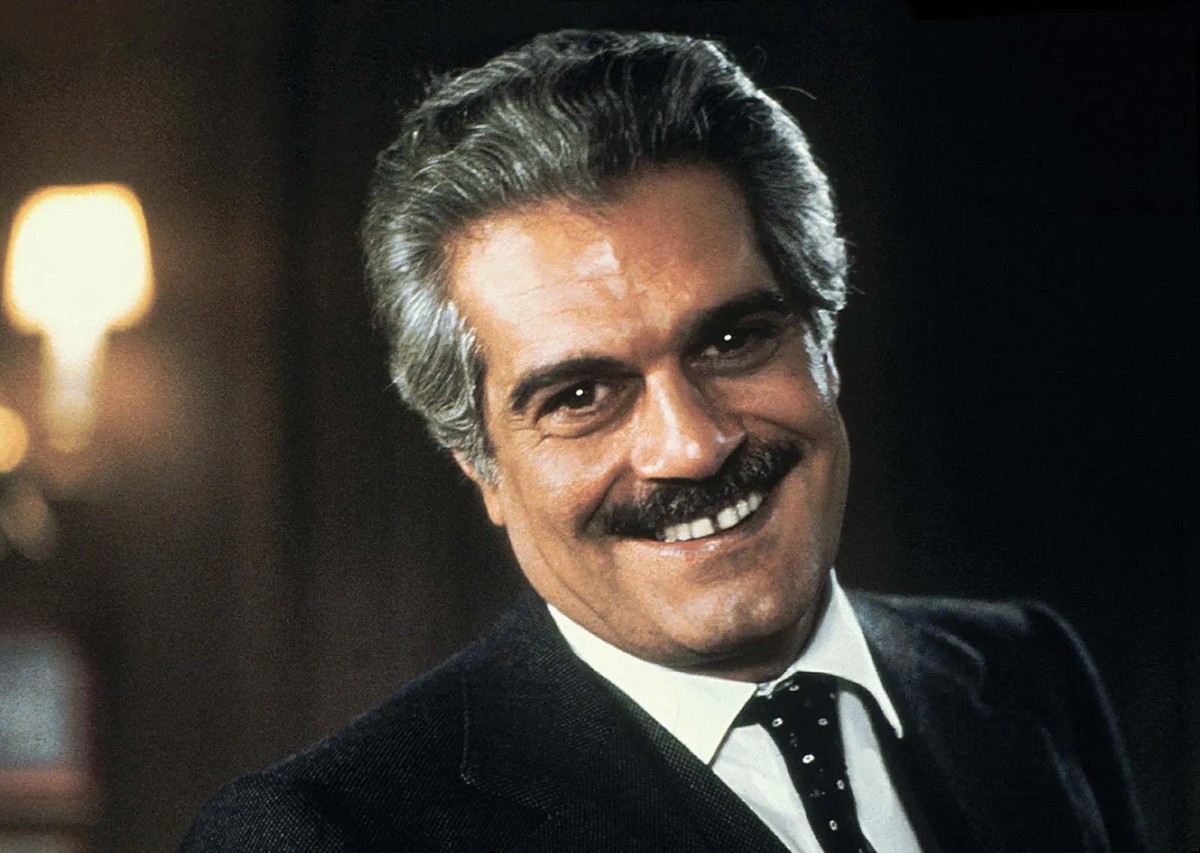
Pitch-black hair. Warm brown eyes. Tanned skin. A tangle of curls. These are merely a few of the rigid boxes that Arab and North African actors are routinely forced into when Hollywood comes calling for a casting call.
When casting becomes focused on checking superficial features to represent a particular region, rather than reflecting the complexity and depth of its people and their stories, how can we expect audiences to look beyond these same stereotypes, recognizing them as individuals with complex identities and experiences rather than as constructed characters on screen?
Studios in the West have historically treated the Middle East, North Africa, and parts of South Asia as a single interchangeable aesthetic blob, ignoring distinct cultural, linguistic, and historical identities.
Even when an actor breaks through to lead a massive global hit, the industry’s structural typecasting often persists, making subsequent non-stereotypical roles remarkably difficult to secure.
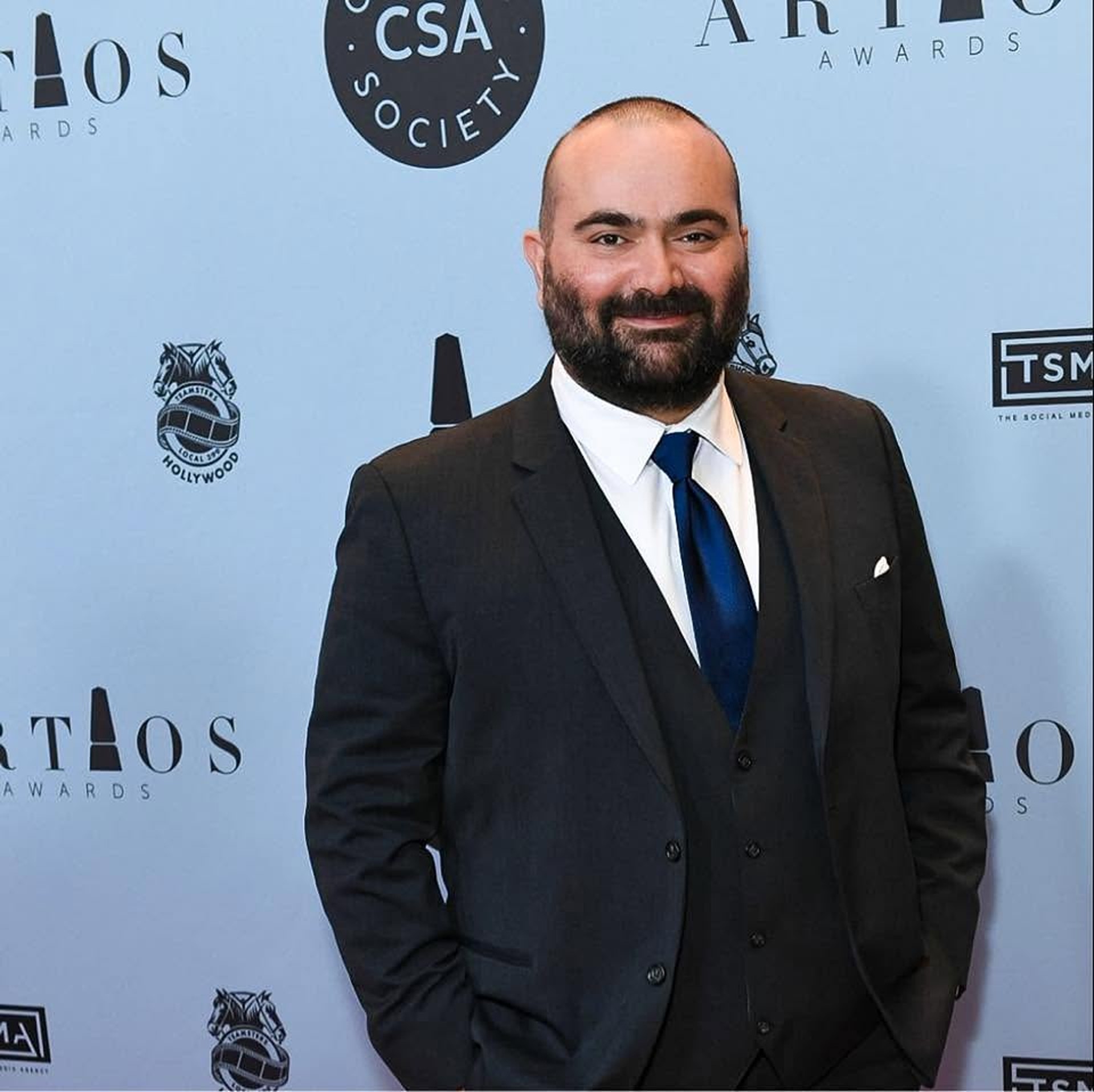
Hamzah Saman, founder of Arab American Casting and a former member of the casting department for Disney’s 2019 live-action Aladdin, works to help MENASA (Middle Eastern, North African, and Southeast Asian) talent break through Hollywood’s traditional barriers by acting as a bridge between actors and the major industry decision-makers.
The experience of Mena Massoud, an Egyptian-Canadian performer who underwent a global casting process before securing the lead role in Disney’s live-action Aladdin (2019), illustrates the persistent prejudices and barriers that continue to exist within the entertainment industry.
Out of thousands of hopefuls, Massoud won a role that grossed over a billion dollars worldwide. Yet, the stark reality of Hollywood’s casting pipeline revealed itself shortly after the premiere. In interviews following the film’s massive success, Massoud candidly shared that despite starring in one of the biggest movies of the year, he couldn’t even secure a single audition for new roles for a long time.
The industry that crowned him a Disney prince was simultaneously unwilling to see him outside of stereotypical, narrow casting parameters.
Having worked in the industry for many years, Saman has witnessed both the progress and setbacks of Middle Eastern representation on screen, experiences that have shown him that appearance alone should never be the deciding factor in casting.
Below is a conversation with Egyptian Streets about his journey toward greater representation of Middle Eastern talent and his vision for the future of the industry.
What did you encounter as an Arab actor that made you realize the problem wasn’t necessarily individual talent, but the structure surrounding that talent?
I started acting professionally in 2006 while studying acting. Casting breakdowns were often very specific about ethnicity and appearance, but I rarely saw myself in the characters being described. I sometimes found more opportunities being considered for Hispanic or white characters.
When a role specifically called for an Arab actor, it was often a terrorist, murderer, or another threatening character. I took work because I needed to make a living, but I wanted opportunities to show my range.
There was no home for me as an Arab actor. I knew a few other Arab actors and small groups, but I couldn’t find a broader community consistently connecting us with meaningful opportunities.
Working on films by Arab filmmakers, including Beirut Hide and Seek, showed me what was possible. Those roles challenged me and gave me confidence to continue. Yet those projects were infrequent, and I also saw filmmakers struggle to find the cast they needed.
That disconnect stayed with me: actors were looking for work while filmmakers were looking for actors, and they weren’t finding each other. I felt we needed to organize and build a place where those connections could happen. That became my reason for creating Arab American Casting.
You’ve worked on projects including Argo (2012), Aladdin (2019), and He Named Me Malala (2015). How did working inside larger productions change your understanding of the gap between Hollywood’s desire for Middle Eastern talent and its ability to actually access that talent?
On Argo (2012), I saw how much work went into reaching communities to find people for the film. I remember radio promotions and outreach to Iranian, Arab, and other Middle Eastern communities. Meeting so many people on set helped spark the idea for Arab American Casting.
Toward the end of production, after getting to know the team, I was asked to help find Iranian-language speakers. That experience showed me how important language was to casting. An actor’s appearance alone could not tell you whether they could speak naturally in a scene or connect authentically with the other performers.
I also remember Ben Affleck speaking with background actors, asking where they were from and learning more about them. Some were given speaking opportunities. Seeing that was exciting because it showed how someone already on set could have much more to offer than the role they were originally hired for.
He Named Me Malala (2015), showed me something else. I was brought in through another casting director who reached out to Arab American Casting for help finding Middle Eastern talent.
It was not the first time she had contacted me. When she needed Arab or Middle Eastern actors, she knew she could come to me and I could help reach the right people. That showed me the value of having a trusted specialized network already in place before a production begins searching.
That became even clearer while working on Aladdin (2019). I remember hearing that Arab American Casting could have been useful to the production if they had known about us earlier. That stayed with me. It made me realize that building the network was only half the job. I also had to make sure casting directors, producers, and filmmakers knew where to find us.
What all three experiences taught me is that Hollywood can genuinely want culturally specific talent and still have difficulty accessing it. The talent may already be there, but if the relationships, language knowledge, and community connections are not in place, the search becomes much harder.
That is what I wanted Arab American Casting to solve: build those relationships before they are needed, so when a production is looking for the right actor, there is already a bridge to the community.
What was missing from the existing casting system that made you decide to build Arab American Casting?
I started Arab American Casting as a Facebook group in November 2011. The idea was simple: if Arab and Middle Eastern actors could come together in one place, filmmakers looking for that talent would finally know where to find them.
Soon after, I built a website where actors could join for free, upload their headshots, résumés, and videos, and connect with each other. I never wanted actors to pay to be seen. The filmmakers are the ones hiring, so that is where the business should come from.
As the community grew, filmmakers started coming to me looking for very specific talent, such as Arabic speakers, certain dialects, accents, and cultural backgrounds. I even kept my own lists because I knew who could actually do what they were asking for.
Then I realized the network was only part of the solution. What was missing was a casting director who understood the community and could run the casting professionally. So I started casting films, student projects from USC, UCLA, and AFI, pilots, commercials, and other productions.
That became the model for Arab American Casting. I’m not selling actors or selling a list. I’m providing a professional casting process.
And because I came from acting, one thing is very important to me: the audition room should feel safe. Actors should be able to take chances, improvise, ask questions, and do their best work. Even though the filmmaker hires me, I want the actors I work with to feel respected and want to work with me again.
Do you think North American casting still treats “Arab,” “Middle Eastern,” “Muslim,” and “North African” as interchangeable categories when they are actually incredibly diverse?
Yes and no. I think the industry has become much more educated, but those identities are still sometimes placed into one broad category.
They are not interchangeable. Muslim describes a religion. Arab is a cultural and linguistic identity. Middle Eastern and North African describe enormous regions made up of many different nationalities, religions, languages, ethnicities, and cultures. Not every Arab is Muslim, not every Muslim is Arab, and not everyone from the Middle East or North Africa is Arab.
That matters enormously in casting. If you are casting a Palestinian character, for example, sometimes it is not enough to find an actor who speaks Arabic. The filmmaker may need someone from a particular region or someone who naturally speaks a particular dialect.
The same is true across Lebanon, Egypt, Morocco, Iraq, Syria, and many other places. Even within one country, the language, accent, culture, and lived experience can change from one area to another.
For casting directors who are not from these communities, I don’t think the answer is that they are expected to know everything. None of us knows everything. The important thing is to ask questions, build relationships with the community, and bring in the appropriate language or cultural expertise when necessary.
I have an advantage because I am Arab; I speak, read, and write Arabic, and I have spent almost 15 years building a professional network of Arab and Middle Eastern actors around the world through Arab American Casting.
I can recognize many of those linguistic and cultural differences, and when something becomes very specific to a region or community, I know to go directly to people from that community rather than guess.
That is why specialized casting matters. Sometimes a production can spend weeks trying to find and understand a community from the outside, when the relationships and talent already exist.
I have also seen Hollywood become much more willing to learn. For me, that is the important part. We cannot assume we understand another person’s identity or culture simply because we recognize a broad label. We have to ask, listen, and get specific.
So are people still sometimes put into one box? Yes. But I also see the industry trying to do better. The goal is not to shame people for what they do not know. The goal is to give them the relationships, knowledge, and access they need to cast it correctly.
This version sounds more like a casting director who has actually done this work for years, rather than someone giving a general diversity answer.
Why should North American talent agencies be collaborating more closely with specialized casting organizations like Arab American Casting?
Because we often reach talented Arab and Middle Eastern actors who may not yet be represented by the agencies a production normally contacts.
A specialized casting organization already knows the community—who speaks Arabic, who has a specific dialect, who is trained, who is local, and who may be ready for a bigger opportunity.
I’m not trying to replace talent agencies. Agencies and specialized casting organizations should complement each other. We can help them discover actors they may not otherwise find, and they can help those actors build stronger careers.
The goal is simple: widen the pipeline so good actors are not overlooked just because they are outside the usual network.
Are Arab actors still disproportionately being called in for roles such as terrorists, cab drivers, immigrants, soldiers, doctors, or villains rather than being considered for ordinary American characters?
Yes, although I think the situation is more complicated today than it was when I started acting.
When I began, many of the roles specifically written for Arab actors were terrorists, villains, or other threatening characters. Today there is more awareness and more effort to show Arab and Middle Eastern people as complete human beings, but the old patterns have not disappeared completely.
There has always been typecasting in Hollywood, and that is not unique to Arab actors. Casting often begins with a type because filmmakers are trying to fill a specific role. The problem is when an actor’s ethnicity becomes the entire type and starts limiting everything they are allowed to play.
I don’t think the answer is to eliminate typecasting completely. The answer is to stop making “Arab” the whole type.
An Arab actor should absolutely be considered for culturally specific roles when authenticity matters. But that same actor should also be considered for the lawyer, the teacher, the neighbor, the romantic lead, the parent, the business owner, or the best friend when ethnicity is not central to the story.
An Arab American actor should not have to wait until a breakdown specifically says “Arab” before being considered.
For me, the goal is simple: specificity when culture matters, and openness when it doesn’t.
What infrastructure do you think is still missing, such as databases, agents, casting directors, language specialists, regional networks, training, or something else?
I think many of the pieces already exist. What is still missing is a stronger professional system connecting them.
We need better networking between Arab and Middle Eastern actors, filmmakers, casting directors, writers, producers, agents, and managers, not only at festivals or when somebody suddenly needs an Arab actor, but as an ongoing professional community.
We also need stronger education on both sides. Actors need access to serious training, career guidance, and professional materials. Filmmakers and casting professionals need better access to cultural knowledge, language and dialect expertise, and people from the communities they are trying to portray.
We also need stronger development pipelines for Arab and Middle Eastern writers and filmmakers, because representation will not grow if the stories themselves are not being written, developed, and produced.
And we need credible organizations that can connect all of those pieces professionally and ethically.
That is what I have tried to build with Arab American Casting since 2011. We are not simply maintaining a list of actors. We connect filmmakers with talent, understand language and cultural specificity, maintain relationships with the community, and work within a professional casting process.
For me, the missing infrastructure is not another database. It is a trusted bridge connecting talent, training, representation, storytelling, and employment.


Comments (0)