


An Egyptian-Italian archaeological team has uncovered the remains of a sizable prehistoric settlement, possibly 8,500 years old, in Egypt’s Western Desert, officials announced Sunday, 29 November.
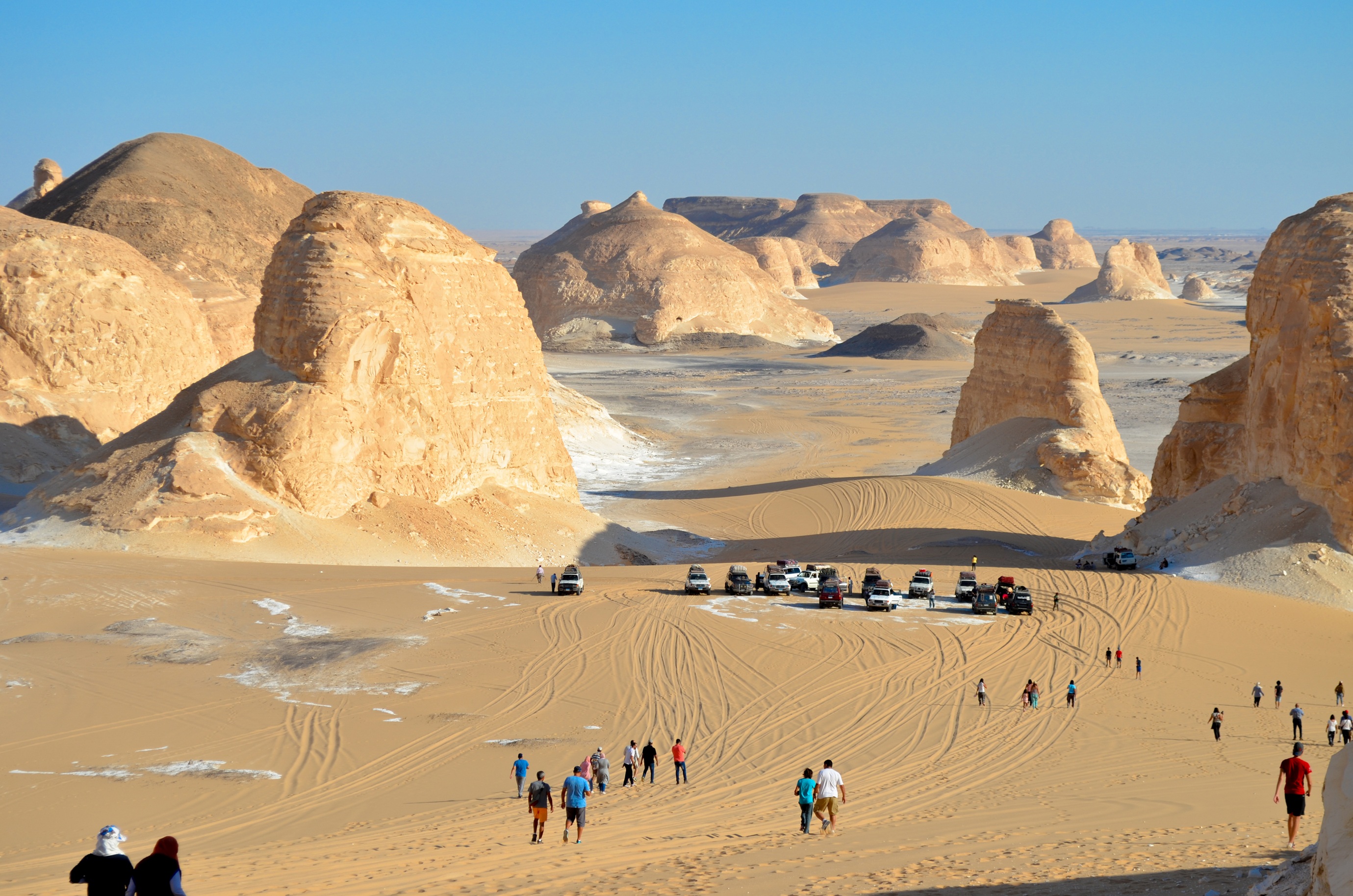
The site, on a plateau at the eastern edge of the Farafra Depression, is among the largest prehistoric settlements documented in the region. Early analysis suggests an organized community rather than a temporary camp. If the dating holds, it could show how people settled the area as the Sahara turned drier.
Researchers recorded about 200 features, including stone structures, hearths and dense clusters of stone tools. Giulio Lucarini, who directs the mission, said comparisons with finds in Farafra’s White Desert and in the Dakhla and Kharga oases helped establish a tentative date in the middle of the Holocene epoch.
Hisham El-Leithy, secretary general of the Supreme Council of Antiquities, said the settlement’s size and layout point to repeated, sustained habitation. Geological studies found signs of a wetter climate than today’s, including shallow depressions and ancient lake deposits, and local stone was available for building and toolmaking, according to the mission. Sherif Fathy, the tourism and antiquities minister, said the find sheds light on how ancient communities adapted to climate change.
The team began fieldwork on the plateau, an area not previously studied, in 2023, and its 2025 season added excavations and geological analysis. Italian archaeologists have worked in Farafra since 1987. Earlier research traced village life in the oasis to roughly 7000 to 6000 B.C. Occupation shifted toward a more mobile pattern after about 5000 B.C., as conditions worsened. The mission said it will continue its research with the Antiquities Council.






Comments (0)