


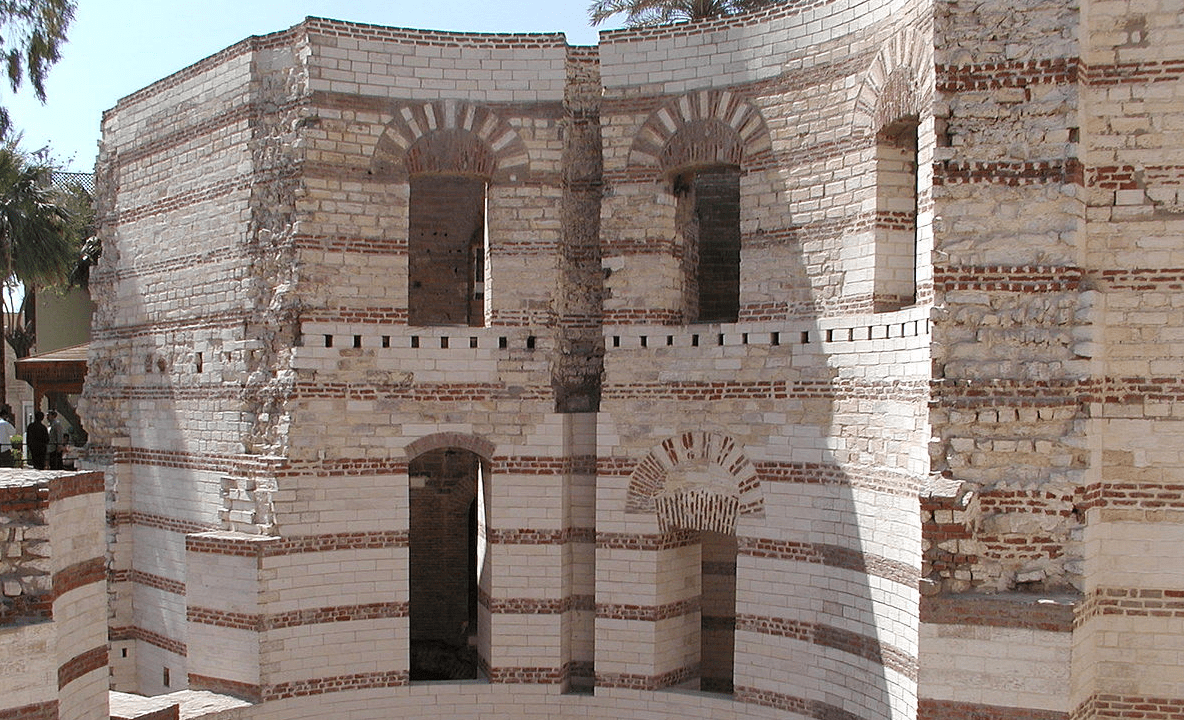
The Fortress of Babylon echoes with memory; limestone and mudbrick lock together, footsteps wander narrow halls, and a collective nostalgia is created in the silence. Sitting on the pinched streets of Old Cairo, the fort is cupped by culture; it is considered a distinguished product of Egypt’s Roman era, and an illustrious monument in Cairo’s universal architectural history. Although fortresses are known as houses of violent history, Egypt’s Babylon was not intended to be a fort at its inception. Initially, the site was used as a harbor entrance by the Ptolemies for a canal linking the Red Sea to the Nile between 246 and 46 BC. The canal was attempted as far back as the twenty-sixth Pharaonic dynasty, with little success, but saw prominence when re-established under Persian rule between 521 and 486 BC. The fort itself, however, came into being under the commission of Roman Emperor Tarjan in 107 BC. Scribes of the time write that “Tarjan went to Egypt and there built a fortress with a powerful and impregnable citadel, having an abundant supply of water.” It is believed the fort’s foundations were initially set by Nebuchadnezzar, king…