

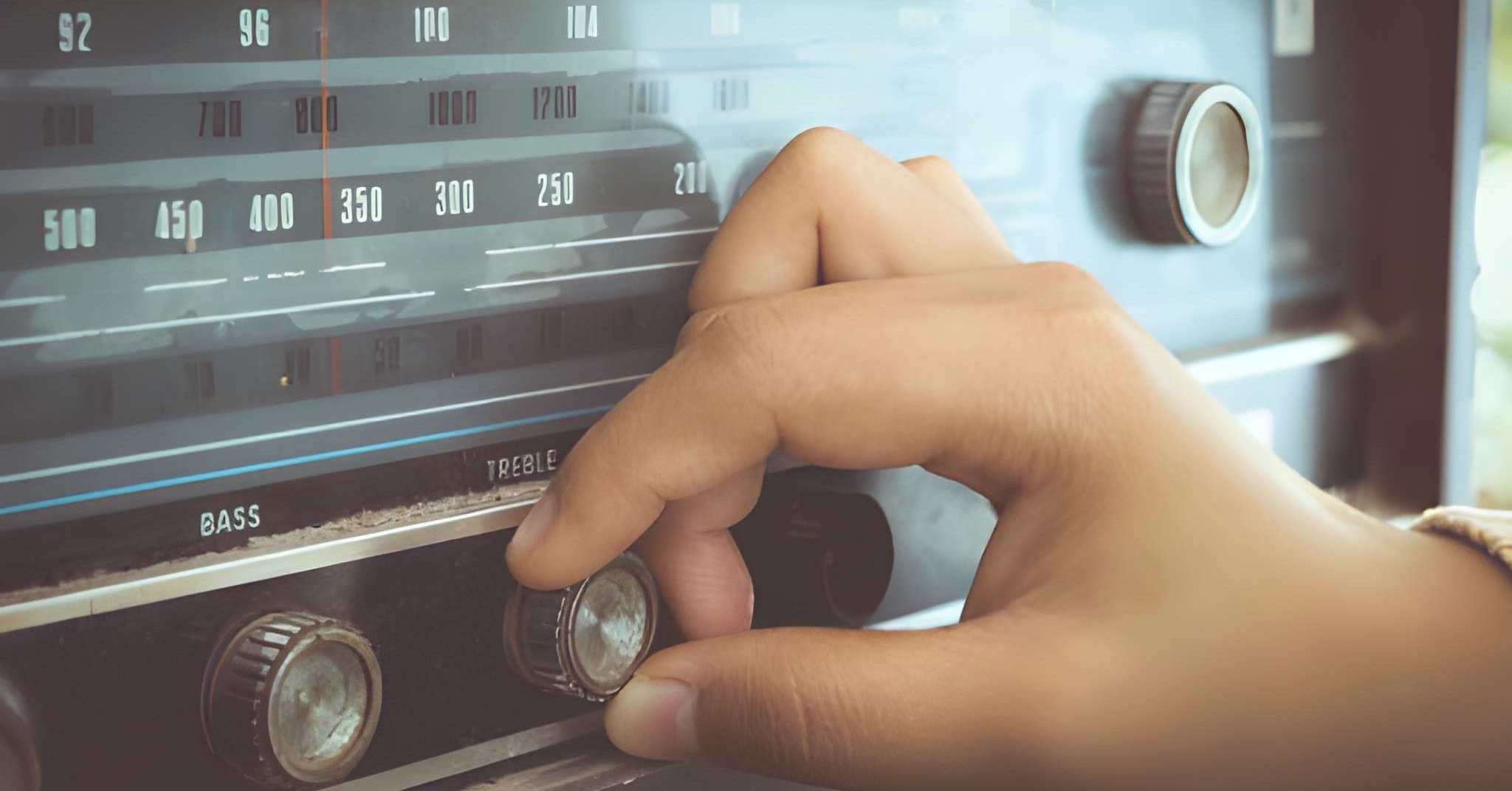
My grandmother Zeinab’s radio sent me to sleep every night for as long as I can remember. Ever since I could sleep away from my mother, and in my grandmother’s room, the radio played quietly in the background. In the darkness and silence of a room meant for sleep, the radio’s faint green light illuminated the rug by the bed, and the familiar voices of Egyptian actors and singers, Amina Rezk, Fouad el-Mohandes, or Mohamed Kandeil hummed.
I would lie in bed and drift toward sleep as voices spilled into the dark. Before I knew the names of any actors or broadcasters, before I understood the stories they told, my grandmother’s radio became the soundtrack of my childhood.
For millions of Egyptians, that radio was far more than an appliance. It was a companion, a teacher, and an entertainer. Its influence stretches back to 1927, when Habashi Gerges established the first Egyptian national radio station, using leftover World War I equipment. Following in his footsteps, Farid Qutri launched Radio de Farid, an Egyptian-made private radio station in 1929 with his wife.
In May 1934, Egypt granted a British telecommunications and engineering company, Marconi, the concession to establish the first official governmental wireless radio station. Private station owners had a one-year grace period before shutting their stations down. In the same year, the first official broadcast crackled through the air with the words that would become immortal, “Hena El Kahera,” meaning This is Cairo.
The first grand radio building rose on Al-Sharifeen Street, Downtown Cairo, also in 1934. Long before television screens or social feeds, the radio carried news, drama, comedy, and prayer into Egyptian homes, binding families in shared anticipation, through the harsh winds and the gentle breezes.
While towering cultural figures like Umm Kulthum, Taha Hussein, Naguib Mahfouz, Tawfiq al-Hakim, Abbas al-Aqqad, and Sheikh al-Baquri played on the radio, the technology was far greater than entertainment and more of a national institution.
For my grandmother, the radio remained an intimate experience. A comfort. A beam of sound that softened the edges of life. In Arabic, the word ‘wanas’ is prevalent, referring to familiar companionship – for many Egyptians, the radio delivered a wanas in the background of everyday life.
In her room, as I lay half-asleep, the programs blended into one another. Morning songs like “Al-Dandarma,” meaning ice cream, “Ouf Al-Aseel,” meaning spare the honorable one, and “One Thousand and One Nights” became my lullabies. The voices she loved wove themselves into my dreams.
My grandmother told me how, as a young girl, she eagerly waited for Ramadan because the holy month turned the airwaves into a season of storytelling, with broadcasts being her celebration.
“We knew the month had truly begun when the voices returned,” she told me.
When she spoke about those nights, her memories unfurled like a map. She remembered the reverent hush that filled the room whenever the great Qur’an reciters, Sheikh Mohamed Rifaat, Sheikh El-Naqshbandi, and Sheikh Nasr El-Din Tobar, came on the air.
Yet the golden age of Egyptian radio was not just about Ramadan. Her own childhood favorites included “Mawhoub wa Salama,” starring Fouad El-Mohandes and Abdel Moneim Ibrahim, whose comedic timing she adored. She also loved Sa’a L Albak (A Hour for Your Heart, 1953), a program that redefined comedic broadcasting, starring Fouad El-Mohandes, Khairiya Ahmed, and Abdel Moneim Madbouly.
Other notable shows included Alf Leyla w Leyla (One Thousand and One Nights, 1955) by the pen of Taher Abu Fasha and the direction of Mohamed Mahmoud Shaaban. The series, she said, made the nights feel longer. Gozek ya Hanem (Your Husband, Ma’am), Rehlet El Karawan (The Nightingale’s Journey, 1958), and Hekayet Hama (The Story of a Mother-in-Law) were some of her favorites.
But nothing captured all Egyptians’ hearts like the Fawazeer, known as Ramadan riddles that became almost a competitive sport. Written first by the poet Bayram Al-Tunisi and brought to life by the distinctive voice of broadcaster Amal Fahmy, they invited entire families to argue, laugh, and guess in unison.
When I think of Ramadan now, the lanterns, the clatter of dishes, and watching animated Nubian figure Bakkar on television, I also hear the radio. I hear my grandmother’s breath steadying as sleep finds her. Radio once connected millions across Egypt and the Arab world, but for me, it connects me to my grandmother and shares the quiet magic of voices in the dark.
Comments (0)