
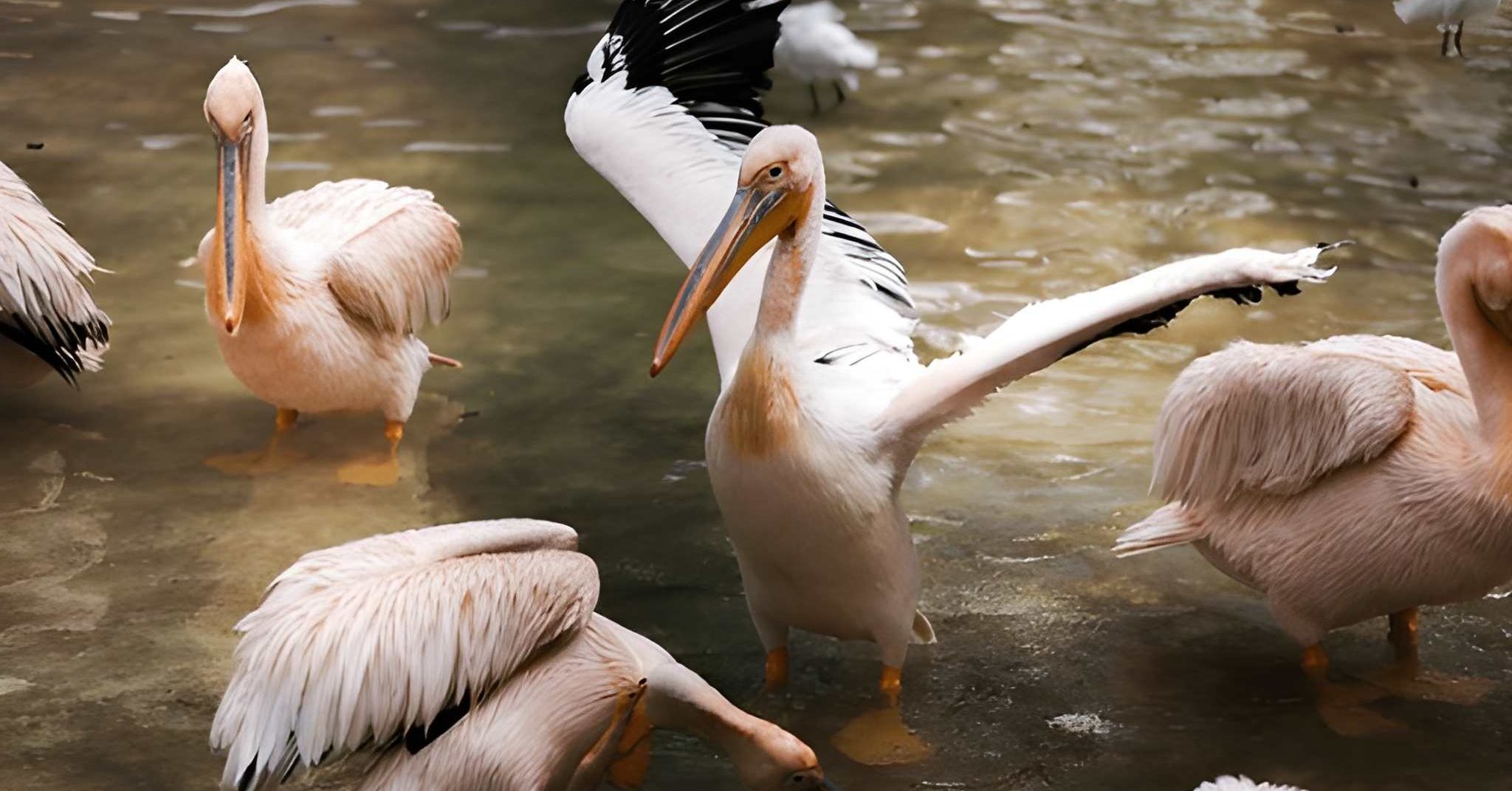
Along the Ain Sokhna road, a desert highway where tankers and weekend travelers rumble toward the Red Sea, a row of fish shops became an unexpected and unsettling attraction. In mid-November, officials found migrating pelicans captured and displayed outside fish shops for tourists, some caged or bound, as passersby stopped to stare.
Pelicans are among the world’s largest water birds, instantly recognizable by their long bills and elastic throat pouches, which they use to scoop fish from lakes, rivers, and coastal waters. Highly social and long-lived, they travel in large flocks and rely on wetlands for feeding, rest, and breeding, making them especially vulnerable to habitat disruption along their migratory routes.
For conservationists, the scene struck a nerve. The migratory bird, the Great White Pelican, listed as Least Concern globally by the International Union for Conservation of Nature (IUCN), meaning they are not currently considered at risk of extinction, was intercepted mid-journey and put on view, causing alarm across Egypt’s environmental community.

The acting Environment Minister, Manal Awad, ordered the immediate confiscation of any birds found in captivity and dispatched field teams to investigate the trapping routes. She stated that hunting, killing, capturing, trading, or possessing protected birds and wildlife is illegal under Article 28 of Environmental Law No. 4 of 1994. The ministry further calls citizens to report any suspected violations involving protected or endangered species so that authorities can respond quickly.
.jpeg)
To many Egyptians, pelicans are spectacular but unfamiliar birds: seen fleetingly overhead, or in the rare quiet dawn at a northern lake. But their ecological role is both subtle and significant.
Pelicans maintain natural balance, Hussein Rashad, director of the Ashtoum El-Gamil Reserve, explained, noting their particular role in controlling insects and supporting the health of aquatic ecosystems in lakes and coastal areas.
Pelicans, along with raptors, storks, and ibises, migrate through Egypt along the Rift Valley–Red Sea flyway, the world’s second most important route for soaring birds. Each year, more than two million birds from 37 species travel this corridor between Eurasia and Africa, including globally threatened species such as the Egyptian vulture, steppe eagle, pallid harrier, and red-footed falcon.
With wingspans that can stretch nearly three meters, the pelican traverses this route in graceful spirals. Both the Great White Pelican and the Near Threatened Dalmatian Pelican depend on the country’s lakes, coastal wetlands, and lagoons for rest and feeding.
While illegal capture of migratory birds is not new to Egypt, pelicans, given their size, protected status, and limited breeding populations, raise particular concern.
As indicator species, their presence and abundance reveal the health of these ecosystems, with declines often signaling pollution, overfishing, or habitat degradation.
These wetlands are both ecological lifelines and cultural landmarks. In the Nile Delta, marshes appear in tomb carvings dating back 4,000 years, where pelican-like birds are shown among flocks in precise, elegant profile.
In response to the shocking scenes of captured pelicans, authorities said they would increase patrols, work closely with local police to enforce wildlife laws, and collaborate with community leaders to curb the illegal trade in birds.
Comments (0)