


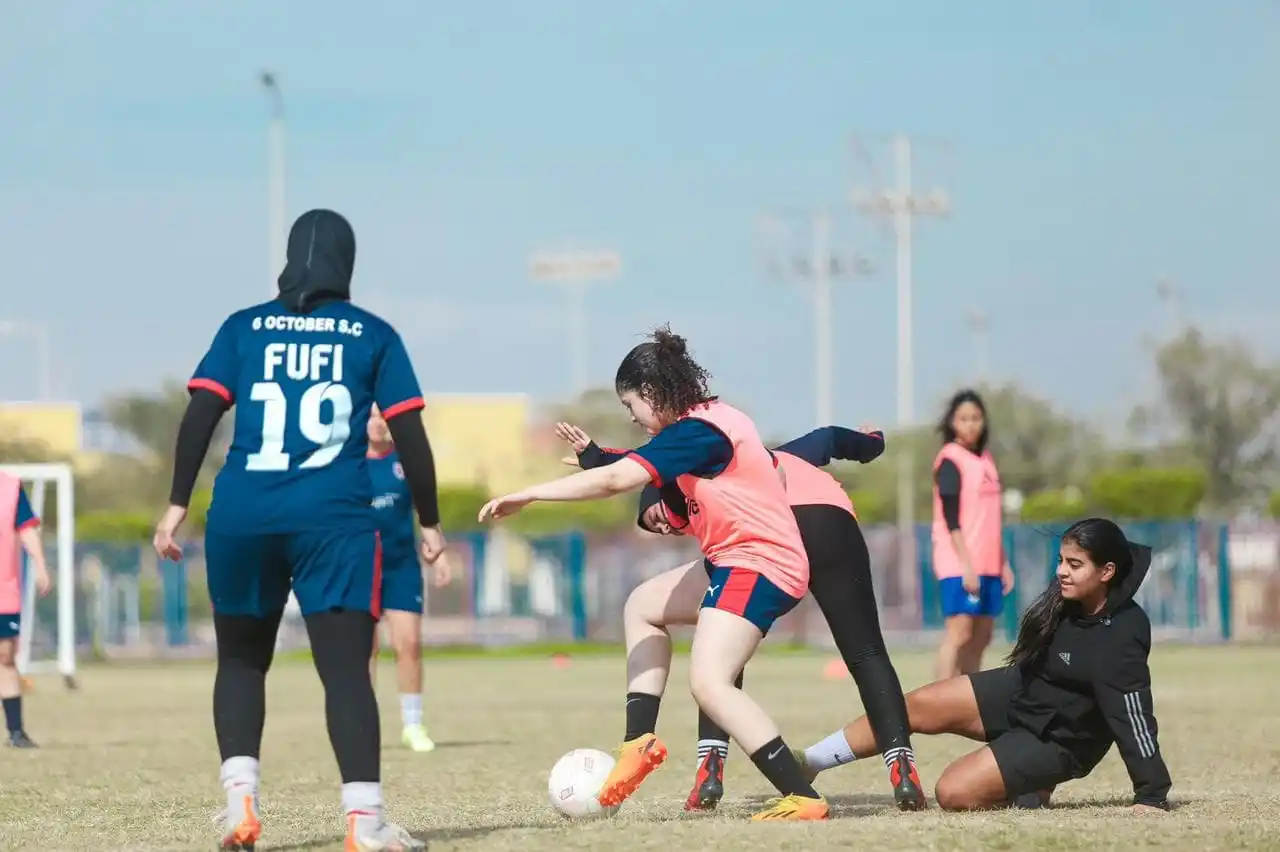
Turning a passion into a career is not easy, especially when opportunities fail to present themselves. For many Egyptians, especially younger ones from lower-income families, the path is constrained long before talent or ambition can be tested. Economic realities and resource gaps hinder structured engagement in hobbies.
Many balance school, work, and household responsibilities, leaving little room for leisure or experimentation. With no spare time or money to invest in lessons or tools necessary for hobbies, sports, music, art, or crafts, they are sidelined in favor of degrees perceived as safer routes to stable employment and income.
The trade-off is driven less by preference and more by necessity, as cost acts as a decisive barrier.
The economics of leisure
Various organized hobbies typically require upfront and ongoing costs. Sports coaching, music or dance lessons, equipment, studio time, and club memberships are costly in relation to average incomes.
While Egypt’s public minimum wage rose from about EGP 2,600 (USD 55) a month in 2009 to EGP 7,000 (USD 147.9) in 2025, hobby-related expenses remain steep by comparison.
Renting a sports court averages EGP 330 (USD 7) per hour, and a monthly gym membership costs around EGP 1,011 (USD 21.4) depending on the area and chain type. Even entry-level creative equipment can be out of reach: the cheapest new classical guitar costs about EGP 3,000 (USD 63.4), while a basic audio interface, which helps record and play high-quality sound on a computer or mobile device, is priced at roughly EGP 1,350 (USD 28.5).
“I used to take tennis lessons last year, a monthly subscription for 4 classes cost EGP 1,700 (USD 36),” Ahmed Gamil, a 23-year-old software engineer, told Egyptian Streets.
The club where he used to practice had rackets and balls, but his coach emphasized that the rackets “weren’t the best,” encouraging him to invest in a better one for EGP 1,300 (USD 27.6). When he wanted to practice without the coach, he would rent a court for EGP 150 (USD 3) per hour and practice with a friend.
“I really enjoyed playing tennis and could do it for hours,” Gamil said, noting that rising costs and a busy schedule with work and house chores eventually forced him to quit.
Drawing and painting lessons are similarly costly. According to Maya Abdelrahman, a 19-year-old freshman in the Faculty of Pharmacy, a basic session averages EGP 500 (USD 10.6), while a one-session beginner course can cost up to EGP 750 (USD 16).
“An online painting course might be around EGP 600 (USD 12.7),” she said. “Once you master one technique, you need more courses to learn others, on top of brushes, acrylic paints, and canvases—prices vary depending on quality.”
Without financial flexibility, those interested in structured hobbies might postpone or abandon participation. Even in sports, where community clubs exist, registration fees, equipment, and transportation costs can make sustained involvement untenable.
The price of participation
National initiatives, such as the National Strategy for Youth and Sports (2025–2032), aim to expand youth programming by investing in young people’s health, skills, education and abilities by promoting sports as a lifestyle, enhancing governance, targeting skill development and national participation in initiatives such as “Bike, Your Health,” “30-Day Challenge,” and “1,000 Girls, 1,000 Dreams.”
However, access to sports, arts, and creative fields remains skewed toward those with greater means and connections as well.
Turning a hobby into a profession typically requires mentorship, exposure, and informal connections that lead to auditions, exhibitions, or internships.
Middle- and upper-class youth are more likely to benefit from such social and cultural capital, where opportunities multiply, while those from low-income backgrounds often navigate these fields alone, without socioeconomic support.
A 2025 Reuters investigation into a grassroots women’s wrestling club in Mansoura experienced the lack of support firsthand. The club operated with little institutional support, relying on coaches and families to cover costs.
Despite evident talent, limited funding and facilities constrained opportunities for the girls involved, illustrating how resource scarcity can limit sports access for talented but low-income youth.
In Egypt, class-based norms and social perceptions strongly shape who has the opportunity to engage in hobbies or organized activities. Families with higher socioeconomic status are more likely to encourage children to take music lessons, join sports clubs, or attend arts programs because they can afford the costs, have social networks that value these activities, and perceive them as worthwhile investments in cultural or professional capital.
Gamil’s family, for example, was supportive.
“My mom actually bought me my new tennis racket,” he said, noting that she wanted him to pursue the sport for its physical benefits.
Conversely, lower-income families often prioritize basic survival needs such as food, housing, and healthcare, and education, including school fees and studying, over pursuing hobbies, seeing extracurricular pursuits as optional or even “luxuries.” This creates a class divide in access to skill-building and cultural activities, reinforcing broader social inequalities.
Inequality beyond income
Gender norms further complicate access, especially in more conservative or rural areas of Egypt. Social expectations often discourage girls from participating in sports or attending public arts programs, due to concerns about safety, reputation, or appropriateness.
Even when resources exist, girls may face familial or community restrictions, fewer role models, or limited facilities designed for female participants. For example, sports programs or music schools may be physically inaccessible or culturally unwelcoming for girls, which reduces their participation relative to boys.
As a young woman, Abdelrahman struggled to find an affordable mixed martial arts (MMA) studio with a female trainer, but most importantly, her family discouraged her from continuing.
“‘It’s not like you’re going to go pro,’ my father would say,” she shared. “‘Just focus on your studies and painting skills,’ he would tell me.”
Her experience exemplifies a broader pattern in which access to hobbies is closely tied to gender as well as class and income, with consequences that extend far beyond leisure.
Skills nurtured through sports, arts, and other activities can open doors to careers, scholarships, social mobility, and self-expression.
Without equitable opportunities, these pathways remain concentrated among the privileged, reinforcing broader inequalities in education, employment, and cultural participation.




Comments (0)