


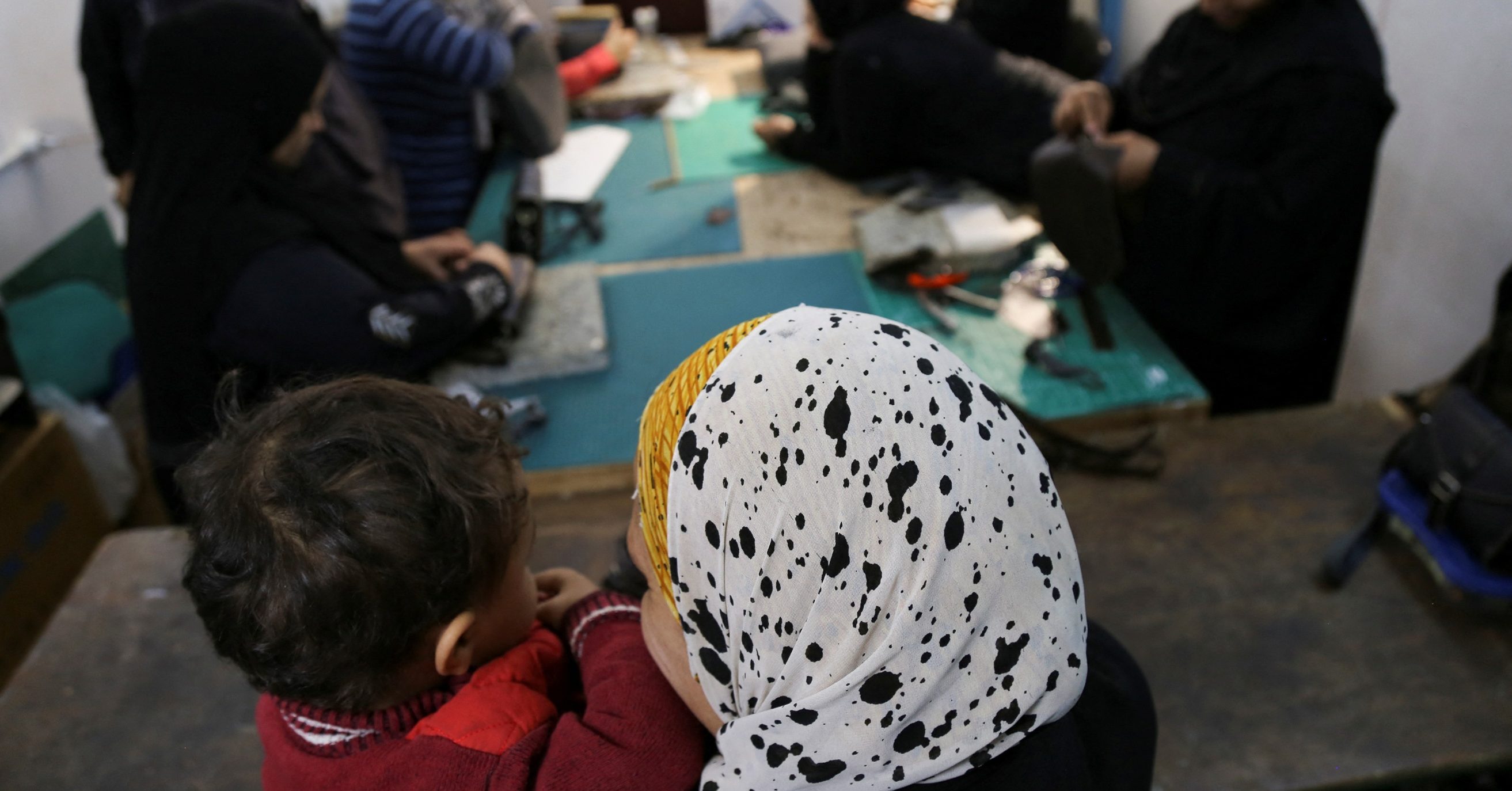
Journalist at Akhbar el-Yom, Nawal Mostafa, currently editor-in-chief, visited Qanater al-Khairia women’s prison to interview drug smugglers on death row one day in 1990. Walking between the grim walls, the laughter of children playing in the prison yard caught her attention. When she asked the prison’s commanding officer about them, she learned they were the children of female inmates. The revelation alerted her to a problem she had been trying to solve ever since.
That same year, Mostafa founded the Children of Female Prisoners Association (CFPA), a non-governmental organization (NGO) dedicated to addressing the plight of children whose mothers are incarcerated.
There are no official statistics on the number of children living with their mothers in Egyptian prisons; however, the law provides aid for those who do. According to Egyptian prison regulations, a woman is allowed to keep her child with her in prison until the child turns two. The law also guarantees that pregnant inmates receive continuous medical care and suspends the execution of death sentences for women during pregnancy, and for up to two months after giving birth.
Mostafa’s early investigation brought attention to the harsh reality faced by women and their children who had never known life outside prison walls. Over the years, the organization raised societal awareness of this marginalized group and, crucially, secured their inclusion in the Ministry of Interior and prison sector budgets, ending decades of neglect.
Inside Egypt’s debtors’ prisons
In 2007, CFPA launched the “Prisoners of Poverty” campaign. Locally known as “gharimat,” they are women sent to prison for being unable to repay small loans or signed debt receipts they could not afford.
By 2021, the latest data announced estimates the number of female debtors in Egyptian prisons at around 30,000. However, NGO’s suggest that the real number is much higher.
The Association has also been a leading voice highlighting this crisis and has paid off debts for some women to secure their release. It also provides legal and economic support to prevent reincarceration, including training and livelihood programs to help them find employment after their sentence.
Additionally, the organization advocates for legal reform to amend Penal Code provisions that allow imprisonment of female debtors of up to three years, as well as penalties such as dismissal from public jobs and placement under police supervision. The Association has also led public discussions and coalitions aimed at ending imprisonment for debtors altogether.
CFPA’s work has highlighted countless victims of systemic neglect, but one case in particular crystallized the urgency of its mission.
Egypt’s first prisoner of poverty
In 2007, Mostafa told the story of Omaima Zaki, described as Egypt’s first “prisoner of poverty.” Zaki had been imprisoned for a financial debt of EGP 8,000, around USD 1,400 at the time, incurred by her late father, for whom she had acted as a guarantor.
Sentenced to three and a half years, she left behind her two-year-old daughter. Mostafa intervened, paying the debts and securing Zaki’s release, demonstrating how the incarceration of a mother can disrupt an entire family.
Freedom brought its own challenges for Zaki, including divorce, poverty, and health struggles. Through CFPA, she received psychological support, vocational training, and a chance to find a job and achieve independence.
From prison to possibility
Inspired by Zaki, CFPA partnered with the Swiss Drosos Foundation in 2013 to launch the “New Life” project. The latter trains women prisoners in small crafts and helps them secure employment or launch small businesses upon release.
The program addresses the double challenge these women face: the conditions that led to their imprisonment and societal rejection that can push them back toward crime.
“New Life,” reinforced in 2014, extends support to former prisoners and their children, assisting families marginalized by poverty and incarceration. CFPA staff carefully investigate individual cases, providing targeted aid and helping women rebuild their lives, outside and inside prison.
For more than two decades, CFPA conducted monthly visits to women’s prisons across Egypt, including Qanater, providing prisoners with medical care, food, clothing, and blankets. It also built a nursery inside Qanater prison for the children, and helped in issuing birth certificates for children whose mothers cannot afford them.
Working with medical convoys, the association attends to the health of children living in prison and supports women in establishing small enterprises, offering both material and in-kind assistance.
Mostafa’s enduring commitment to giving children born behind bars a chance at a life of dignity, justice, and hope continues to reap benefits. With the dedication of 1,000 volunteers, CFPA operates across ten governorates, supporting more than 3,200 children through 447 programs.
In September 2019, the organization launched another initiative, the Point of Light project, in partnership with the Abu Dhabi Development Bank, to help empower current or former female prisoners by providing financial aid.
At the heart of the project is the New Life 2 workshop inside Damanhour Prison in Beheira, where women are trained in handicrafts and small business skills.
The initiative also created 30 small businesses across Cairo, Giza, Qalyubia, and Beheira. In addition, the Nawal Mustafa Entrepreneurship Competition, launched in 2020, helps prisoners, their families, and children earn income and develop new ideas. In partnership with the Minister of Collective Solidarity, the competition returned in 2021, under the theme “Egyptian Handicrafts & Heritage”.
CFPA has helped improve the lives of many women in prison and their families. Economic, social, and legal support have helped them reintegrate into society.
As the organization pushes for legal reforms and advocates for keeping families together, through monthly visits, essential supplies, and public awareness campaigns, CFPA aims to ensure that prisoners and their children have access to the basic rights and support they need.




Comments (0)