

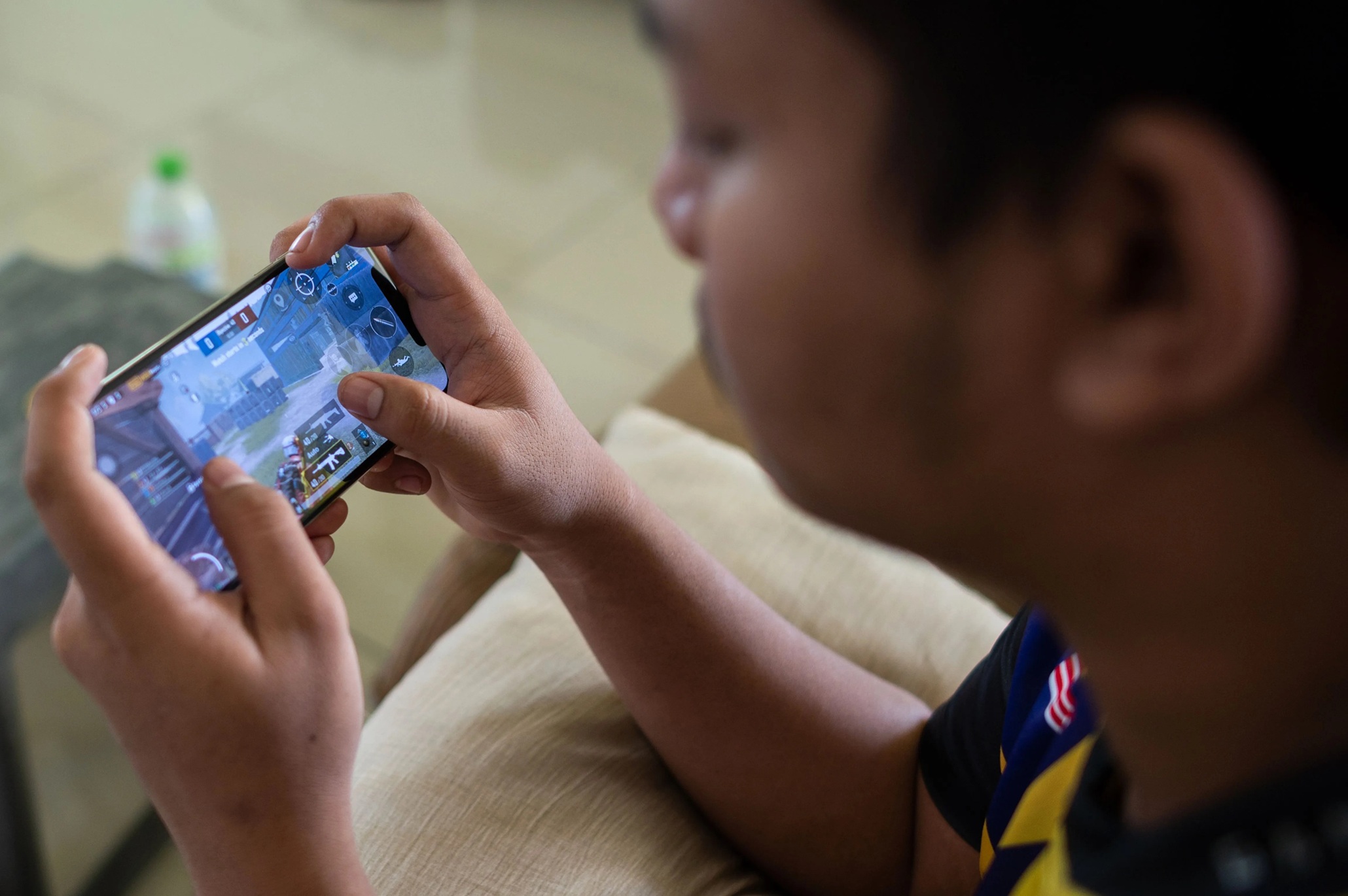
Every day in Cairo’s apartments and the coffee shops of Giza’s crowded neighborhoods, millions of Egyptians settle in at their computers or pull their phones from their pockets, preparing to game for hours. For most, gaming is a leisure activity. For a growing number, it is an activity that is hard to walk away from.
Egypt sits at the center of this compulsion, where some players can not stop gaming.
According to a 2023 report by Niko Partners, a video games business research company, Egyptians accounted for 40 million players, representing 58.5 percent of gamers across the three largest gaming markets in the MENA region, including Saudi Arabia, Egypt, and the UAE. And Egyptians are not just playing; they are playing longer than almost anyone else. Egyptians lead globally in daily gaming, averaging 1 hour and 43 minutes per day.
Play becomes a disorder
That appetite for gaming comes with a cost. As of 2021, around 3 percent of the global gaming population, estimated at 2.96 billion people, are addicted to gaming. In Egypt, according to a 2023 survey by Egypt’s Central Agency for Public Mobilization and Statistics (CAPMAS), 43.5 percent of minor gamers are considered addicted to gaming.
Gaming addiction, formally recognized as gaming disorder by the World Health Organization (WHO) in 2018, is a mental health condition characterized by uncontrollable gaming, which takes priority over other life interests and daily activities, persisting despite negative consequences on personal and social life.
Addicted players could lose track of basic needs like sleep and meals, and may struggle to interact with others offline, according to a 2023 study by Taibah University. It is common for gaming sessions to stretch to 10, 15, or even 20 consecutive hours.
Under the American Psychiatric Association’s criteria, video game addicts spend an average of 34.53 hours a week playing, according to researchers at the University of London.
The scale of the problem is significant, both in Egypt and worldwide, where the numbers are particularly striking among younger demographics. A 2022 study made in China found that gaming addiction affected 8.8 percent of adolescents and 10.4 percent of young adults aged 18 to 35 globally.
In Egypt, nearly a third of Egyptians, 30.5 percent, play electronic games, with young adults aged 18 to 39 making up 34.8 percent of players, according to the CAPMAS 2023 survey. Most gamers, 46.8 percent, play for less than an hour a day, while 3.9 percent spend more than three hours daily.
A 2023 study on gaming behavior disorder by the University of Alexandria also found that the COVID-19 pandemic was a significant driver of increased gaming time among Egyptians. The lockdowns that kept people indoors accelerated habits that, for some, proved difficult to reverse.
Not everyone is equally at risk
Egyptian research shows that certain demographics and behaviors make some players far more vulnerable to addiction than others. The study by the University of Alexandria included over 2,000 individuals, and found that 84 percent of Arab gamers, the majority of whom were Egyptian and single, started playing before the age of 12, and that daily playing hours and following gaming streamers were the two strongest predictors of addiction risk.
According to another 2022 study by Menoufia University, those most at risk were male, urban, sleeping less, and playing more hours per week, while lower socioeconomic status emerged as a protective factor.
Mental health showed a strong negative correlation with addiction severity, and the games most commonly played by those affected leaned toward violence and action-heavy, even as the reasons players gave for gaming were far more ordinary, including relaxation, amusement, and the desire to level up. Research also links excessive gaming to depression, anxiety, social isolation, and declining academic performance.
Limited tools amid an expanding market
Egypt’s response has been pushing guidance and institutional awareness efforts. Egypt’s Fund for Combating and Treating Addiction and Abuse has rolled out awareness campaigns in residential communities, with a free confidential hotline available for those seeking help. But awareness campaigns can only go so far.
The obstacles to treating and managing gaming addiction are structural. Egypt’s gaming market is not slowing down, with revenue projected to reach USD 1.54 billion (EGP 73.14 billion) by 2030, growing at a rate of 10.3 percent annually between 2025 and 2030.
Mental health infrastructure also remains limited, and gaming disorder as a distinct clinical category is still underrepresented in public health conversations. The conditions feeding addiction, including market growth and lack of awareness, are expanding faster than the frameworks designed to address it.
Until gaming addiction is recognized and treated as the behavioural health issue it is in Egypt, 40 million players will keep logging on, and the line between hobby and disorder will remain difficult to see.





Comments (0)