

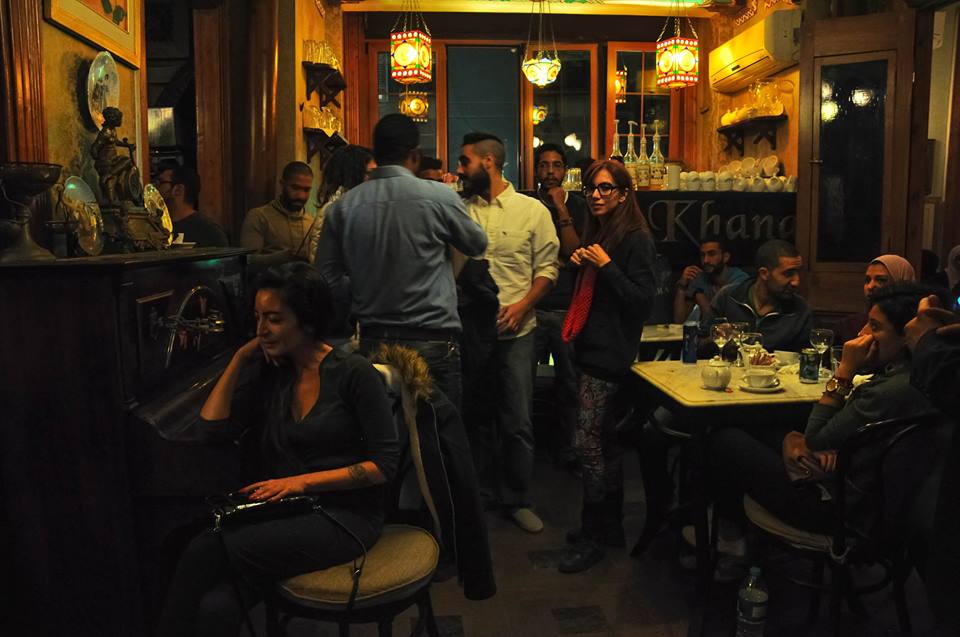
At a café in Cairo, a casual conversation between friends takes an unexpected turn. Someone says a comment was “triggering.” Another explains a breakup as the result of “toxic behavior.” A third talks about “setting boundaries.” None of them are therapists, yet the language sounds familiar, almost routine.
For many young people, particularly in higher- and upper-middle-class circles, therapy vocabulary has become the easiest way to explain emotions and relationships. Words that once belonged to private sessions now sit comfortably in everyday conversation, shaping how disagreements, hurt, and conflict are understood.
A Language Shaped Online
This shift did not start in therapy rooms. It started online.
On TikTok, emotional experiences are often flattened into quick explanations. A strained friendship becomes a lesson about boundaries. A tense relationship with a parent is reframed as emotional unavailability. A breakup is explained through attachment styles.
According to a 2022 study published in the Journal of Medical Internet Research, most mental health content on TikTok is created by non-professionals and presents psychological concepts in simplified, highly relatable ways rather than clinical terms. The study found that complex experiences are often reduced to easily recognisable labels designed to fit short-form video formats.
In Egypt, where therapy remains expensive, unevenly accessible, and still burdened by stigma, this matters. For many young people, social media becomes the first place they learn how to name their emotions. Language fills a gap long before formal care does.
More Than Just Words
For some, this shift marks a real change in how mental health is talked about. Young people are more willing to name emotional harm, call out unhealthy dynamics, and set personal limits, topics that older generations often avoided. Using therapy language also signals emotional awareness and self-knowledge, with conversations about relationships now including communication styles, boundaries, and emotional needs.
But, the speed at which these words spread comes with risks. Research analysing TikTok content shows that therapy language often circulates outside its clinical context. A 2022 study in JMIR Formative Research found that many of the most viewed videos tagged with the hashtag mental health focus on general emotional themes such as coping strategies and experiences of healing rather than clinical definitions, showing how quickly and widely psychological terms travel.
When Language Moves Faster Than Access
The popularity of therapy vocabulary exists alongside a stark reality: access to actual mental health care in Egypt remains limited. The country’s mental health system is under‑resourced, with fewer than 1,000 registered psychiatrists for nearly 100 million people, and most specialists are concentrated in big cities like Cairo and Alexandria. As a result, many Egyptians never encounter professional care at all.
A 2023 study published in BMC Psychiatry found that most Egyptian university students experiencing psychological distress did not seek professional help. The main barriers were wanting to handle problems on their own, not knowing where to go, and uncertainty about treatment options.
Public mental health services remain scarce in Egypt, and where they exist, they can be overcrowded, underfunded, or limited to specialised psychiatric hospitals. Private therapy, meanwhile, is priced well above what many can afford, with sessions in Cairo often starting several hundred Egyptian pounds, a significant burden for individuals with modest incomes, especially considering the private sector’s minimum wage stands at EGP 7,000 (USD 148).
These conditions explain that therapy language travels faster than therapy itself, because for young Egyptians, therapy words are tools to describe feelings, relationships, and conflicts that often go unspoken. They do not replace professional help, but they provide a way to communicate in a society where mental health support is limited. Used online or at home, this language is shaping how a generation talks about emotions.
Comments (0)