


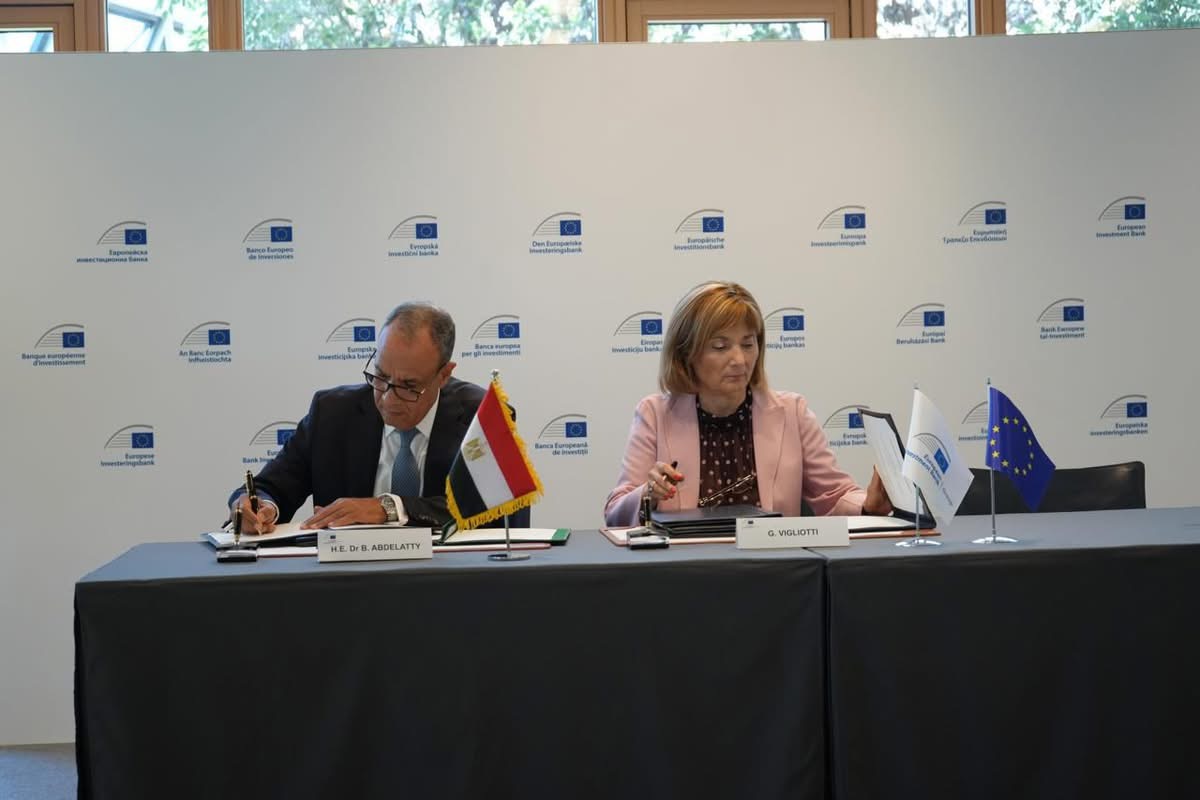
Egypt and the European Union (EU) have strengthened their strategic partnership in renewable energy with a financing package of up to EUR 690 million (EGP 39 billion) aimed at upgrading and expanding Egypt’s electricity transmission network on Monday, 15 June.
The funding combines a EUR 600 million (EGP 34 billion) loan from the European Investment Bank’s development arm, EIB Global, with grants of up to EUR 90 million (EGP 5 billion) provided by the European Commission.
Led by the Egyptian Electricity Transmission Company (EETC), the programme is designed to modernise the national electricity grid while accelerating the integration of renewable generation.
Moreover, the project seeks to enable the connection of approximately 22 gigawatts (GW) of renewable energy capacity by 2030, a level expected to supply electricity for nearly 10 million households.
As part of the initiative, state-of-the-art substations will be constructed and advanced transmission lines installed to bring solar and wind power from the Red Sea and Gulf of Suez regions into the national grid.
Expected benefits of the upgrades include reduced transmission losses, improved electricity reliability, and stronger energy security, while supporting sustainable economic development.
According to the programme structure, the EU’s contribution represents 44 percent of the total cost, with the remaining financing covered by EETC’s own resources.
The agreement builds on a broader pipeline of EU-backed renewable investment in Egypt.
It includes projects such as the Obelisk solar Photovoltaic (PV) plant with battery storage, supported by EIB financing, as well as EU-grant-supported initiatives including the Nexus of Water, Food and Energy (NWFE) platform and the Green Economy Financing Facility, which aim to mobilise private-sector investment across renewables and energy efficiency.






Comments (0)