


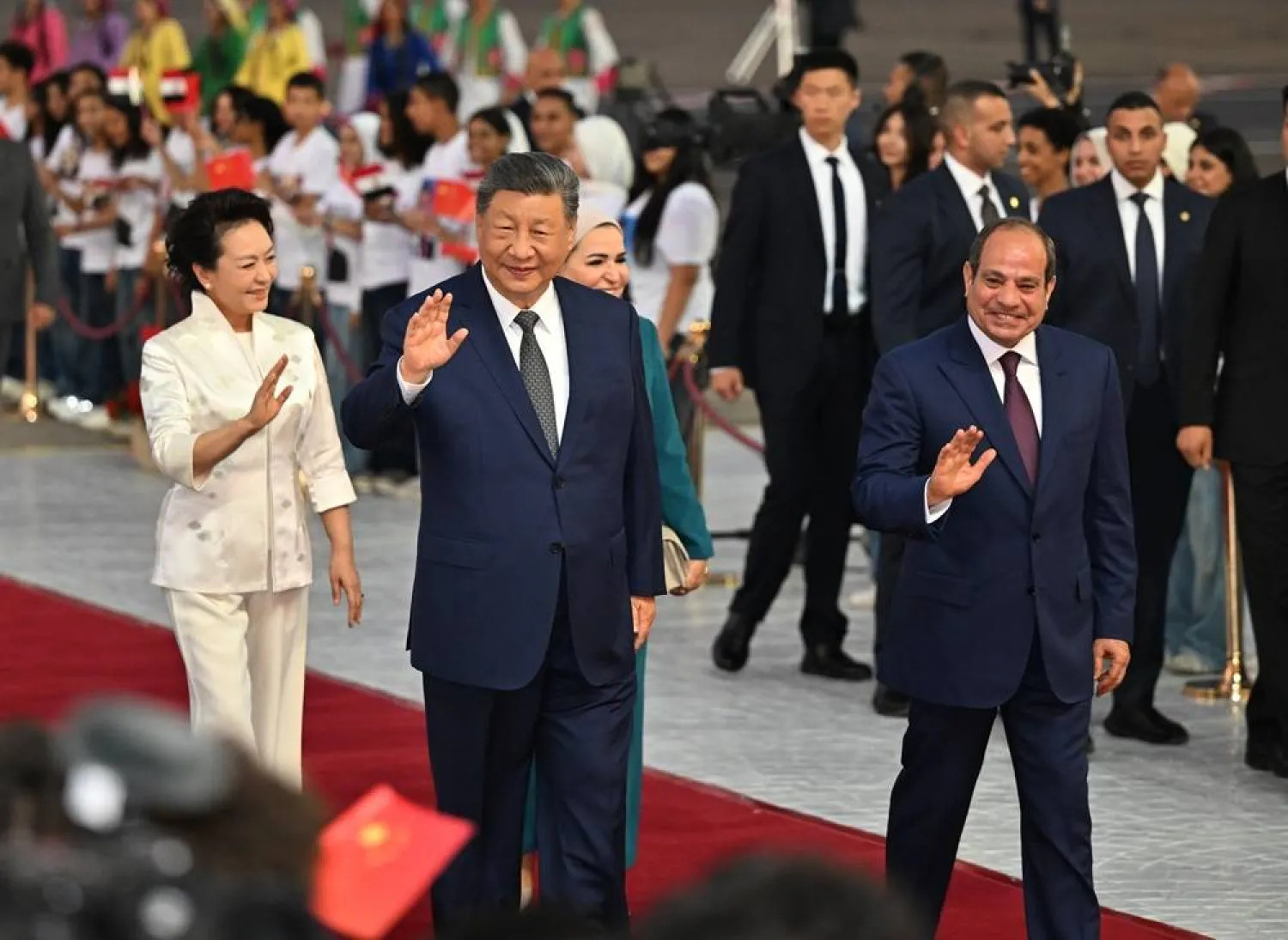
Seventy years after Egypt became the first Arab and African country to establish diplomatic relations with the People’s Republic of China, Cairo and Beijing are looking to take their relationship into a new era.
Chinese President Xi Jinping’s two-day state visit to Egypt, held September 1–2 at the invitation of President Abdel Fattah El-Sisi, was focused on the future of the two countries’ relations.
During their talks, Presidents El-Sisi and Xi reviewed the significant expansion of bilateral relations, particularly since the two countries established their Comprehensive Strategic Partnership in 2014.
El-Sisi and his Chinese counterpart also agreed to launch the third phase of the expansion of China-Egypt TEDA Suez Economic and Trade Cooperation Zone in the Suez Canal Economic Zone (SCZone). More than 200 companies have already invested in the zone.
China recognized the importance of the Nile River to Egypt’s water and food security, while Egypt reaffirmed its commitment to the One-China principle and its support for China’s position on issues related to sovereignty and territorial integrity, including Taiwan.
A relationship built on infrastructure, now moving into technology
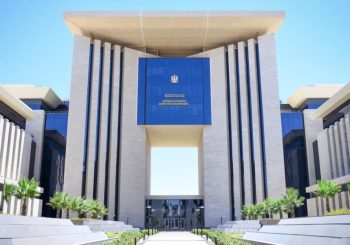
Chinese involvement in Egypt is already highly visible. The two countries have worked together on major infrastructure, transportation, energy and manufacturing projects, such as the New Administrative Capital, while Chinese companies have established a growing presence in the Suez Canal Economic Zone under the framework of the Belt and Road Initiative.
However, the economic centerpiece of the new agenda is a push for greater Chinese involvement in local manufacturing.
Egypt and China agreed to deepen cooperation in sectors including electric vehicles, shipbuilding, renewable-energy equipment, agriculture and automotive manufacturing.
The clearest sign of how the relationship is evolving is the list of technology sectors included in the agreement.
Egypt and China want to expand cooperation in artificial intelligence (AI), cloud computing, data centers, data-driven industries, semiconductors, cybersecurity, space applications and remote sensing.
The two governments also called for greater exchange of technology, expertise and training, as well as cooperation around critical-mineral supply chains, reflecting the growing importance of securing materials needed for advanced manufacturing, renewable energy and electric vehicles.
Egypt’s biggest economic ask: sell more to China
Egypt and China have a substantial trade relationship, but it has long been heavily weighted toward Chinese exports. Egypt now wants to change that through this new partnership.
The joint statement explicitly calls for a more balanced trade relationship and for more Egyptian products to enter the Chinese market.
Egypt welcomed Chinese measures aimed at reducing customs duties for African countries and the two sides agreed to continue consultations on an “Early Harvest” agreement, which is intended to identify areas where trade cooperation can advance more quickly.
The push for more Egyptian exports is important because it connects directly to Egypt’s local industrial strategy.
If Chinese companies establish factories in Egypt producing electric vehicles, renewable-energy equipment, automotive components or other manufactured goods, Egypt could potentially export part of that production rather than simply importing finished products.
Changing how to finance trade
The economic partnership is being supported by a growing financial relationship. The two presidents welcomed cooperation involving Chinese Panda Bonds, as well as the expansion of arrangements allowing the two countries to exchange their local currencies.
They also welcomed the renewal and increase in the value of the bilateral currency-swap agreement.
Both governments want their banks and financial institutions to play a greater role in supporting industrial investment, infrastructure projects and the green and digital transitions.
The two sides also agreed to encourage greater use of Egyptian and Chinese currencies in trade and investment.
For Egypt, expanding local-currency arrangements could make it easier to conduct part of its trade and investment relationship with China without relying entirely on third-country currencies.
After the talks, Egypt and China have instructed their officials to move ahead with the agreements and to hold the next meeting of their Joint Governmental Committee as soon as possible.
Xi, meanwhile, invited El-Sisi to visit China. The Egyptian president accepted the invitation and said he would make the trip at a mutually convenient time.
Trade between Egypt and China is substantial and has expanded significantly in recent years, reaching approximately US$20.8 billion (EGP 1.06 trillion) in 2025, up from US$17.4 billion (EGP 886 billion) in 2024.




Comments (0)