


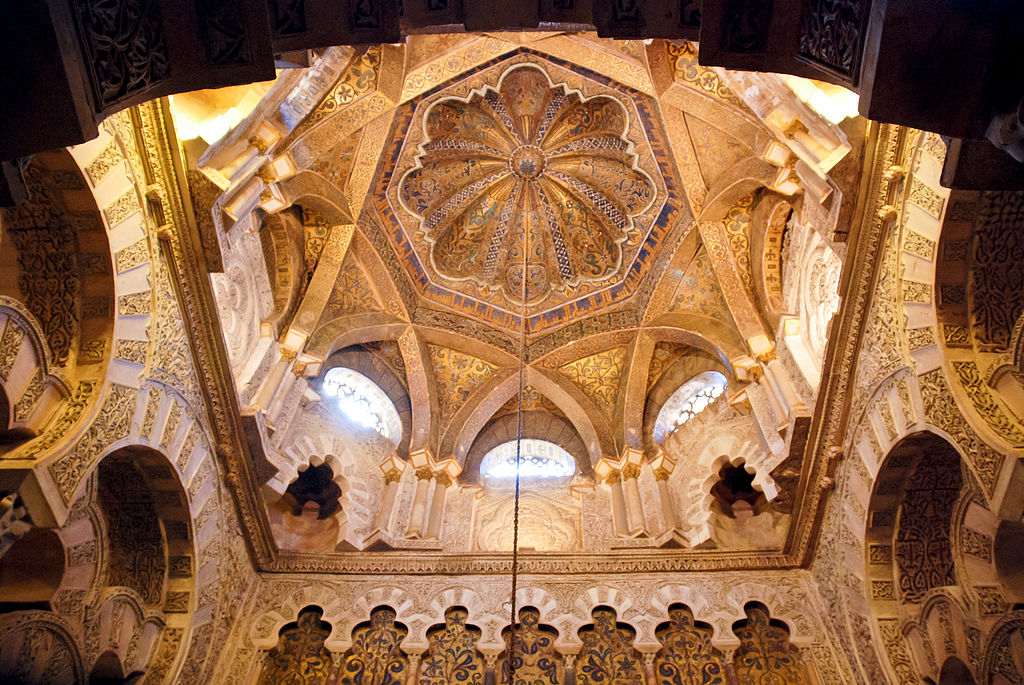
The pointed arches that rise over Notre-Dame Cathedral in France and Canterbury Cathedral in England may owe part of their lineage to a ninth-century mosque beside the Nile, according to Diana Darke, an Oxford-educated Arabist.
Egyptian and Mamluk architecture reached Europe in two distinct waves over the years. Firstly through medieval trade and cultural exchange, and then again through the Orientalist and Revivalist movements of the 19th and 20th centuries. Together they left a quiet network of monuments, from the cathedrals of France and England to a brick mosque in Lithuania, that trace their design vocabulary back to Cairo.
The Medieval Transmission
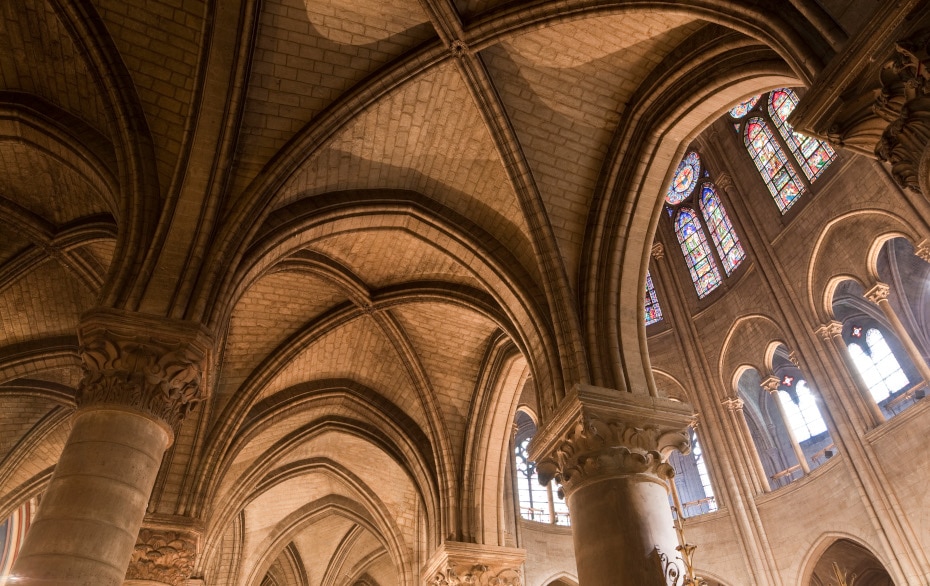
The earliest and most consequential exchange involved the pointed arch. Structures such as the Ibn Tulun Mosque in Cairo, completed in the ninth century, helped popularize the form. Amalfi merchants, Italian medieval traders and seafarers, carried it to southern Italy, and it later surfaced in French Gothic cathedrals, including Notre-Dame, and in England at Canterbury. The arch likely traveled from Cairo through Italian trading ports to northern Europe, though how directly remains debated.
Decoration traveled too, including Mamluk and Fatimid ornaments, such as arabesques, geometric patterning, and colored marble stonework, which moved through Sicily in Italy, southern France, and Spain as goods and craftsmen crossed the sea.

A Second Wave: Revivalism
In the 19th century and early 20th century, European architects were borrowing from Cairo on purpose. The results were often built for Muslim communities far from the Arab world, and they were designed to look like home.
In Vladikavkaz, Russia, which sits in the North Caucasus, on the contested eastern edge of what is usually counted as Europe, the Sunnitskaya Mosque, completed in 1906, was designed by the Polish architect Józef Płoszko. It takes its look from the classical Sunni mosques of Cairo, particularly the lineage of Al-Azhar.

Another monument with oriental influence is the Main Kaunas Mosque, in Kaunas, Lithuania, built in 1933 by the architect Wacław Michniewicz. It is a brick structure that borrowed oriental motifs from Mamluk-era monuments in Cairo, among them the Funerary complex of Sultan Qaytbay in Cairo.
Additionally, the Italian architect Antonio Lasciac spent decades in Egypt in the late 19th and early 20th century designing Neo-Mamluk and eclectic buildings, including Bank Misr and palaces for the Khedive’s court. He carried that taste home to Gorizia, on the Italian-Slovenian border, where Lasciac’s private villa at Rafut, built in 1909, incorporates Mamluk revival aesthetics into a European residential setting.
While the medieval borrowings are largely invisible to visitors, folded into Gothic naves that few associate with the Islamic world, the 20th-century examples are easier to spot, and they show Cairo’s architectural language still traveling well after its medieval heyday, carried by European architects who worked in Egypt.





Comments (0)