


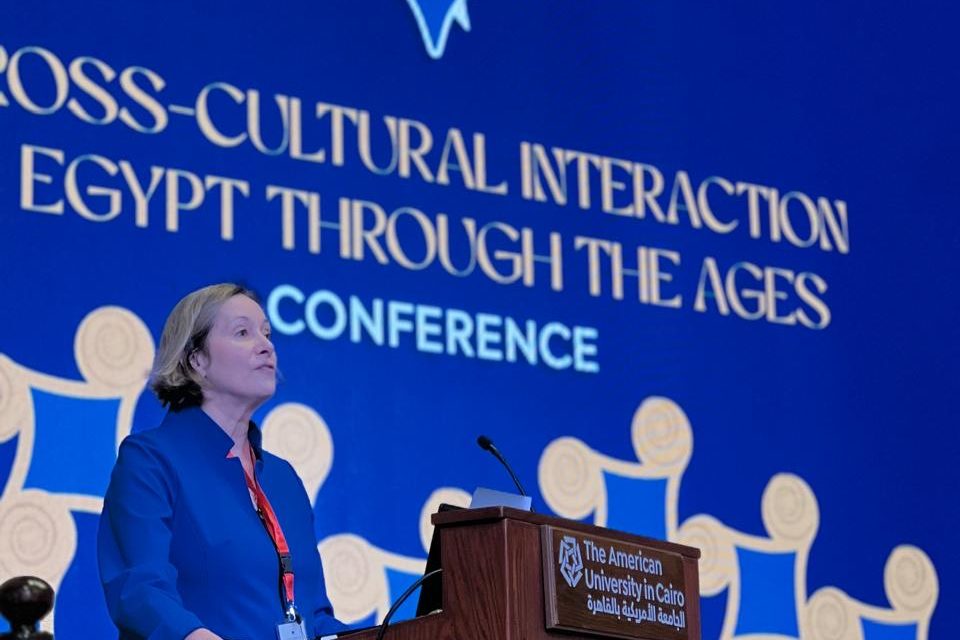
This year, the “Cross-Cultural Interaction in Egypt Through the Ages” conference unfolds at Ewart Memorial Hall, the storied auditorium on The American University in Cairo’s (AUC) Tahrir Campus. For a three-day exploration from 5 to 7 December, scholars gather on cross-cultural interaction, an academic deep dive into how Egyptians, from the ancient court of the Hyksos to the modern metropolis, have exchanged ideas, technologies, languages, and rituals with neighboring civilizations.
The conference is organized by the AUC in partnership with the American Research Center in Egypt (ARCE), founded in 1948. ARCE has long been noted for conservation and expanded its mission, partnering with the Ministry of Tourism and Antiquities and global institutions, to enhance the study and sharing of Egypt’s heritage.
The conference highlights Egypt’s history, sprawling across millennia, with a record of constant encounter with cultures, traders, migrants, and neighbors from the pharaonic courts to the Greco-Roman, Coptic, Islamic, and colonial eras.
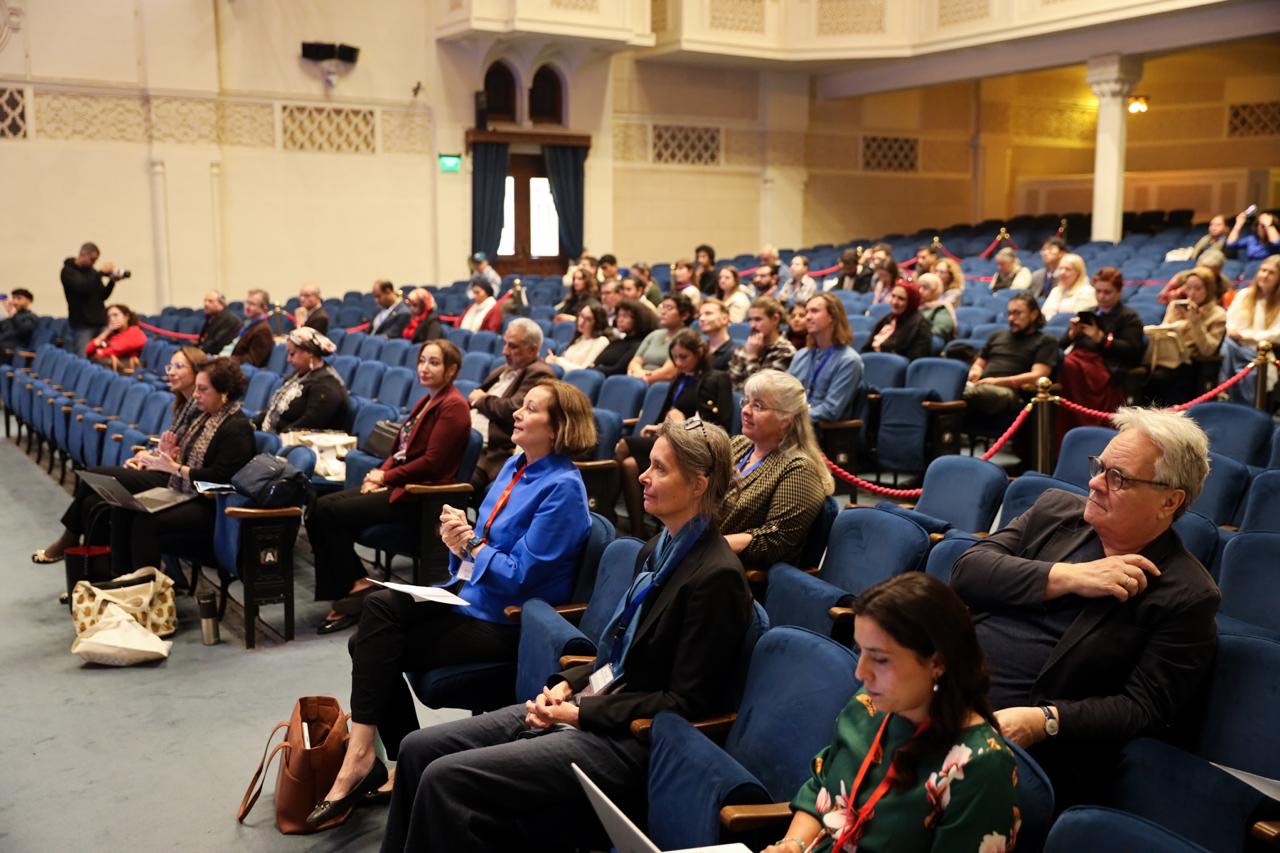
It is expected to draw specialists whose expertise ranges from Bronze Age diplomacy to Islamic-era manuscript traditions. It also examines how these layers of contact shaped Egypt and how Egypt, in turn, left its mark on the cultures around it.
One of the anticipated moments was a keynote by Irene Forstner-Müller, Director of the Austrian Archaeological Institute in Cairo, whose work on the ancient city of Avaris has reshaped debates about the Hyksos, who were rulers once dismissed as invaders, but now increasingly understood through the lens of migration, trade, and hybridity.
Her talk hints at the broader theme running through the gathering, which is that Egypt is a place where cultural lines blur more often than they harden.
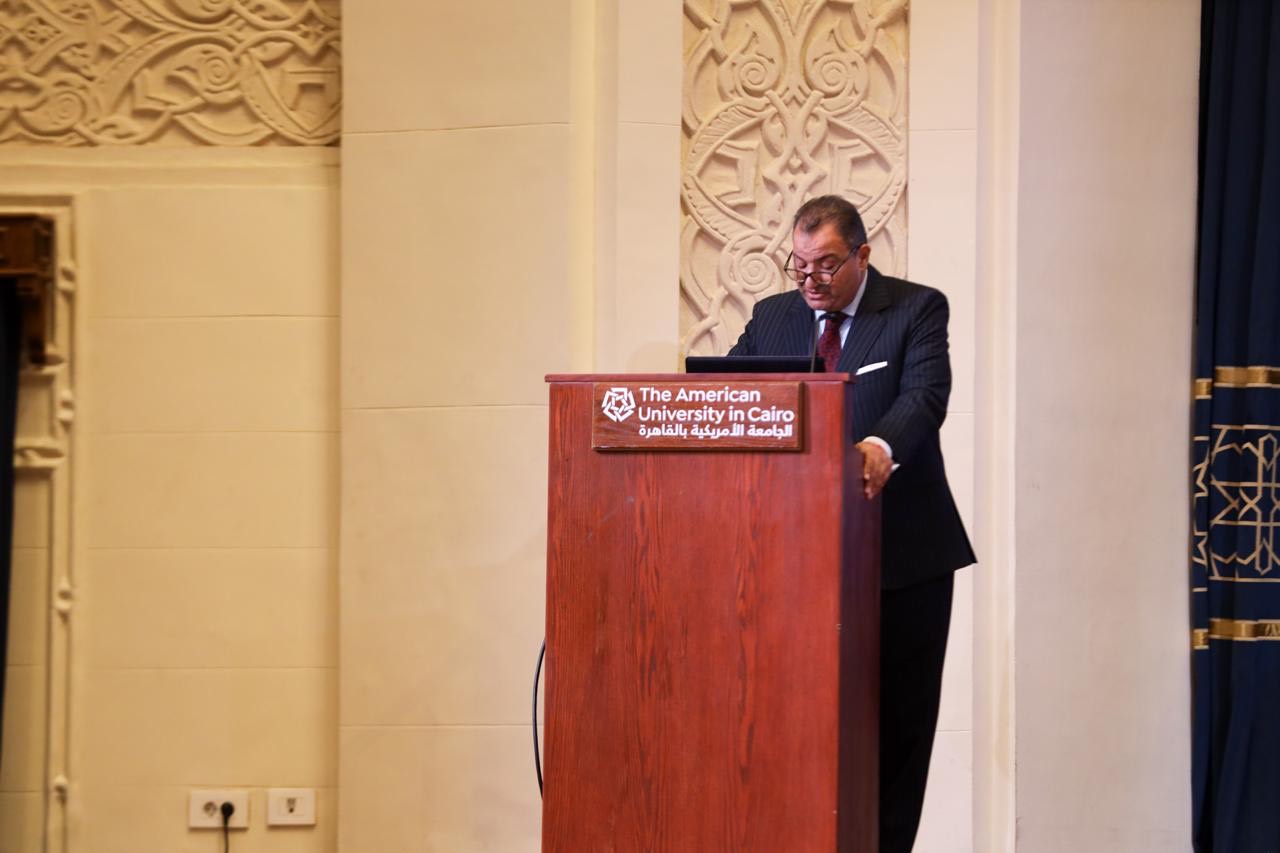
The conference offers a rare chance for scholars across eras to examine how Egypt’s ties with Asia, Africa, and Europe shaped both its own culture and the wider world, according to Salima Ikram, professor at AUC and the first holder of the Amelia Peabody Chair in Egyptology.
“It also aims to advance Egyptology and scientific research by encouraging interdisciplinary collaboration,” she stated.
Beyond the sessions and panels, the real story is the conference’s ambitions to push Egyptology toward more interdisciplinary approaches and to reconsider the country as a self-contained civilization.
Attendees can register to join the event in person or online, with a live stream available for a global audience.




Comments (0)