


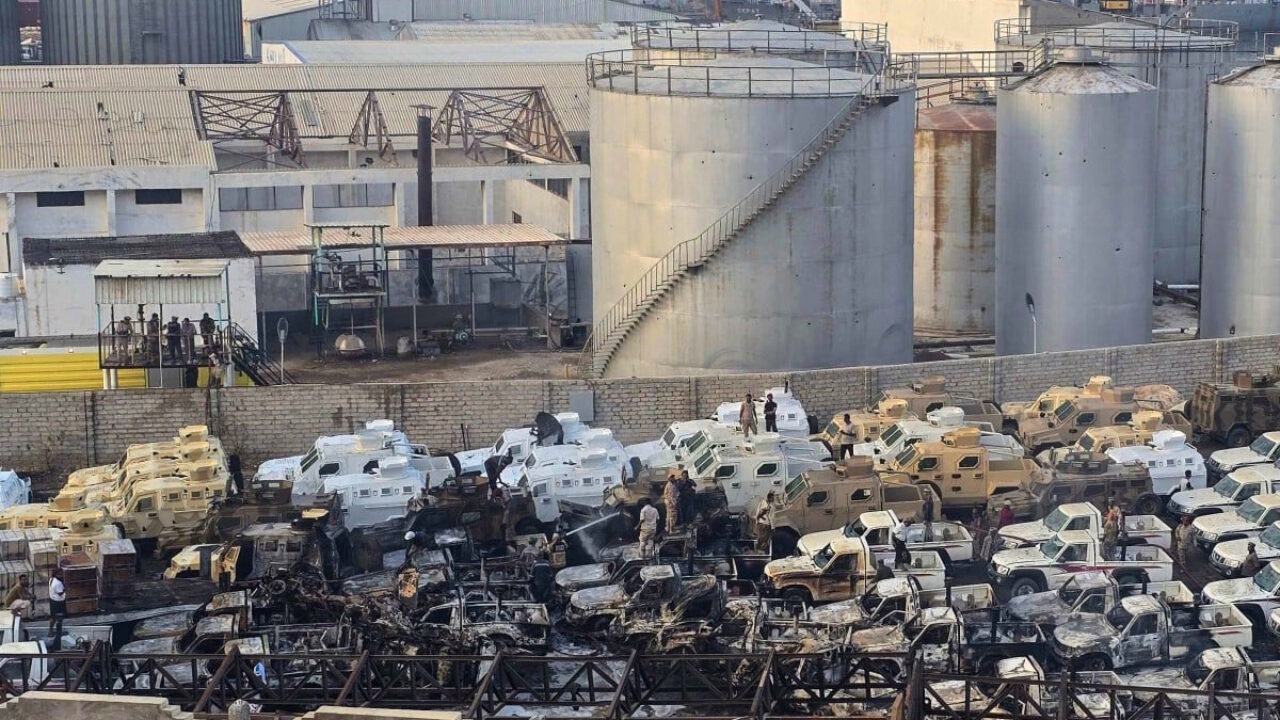
On 30 December 2025, Saudi Arabia carried out an airstrike on the port city of Mukalla in Yemen, targeting what Riyadh claimed was a shipment of weapons supplied by the United Arab Emirates (UAE) intended for the Southern Transitional Council (STC), a faction seeking independence for southern Yemen.
In response, the UAE announced the withdrawal of its remaining counterterrorism personnel from Yemen, emphasizing that the decision to withdraw its personnel was made “of its own volition” and was not a direct response to Saudi pressure.
The Emirati Ministry of Defence also denied accusations that they were sending weapons to the STC, insisting that the vehicles involved in the Mukalla shipment were intended for Emirati forces and not Yemeni factions.
The Saudi Ministry of Foreign Affairs then expressed “disappointment” with the UAE, accusing Abu Dhabi of pressuring the STC to heighten military hostility against Saudi-backed forces in the eastern provinces of Hadramout and al-Mahra.
“This escalation constitutes a threat to the kingdom’s national security,” the Saudi Ministry of Foreign Affairs declared, stressing that such threats would not be tolerated.
UAE’s Position
The UAE has been involved in Yemen’s military conflict since 2015 as part of the Saudi-led Arab Coalition.
However, the UAE’s close relationship with the STC was previously underestimated by some Saudi observers, even as Abu Dhabi trained, armed, and financially backed the group, enabling it to emerge as a powerful political and military force.
This support enabled the STC to consolidate control across large parts of southern Yemen. In doing so, the UAE diverged from Saudi Arabia’s focus on preserving a unified Yemeni state and complicated coordination between the two Gulf allies.
Political analysts stress that the current tensions reflect deep-rooted disagreements about Yemen’s political future and the overall balance of power in the region.
A Broader Geopolitical Gamble
Egypt’s Ministry of Foreign Affairs released a statement saying it is closely monitoring developments and “has full confidence in the keenness of both the Kingdom of Saudi Arabia and the United Arab Emirates to deal wisely with the current developments in Yemen in a manner that preserves Arab unity and the common Arab destiny.”
However, the situation mirrors previous Gulf crises, such as the 2017 fallout involving Qatar, where Saudi Arabia and the UAE coordinated actions against a common adversary, but ultimately destabilized their regional relationships.
While Saudi Arabia and the UAE clash now, the Houthi rebels likely stand to gain from this rift. The Houthis may perceive the discord between their two major adversaries as an opportunity to consolidate their power in northern Yemen, further complicating the already dire humanitarian situation that has resulted in over 150,000 deaths
The Stance of Yemeni Leadership
Meanwhile, Rashad al-Alimi, head of Yemen’s Presidential Leadership Council (PLC), announced on Monday, 29 December, the cancellation of a joint defense pact with the UAE and declared a state of emergency in Yemen, citing the need to confront the Houthis and alleged UAE-backed mutinies.
By 31 December, internal divisions within the PLC emerged, with several members rejecting al‑Alimi’s decisions and warning that efforts to demonize the UAE would ultimately benefit Yemen’s enemies.
As the rift between Saudi Arabia and the UAE over the STC deepens, military coordination becomes affected, reinforcing longstanding geopolitical disagreements about Yemen’s governance and security. Meanwhile, analysts warn that such divisions may create opportunities for other actors, including the Houthis movement, to consolidate control in northern Yemen.




Comments (0)