


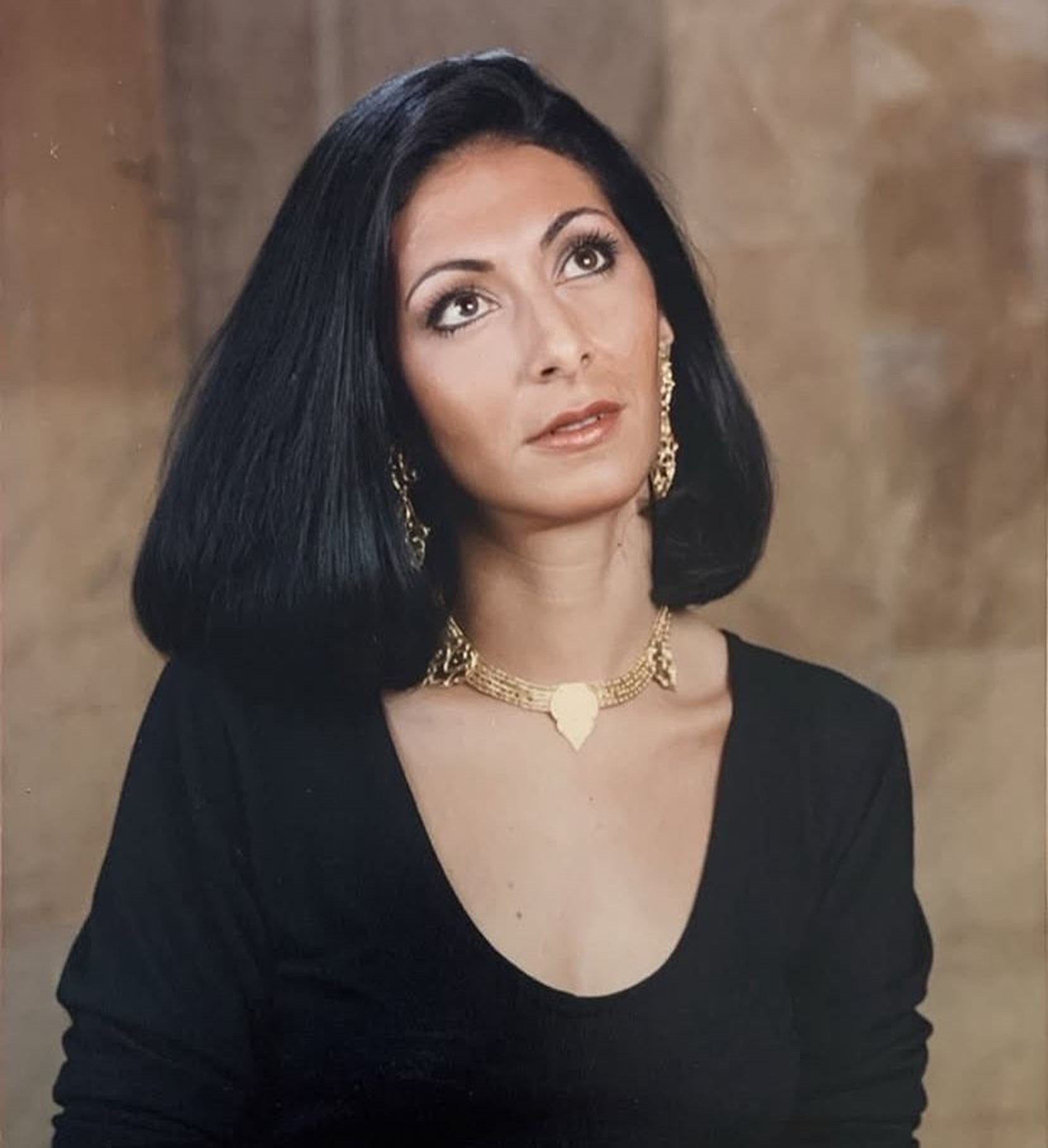
The story of jewelry is never told just once. It unfolds again and again, across generations and years. It lives alongside its people, as if it were a part of them, shaped by time, growing and evolving, carrying the energy and history of the hands that crafted it, the minds that designed it, and the wearers who cherished it.
A single precious stone can, on its own, tell a thousand stories. In the case of Egypt, it holds all of its history within it, as if guarding the soul of the nation; an Egypt that saw centuries pass, endured pain, fought for its place, and rose anew.
Unlike written historical records that may be lost or altered, jewelry endures, preserving the fingerprints that shaped it, as if boldly declaring: these are the Egyptian hands that created me, and the Egyptian minds and hearts that designed me. These fingerprints cannot be questioned or erased; they record human effort in real time.
After more than forty years, Laila Nakhla, cofounder of the renowned family-owned Nakhla Jewelry alongside her husband Ikram Nakhla, speaks of the brand as if it still lives within her, shaping her thoughts, her character, and the way she moves through the world.
For her, Nakhla Jewelry is an emotional story of belonging and becoming, one that continues to resonate deeply in her life. Her brand’s story is of deep passion for Egypt; its culture, its history, and its singular tradition of handmade craftsmanship found nowhere else in the world.
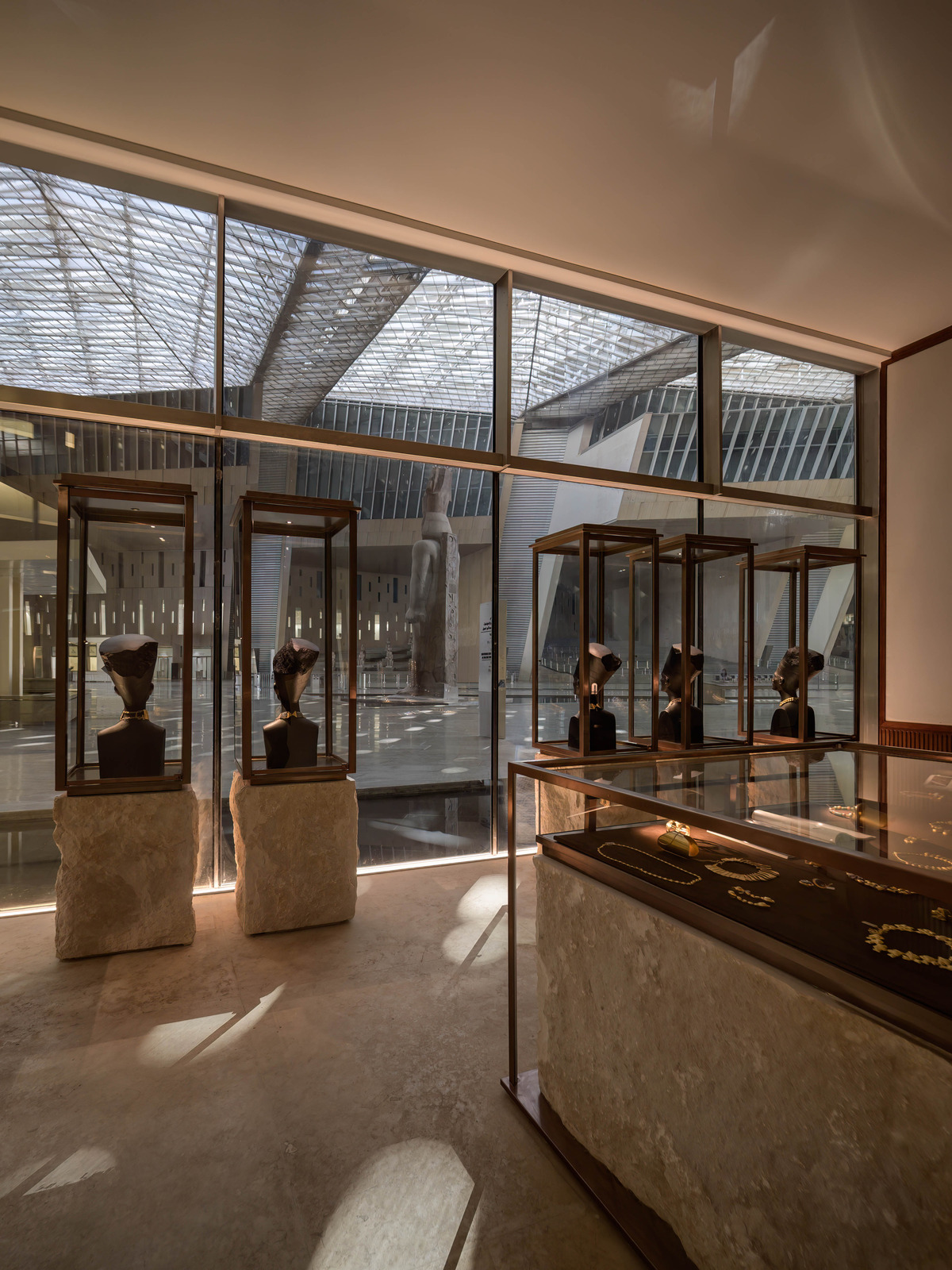
“The whole brand for me is a very emotional story. It’s very dear to me,” Nakhla says softly, seated inside the brand’s exquisitely designed store at the Grand Egyptian Museum.
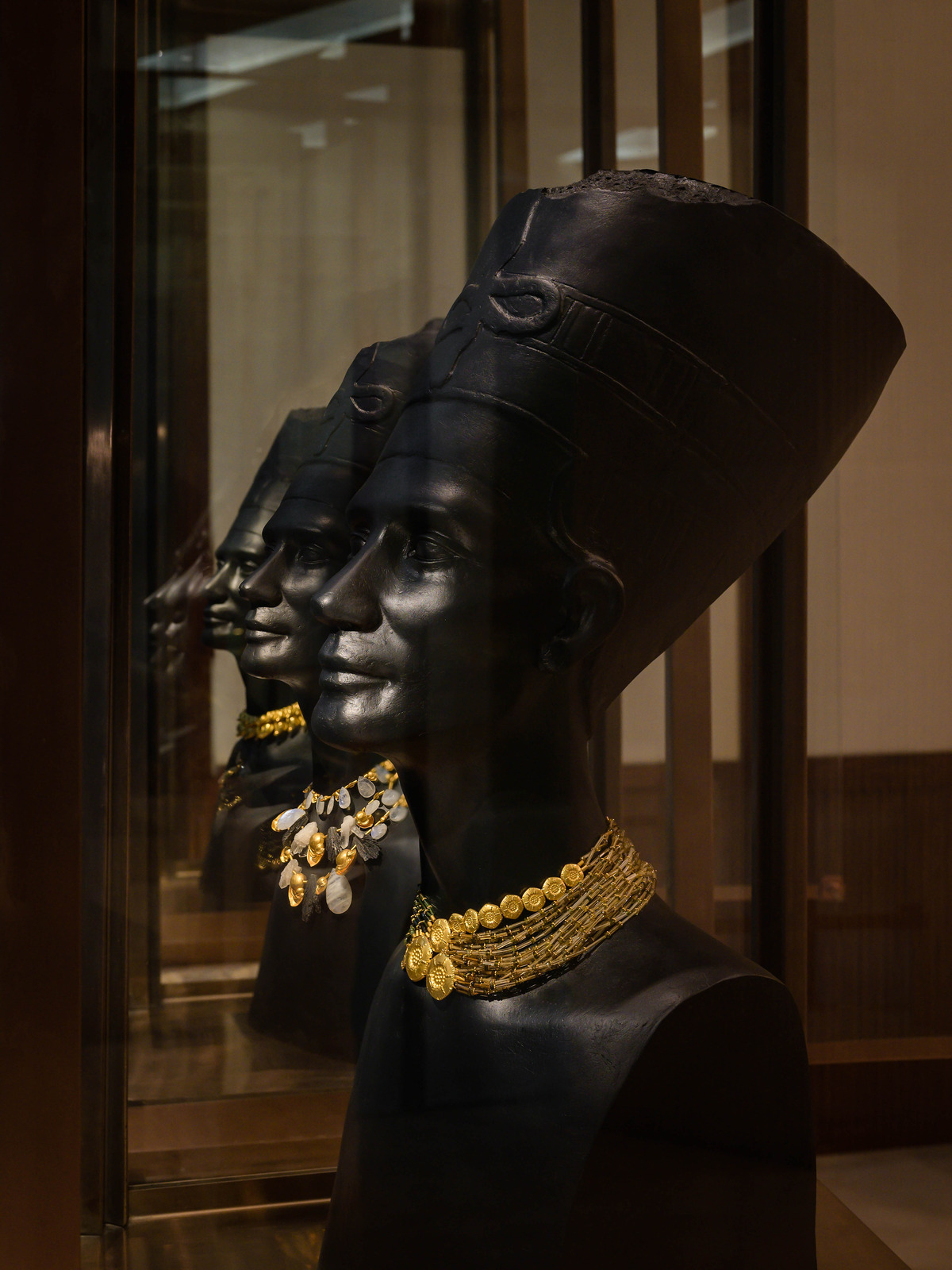
Around her, sculptural busts of Queen Nefertiti surround the store, adorned with the signature bold Nakhla necklaces, handcrafted in 21-karat gold, each piece evoking the elegance and iconic spirit of ancient Egyptian jewelry.
“This is like my own child, my dear story, and a memory of Anna Boutros Ghali, who taught me to truly value Egyptian culture and history.”
Much like the bust of Queen Nefertiti displayed at the entrance of the store, boldly embodying a woman’s strength and presence, Nakhla’s journey with the brand began with the women she encountered early in life.
Women who, like Nefertiti, carried their identity and culture with pride, and who chose, time and time again, to contribute to their country and heritage.
Out of the legacy of these remarkable women came Nakhla Jewelry, a brand that remains true to its roots, creating 100 percent locally handmade pieces inspired by the layered history of Egypt.
“In life, there are those who set trends and those who follow,” Nakhla says. “We chose to set the tone, defining a distinct style of jewelry, a way of seeing, and a deep pride in our culture and Egyptian heritage.”
What Does It Take to Safeguard Egypt’s Past?
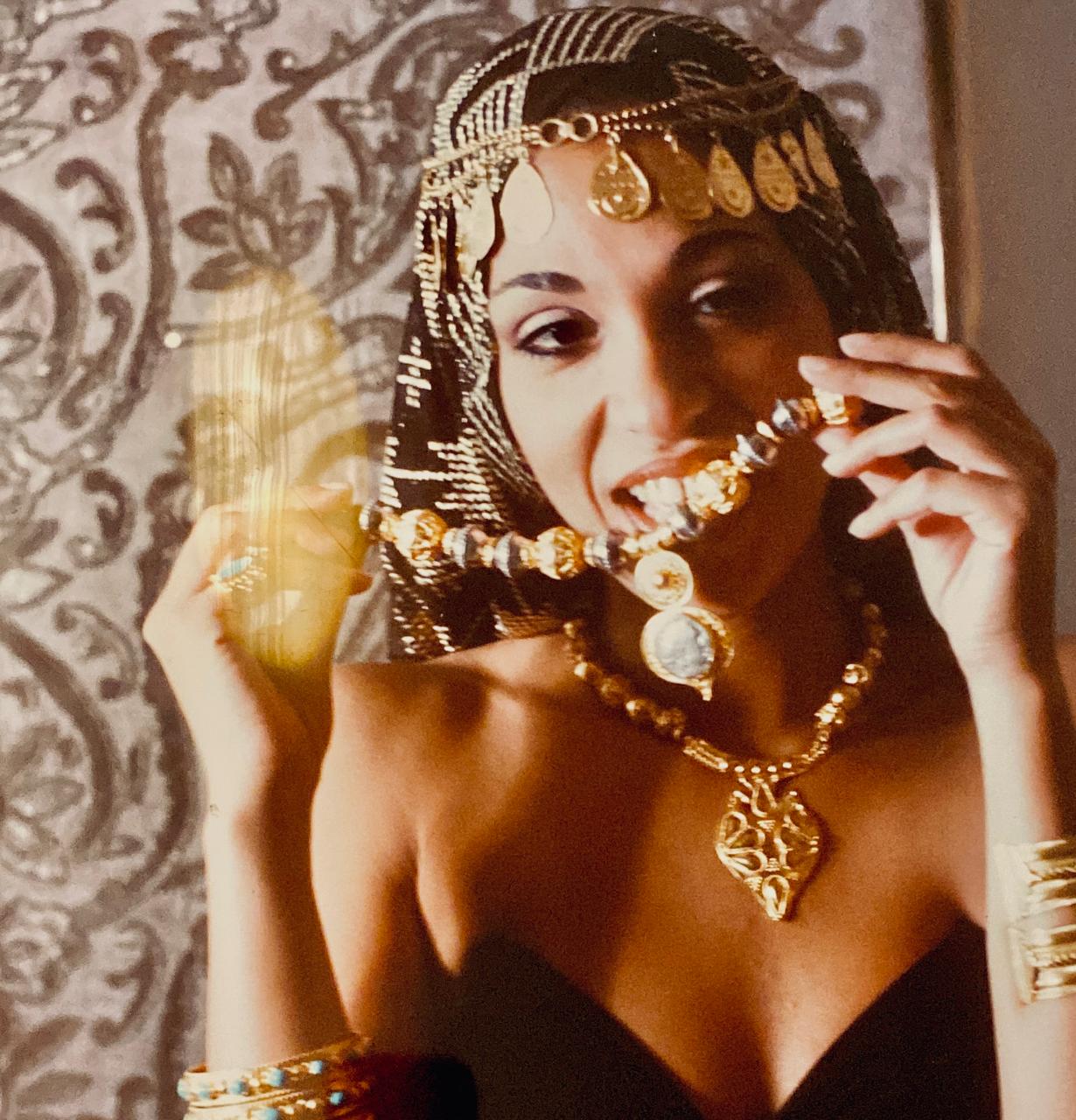
To know Nakhla Jewelry is to essentially know the country.
The embodiment of how beauty can rise from uncertainty and hardship encapsulates it. As even in the darkest moments of Egypt’s history, art and culture endured, sustaining the spirit of a nation determined to keep breathing and creating beautiful art.
When Nakhla’s love affair with art began in childhood, it was during the years of Gamal Abdel Nasser’s presidency.
Egypt in the 1950s and 1960s was a nation forging a new identity after the 1952 revolution that ended the monarchy and British influence. Nationalisation, land reform, and a socialist vision reshaped society, but the price was steep, as the Suez Crisis of 1956, the Six-Day War of 1967, and the October War of 1973 left deep scars.
Yet, even in scarcity, state-sponsored galleries and ateliers arose, offering rare access to art for ordinary citizens. One such initiative was the Atelier of Painting on Qasr El Nile Street, a modest space where art pieces by Egypt’s artists were sold at affordable prices.
Nakhla fondly remembers the Atelier of Painting on Qasr El Nile Street, where, for as little as one to seven pounds, even those with modest means could acquire original works of Egyptian artists.
“I would save my ten-pound monthly allowance to buy something, from two pounds to three pounds. It was only once a year, but it opened a world for me,” she says.
It was this early exposure to art that left an indelible mark.
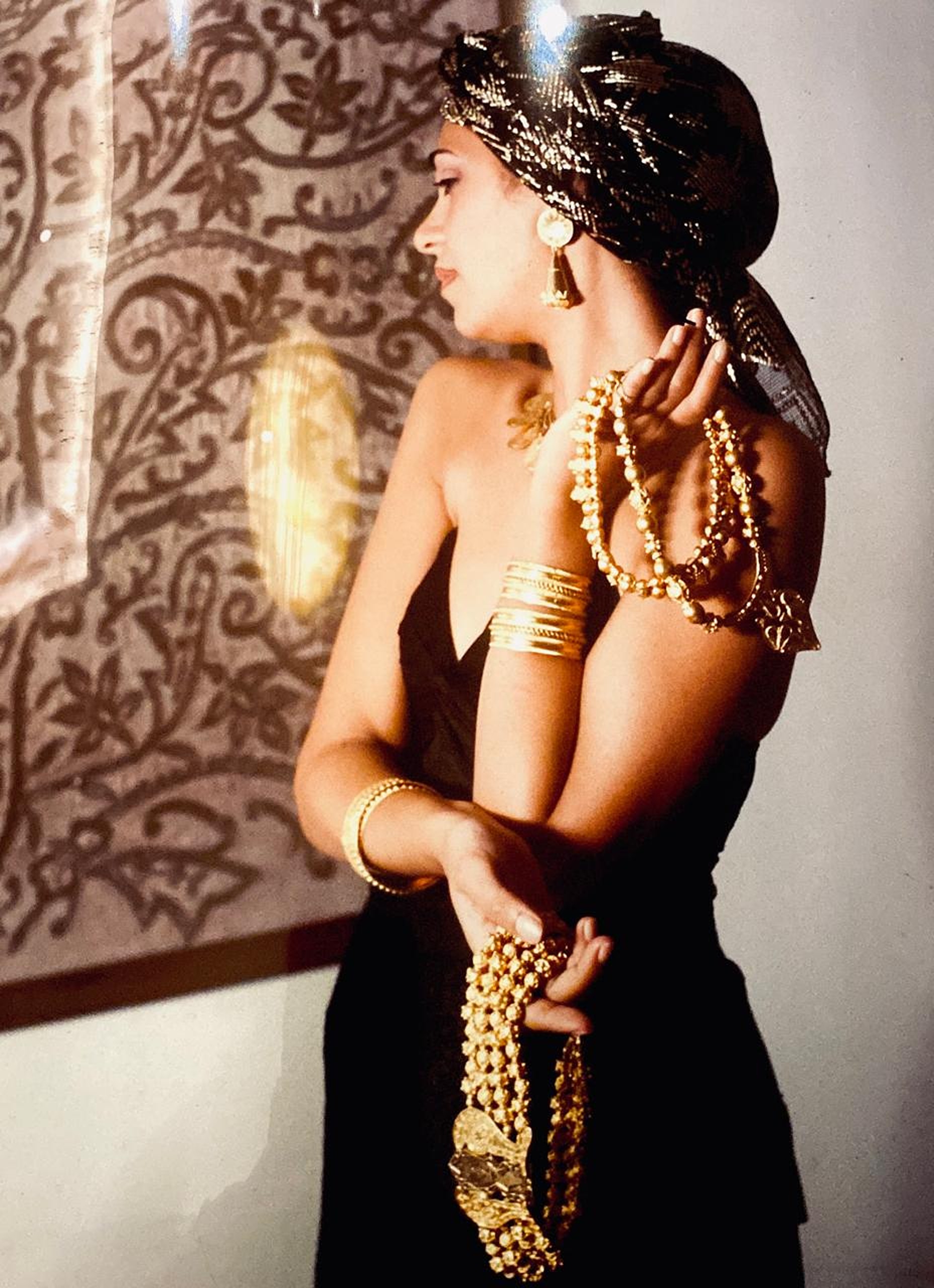
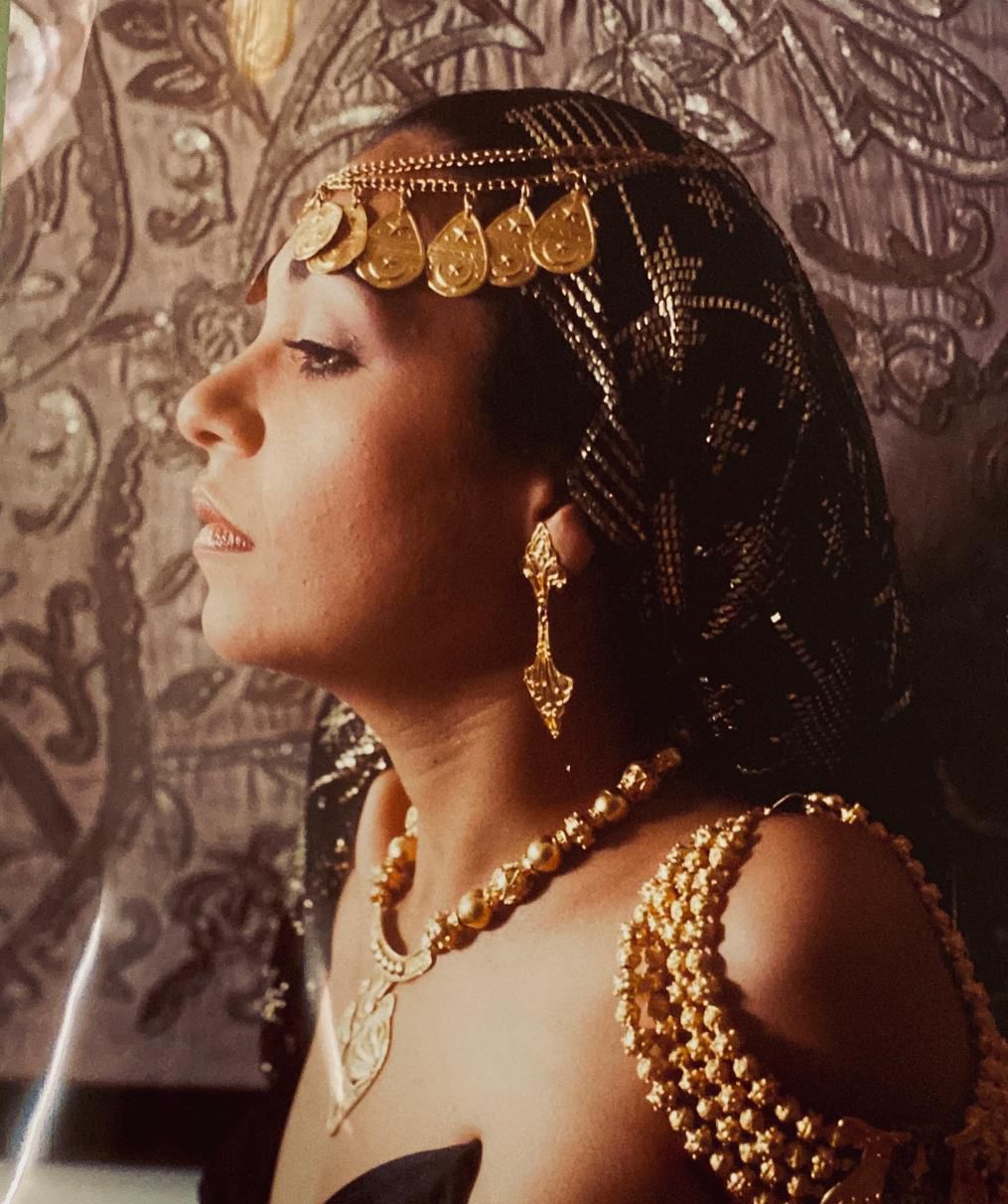
“All my life, I was interested in Egypt. In history. In art,” she says passionately.
As the country shifted from one war to the next, access to art allowed ordinary people like Nakhla to experience even the tiniest moments of inspiration during her childhood.
The bridge between that early fascination and jewelry came through a lineage of women who shaped her intellectual and aesthetic world.
Chief among them was Lea Boutros Ghali, wife of Boutros Boutros Ghali, former Secretary General of the United Nations, whom Nakhla describes as a second mother, an elegant, formidable, and deeply cultured woman.
It was also Lea who redirected the young Nakhla toward a woman who would become pivotal in her life: Aunt Anna.
Aunt Anna, an Armenian woman who had walked to Egypt during the genocide, was married into the Boutros-Ghali family, and became known as a prominent pioneer in charitable and social work, being deeply involved in Coptic and Armenian community activities
“I walked into her house and found a world completely different from mine,” Nakhla recalls.
While Nakhla’s own upbringing was European in orientation, with French, Italian, and British influences, Aunt Anna’s home was a layered, pan-Middle Eastern universe: Turkish, Iranian, Syrian, Armenian, and Egyptian objects coexisted in harmony. Hand-painted cupboards, rare books, and antique furniture filled the entire space of the room.
The home is the emotional core of any person, and equally, of every brand. It was here, at Aunt Anna’s home, that love, inspiration, and creativity first bloomed, and where the seed of the brand’s core emotion found its roots.
“It felt like I was stepping into a world of beauty. Everything was handcrafted, every piece told a story,” Nakhla recalls. “Aunt Anna taught me to look at history, at design, at heritage, and that jewelry could be a vessel of culture and tradition.”
This intimate environment enabled Nakhla to understand the art of making and selling jewelry. Every Friday morning, together with Aunt Anna, they visited Khan el-Khalili to source ancient beads, scarabs, and faience fragments; afternoons were spent directing Armenian craftsmen in mounting them into contemporary settings.
Wednesdays were for labeling and pricing, and Thursday evenings were spent hosting elegant tea gatherings where Cairo’s remaining grand dames purchased pieces to support Coptic and Armenian orphanages.
The man who would later become her husband, and her partner in founding Nakhla Jewlery, was learning these lessons from Aunt Anna in real time alongside Nakhla.
Together, under Aunt Anna’s guidance, they worked side by side with craftsmen, learning not only the techniques of the trade but a way of seeing, such as how to distill Egypt’s history, symbols, and spirit into jewelry that felt modern and alive.
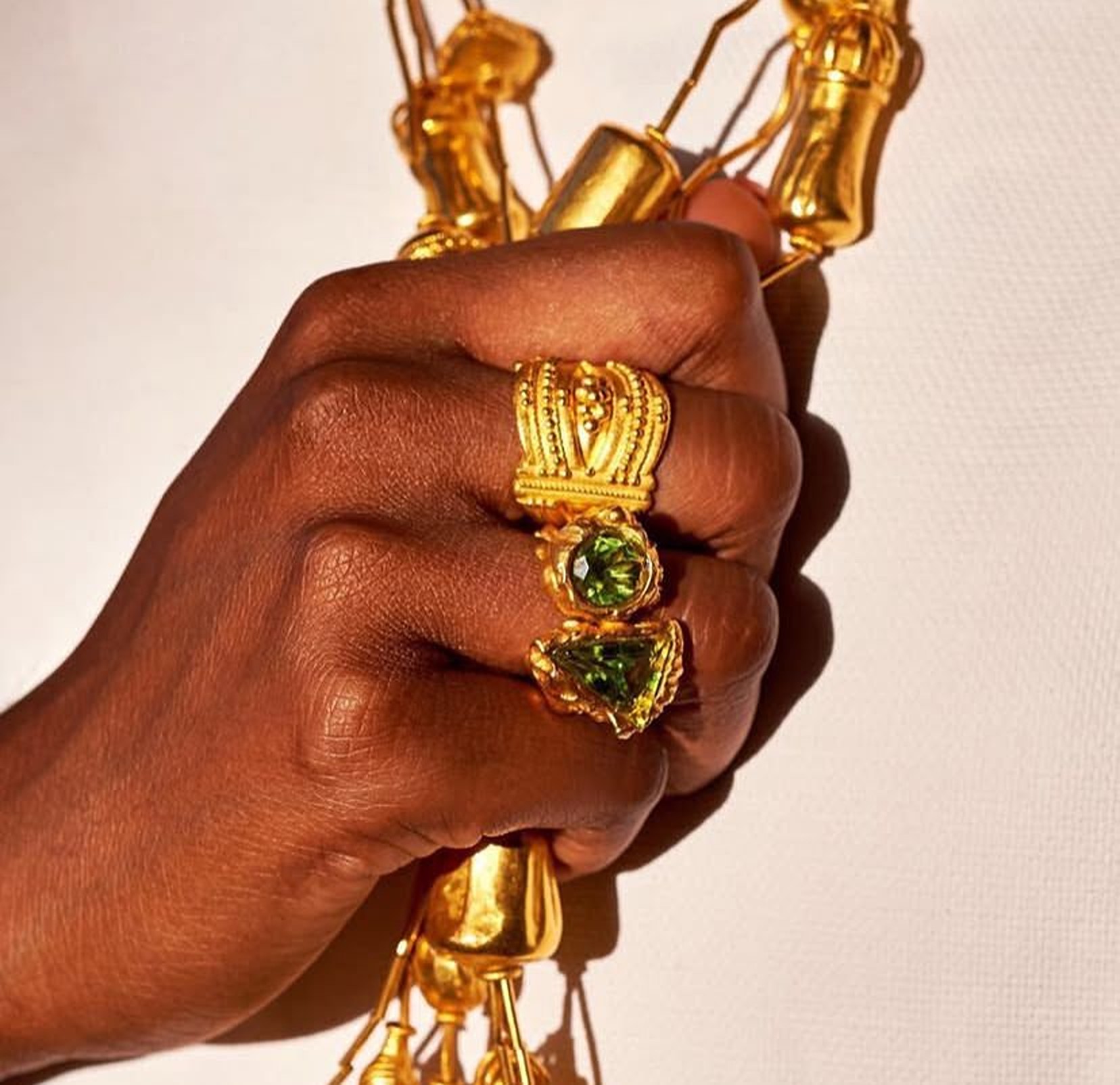
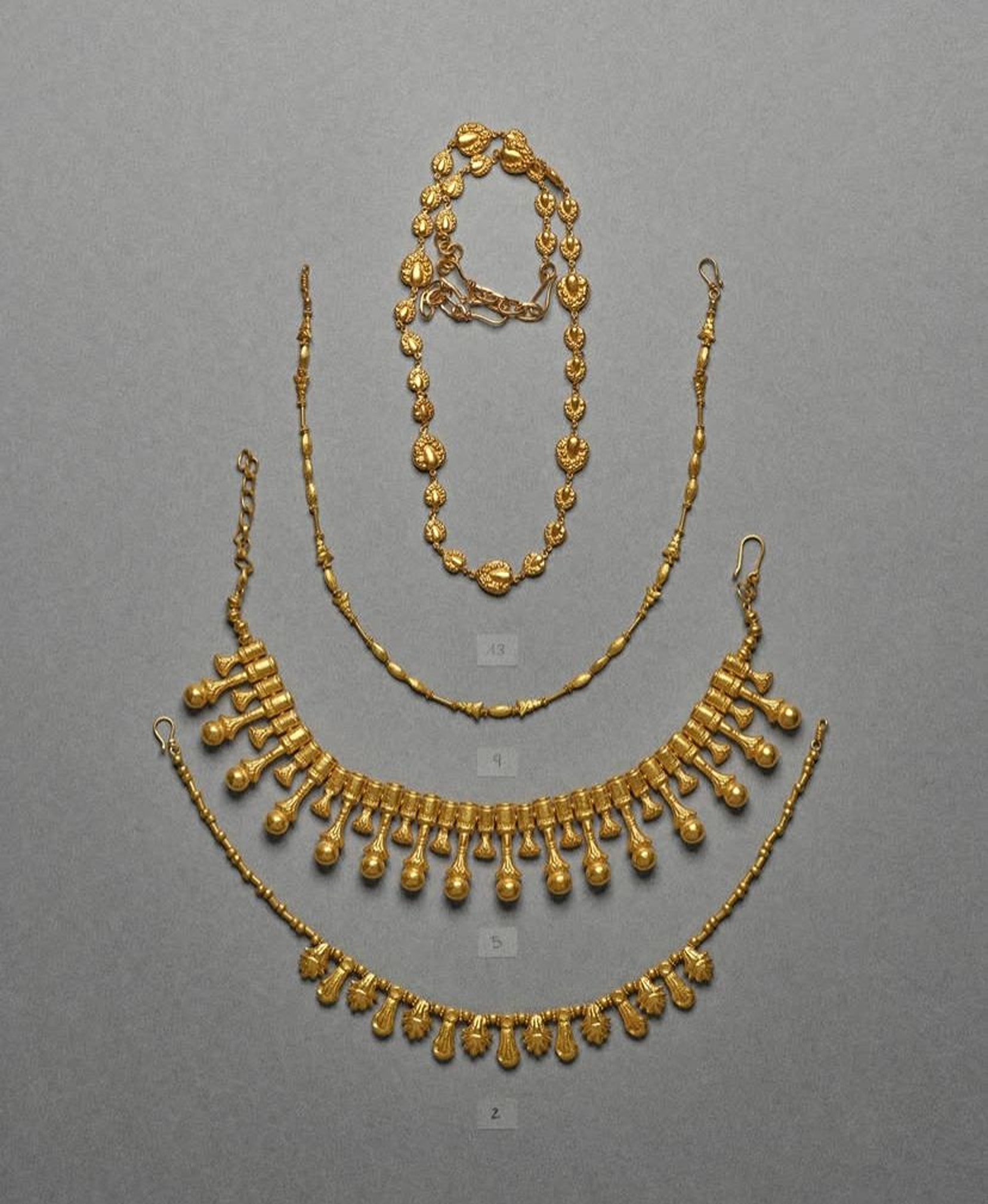
It was a vision they would later describe as a “new concept of an old jewel,” which refers to pieces that were rooted in the structures of the past, yet contemporary in their lines. Drawing inspiration from Greco-Roman, Persian, Nubian, Islamic and Pharaonic influences, they reworked these influences into designs that felt wearable and suited to everyday life.
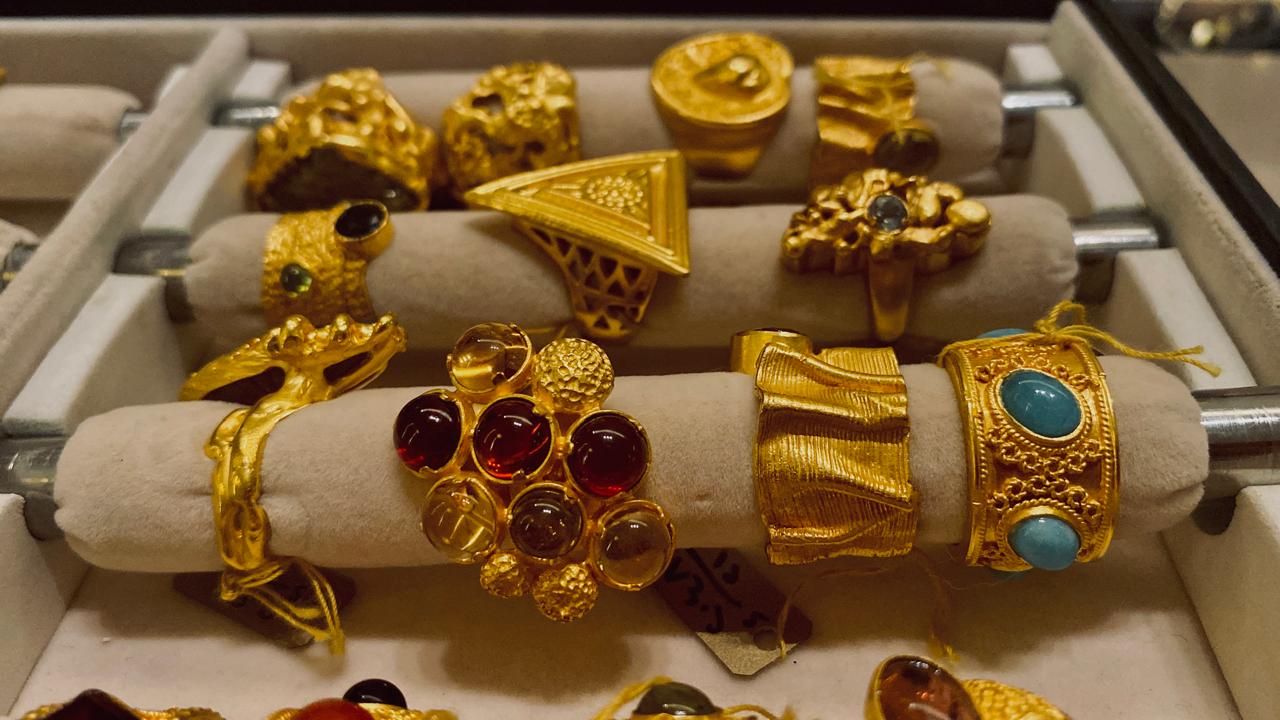
The result was lavish necklaces that paired gold with turquoise, coral, seed pearls, and other semi-precious stones. Some designs pushed even further, layering dozens of strands into bold compositions, finished with oversized, intricately worked 24-karat gold Coptic clasps.
Some pieces also combine elements from different civilizations within a single work, such as featuring two pharaonic cobras alongside a central element with Islamic design.
What Endures
Yet by the late 1970s, Egypt was facing deep political and economic instability. Tourism had slowed to a near halt, markets disappeared, and master artisans, once the keepers of generational knowledge, were abandoning their trades to survive.
“Egypt was in crisis,” she recalls. “Craftsmen were leaving their work. There were no tourists, no market. Little by little, the heritage of jewelry was at risk of being lost.”
Determined to preserve and revive this heritage, Nakhla and her husband began creating their own jewelry, starting humbly with a few gold pieces inspired by Egypt’s history.
“We wanted to return to gold, the metal of Egypt, the Pharaonic metal,” she explains.
Their first clients were figures like Lea Boutros Ghali herself, who proudly wore their pieces into society, helping to set a new standard for jewelry rooted in local culture rather than European imitation.
From the beginning, Nakhla Jewelry positioned itself against imitation.
At a time when Egypt’s market was flooded with copies of European houses, such as Cartier and Van Cleef & Arpels, Nakhla shifted the conversation, turning back toward Egypt’s own visual and cultural origins.
“We taught the world what jewelry was, yet we started copying the Europeans. For me, that was heartbreaking. How did we fall so low?” she says.
“In times of national strain, Egypt repeatedly experiences a loss of knowledge across all sectors.”
The recurring pattern of cultural and intellectual extraction from Egypt can be seen through the example of ancient Egyptian jewelry motifs. Following the 1922 discovery of Tutankhamun’s tomb, which sparked global “Egyptomania,” luxury houses extensively drew from Pharaonic designs during a time of Egyptian political vulnerability.
In resistance to the appropriation of Egyptian craft, Nakhla and her husband Ikram were deliberate in grounding their work at home.
Every piece was designed and handcrafted entirely in Egypt, made by local artisans whose knowledge shaped each detail.
Their aim was not to turn heritage into spectacle, but to reframe Egyptian jewelry as something wearable, moving it away from costume and toward pieces meant to be worn, layered, and carried into everyday life.
“I want to live with my jewelry,” she says. “I don’t want things in cupboards. I want practical jewelry I can wear everywhere, like at work, family gatherings, and in my day-to-day life.”
“I like big spheres. Big ornaments. Women in the past were always seen. Jewelry was a visible mark of identity.”
What Has Luxury Come to Mean Today?
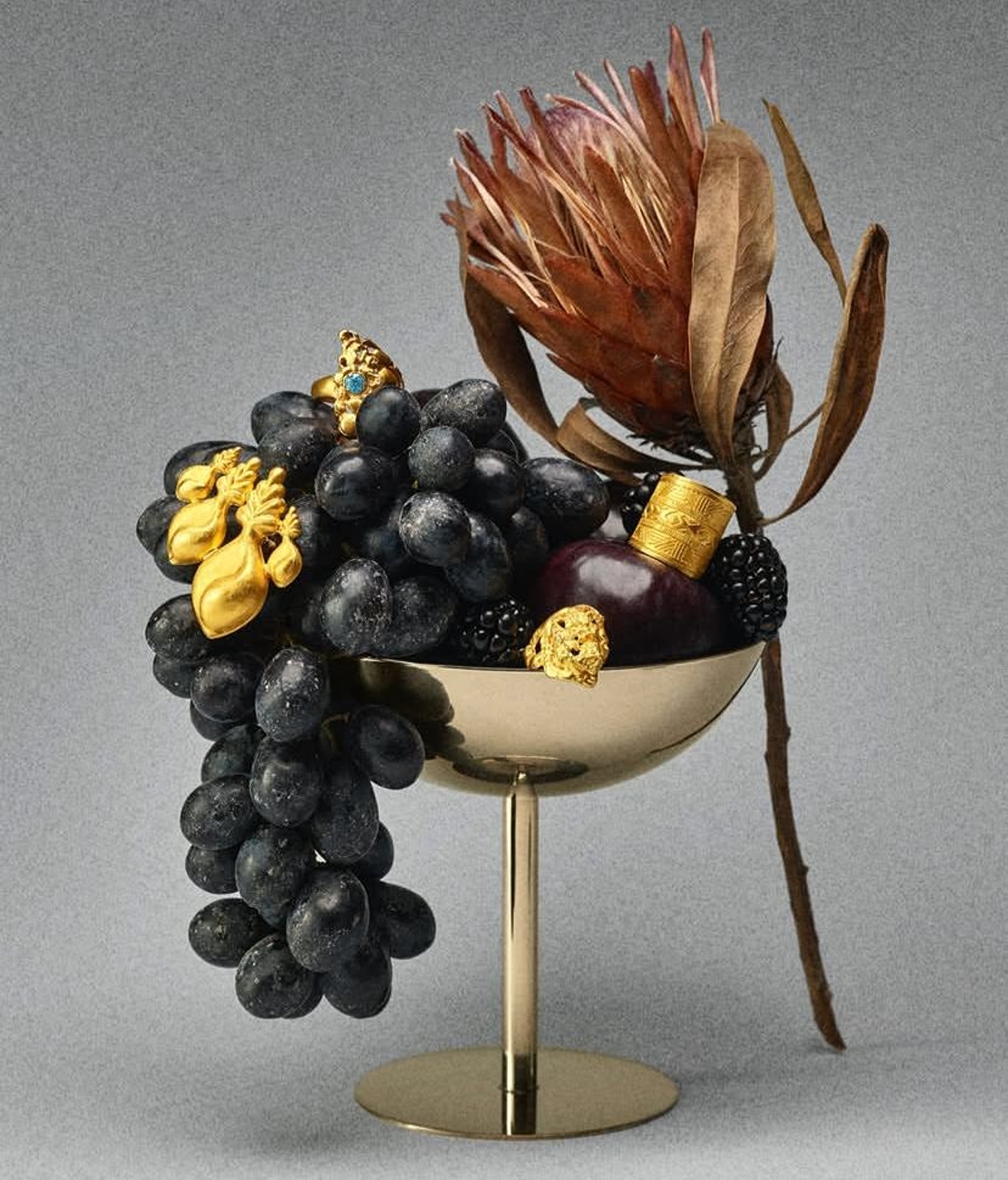
The luxury market today is under a microscope. In an era where everything is visible, shareable, and instantly replicated, the question of what truly constitutes luxury has become unavoidable.
Is it scale, price, and exposure, or is it discretion, intention, and time?
As heritage houses race to remain relevant in a landscape shaped by algorithms and virality, the idea of luxury itself feels increasingly hollowed out, flattened by overexposure and mass accessibility.
Nakhla Jewelry emerges from a different lineage altogether, shaped long before branding became performative. It belongs to a generation that understood discretion as a form of power, where exclusivity was sensed.
The insistence that every piece be entirely handmade, crafted locally by Egyptian artisans, reflects an older philosophy that is rooted in the belief that luxury is inseparable from human touch, patience, and the passing of knowledge from one hand to another.
“When you touch things with your hand, there is an energy,” Nakhla reflects. “Not just the design, but the human energy passed into it. It’s spiritual. That’s our edge, and that’s what the world cannot replicate.”
It is not only in the designs or the fact that each piece is handmade; it is also in how they nurture their artisans, welcoming them into the brand’s journey as part of the family. In this way, the knowledge of the craft is preserved, living on as it is passed from one generation to the next.
“We’ve worked with the same artisans for over forty years, and they later trained their children and passed on their knowledge to them,” she says.
“For our generation, the people you worked with were your family. You were responsible for one another; you looked after them in a real way. It wasn’t transactional like it is today. It wasn’t just a contract.”
Even the decision of where to open the first shop was deeply considered.
Rather than chasing visibility or foot traffic, the location was chosen to mirror the brand’s own story. Set along the Nile in Giza, just moments from her mother’s home and near Aunt Anna’s former address, the space was anchored in her own personal history.
For Nakhla, it was a way of keeping the brand grounded, tied to memory, place, and an emotional center.
“People told me no one would walk there,” she says. “I said, if someone truly wants to buy, they will come. And they did. People queued in the street.”
Over the decades, Nakhla Jewelry welcomed an extraordinary range of royal and elite visitors, among them Prince Michael of Kent, Lady Balfour, and Jacob Rothschild from the British royal family, during a period when Egypt was cautiously reopening to the world in the late 1980s and 1990s.
Yet the brand never chased visibility. “We come from a generation where discretion is the tool,” Nakhla says. “We are not about showing off.”
From the very beginning, Nakhla and her family understood that building a luxury brand is not something that can be rushed; it must be carefully earned. Longevity, they believed, comes only from carving out a rare identity, one that leaves its own imprint rather than following what already exists.
This philosophy was repeatedly tested by Egypt’s modern history.
The upheaval of the 2011 Arab Spring, the years of uncertainty that followed, defined by curfews, instability, and a dramatic drop in visitors, and later the global standstill of COVID-19, which once again sealed borders and stalled movement, placed a lot of pressure on the brand.
That the brand even survived each historical era is proof not only of its own resolve, but also of the enduring strength of Egypt’s arts and culture sector.
In a volatile world, the brand’s survival points to a simple philosophy, which is that for a luxury brand to last, it must withstand being tested, and it can only do so if its designs are truly unique, anchored in a history and identity that cannot be copied, outsourced, or imitated elsewhere.
“These fifteen years have been very tough, I always say that it is a miracle that Egypt even survived,” she says. “Egypt has only begun to breathe again very recently.”
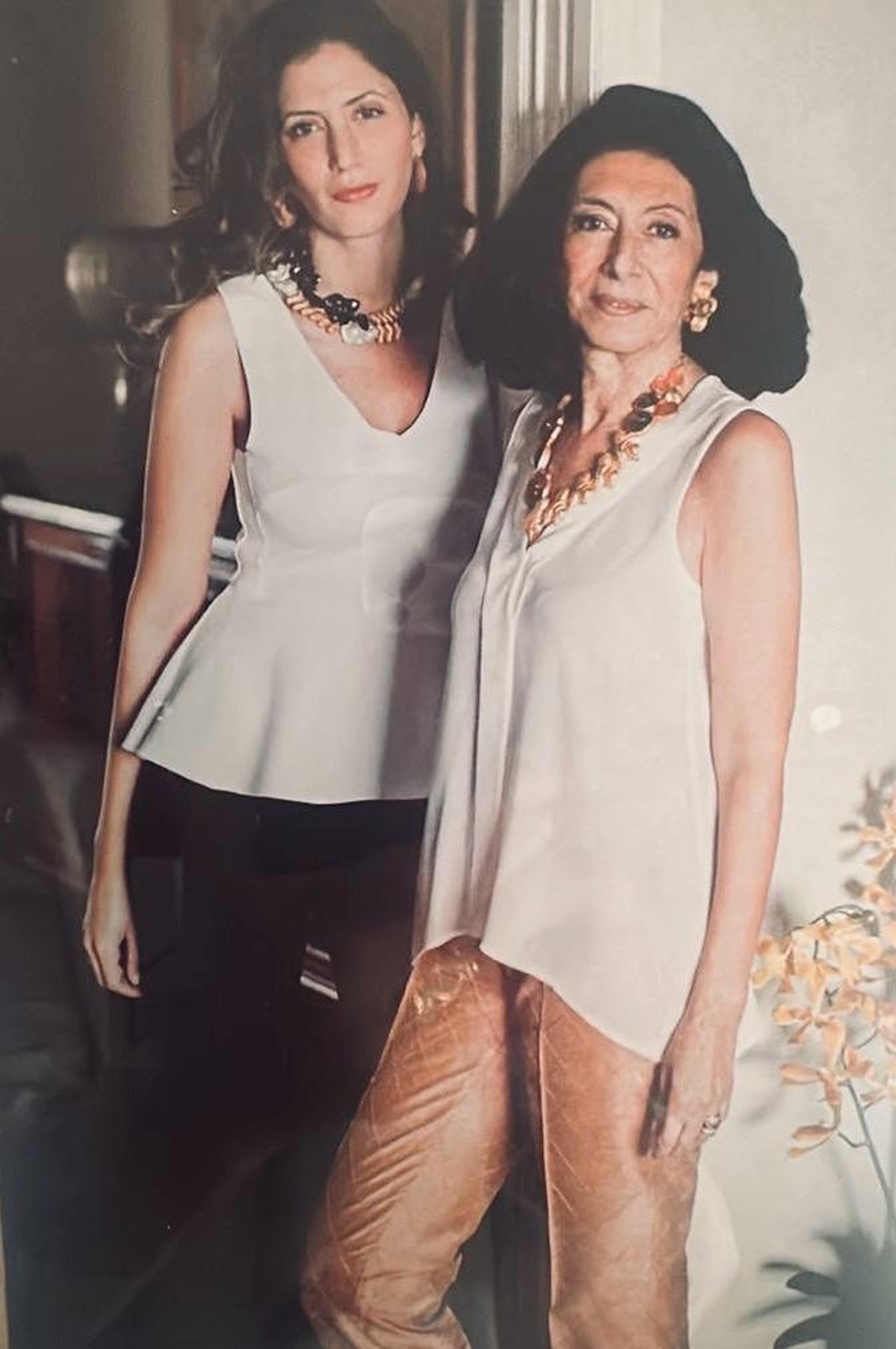
Today, the brand’s evolution is guided by her daughter Malak Nakhla, who represents a generation attuned to global presence, leading to Nakhla Jewelry’s presence at the Grand Egyptian Museum.
Nestled in the shadow of Ramses II, the store feels like a miniature version of the Grand Egyptian Museum itself, where centuries of history are distilled into a single piece of jewelry, a single precious design.
And yet, the heart of the brand remains intact, even after all these years, carried most vividly through the memory of women like Lea Boutros Ghali and Aunt Anna Boutros Ghali, who wore Nakhla Jewelry throughout their lives.
“On Lea’s hundredth birthday, we made the cake. I said, ‘Make a wish.’ She whispered, ‘Peace and love.’”
Nakhla pauses, a soft smile crossing her face. “It was a different generation. Gentle, cultured. They invested in beauty.”
In many ways, Nakhla Jewelry sees jewelry as memory, as identity, and as resistance; resistance to erasure, to cultural appropriation, and to forgetting one’s identity and history.
“Why should I ever look abroad?” Nakhla asks. “All the inspiration we need is here.”
And in her hands, Egypt’s past is not merely recreated; it is lived, honored, and carried forward.




Comments (0)