


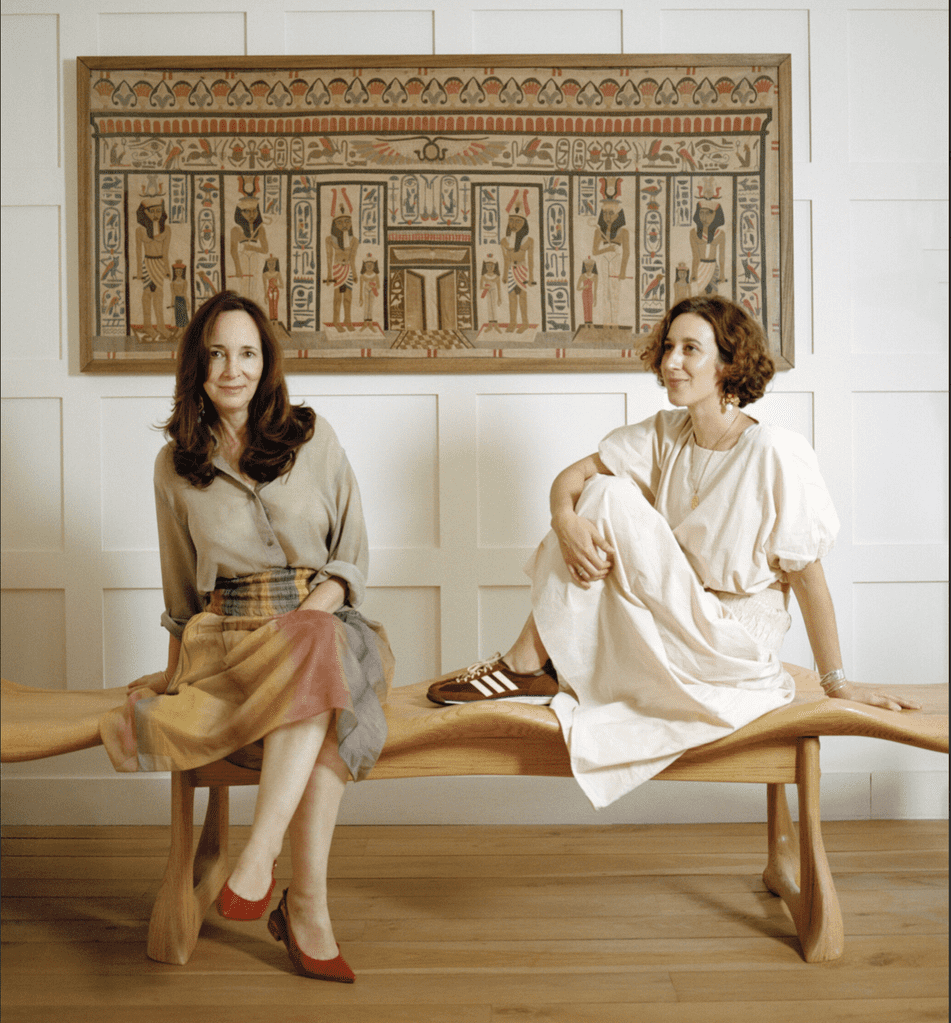
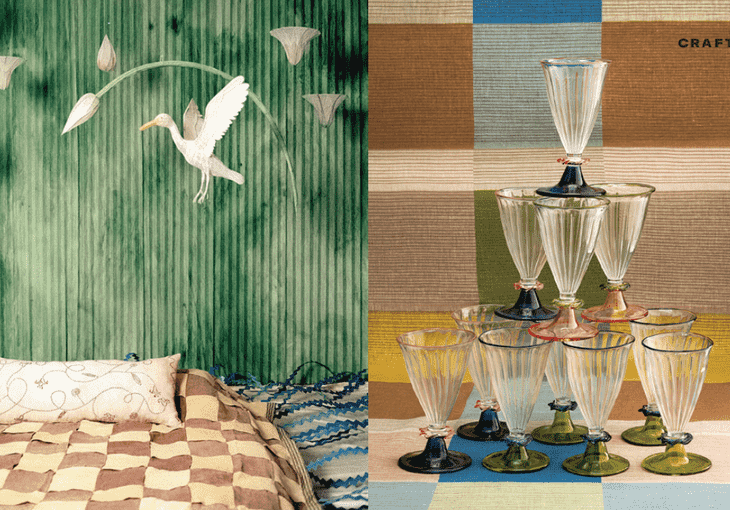
Walking into ANŪT founder Goya Gallagher’s apartment in Zamalek feels like stepping into a hubbub of colour and conversation. The space is beautifully curated, with hand-thrown bowls artfully arranged on the dining table, hand-embroidered cushions perched on the sofas, and colourful hand-blown glasses lining the kitchen counter.
I’m ushered in quietly, a finger raised to my lips. Goya and her Creative Director, Cruz María Wyndham, are still on the phone, animatedly discussing a new collaboration. Countless prints and sketches are strewn around the living room, research for their new collection, soon to be announced.
The two women behind the ANŪT ship are fuelled by a boundless kinetic energy that is difficult to put into words. Exactly one year after launching their homeware brand — dedicated to bringing “the warmth, light, and magic of Egyptian heritage and craftsmanship into people’s homes” — their momentum continues to gather pace.
As we talk about ANŪT’s first year, they bounce comments off each other, finish each other’s sentences, even as new ideas spark between them.
Yet for all this dynamism, Goya insists that, over the last year, they have matured and become calmer. The energy, drive, and motivation behind ANŪT remain the same, but they have the foundations in place now to move more slowly, think more critically, and be more considered about the direction in which they want to take the company.
“Launching the company a year ago was a crazy moment,” Cruz explains. “We were on adrenaline overdrive, organising our launch party whilst trying to bring out a new website, open a new factory and an embroidery school, all while polishing off a new collection. It was hectic.”
The Launch
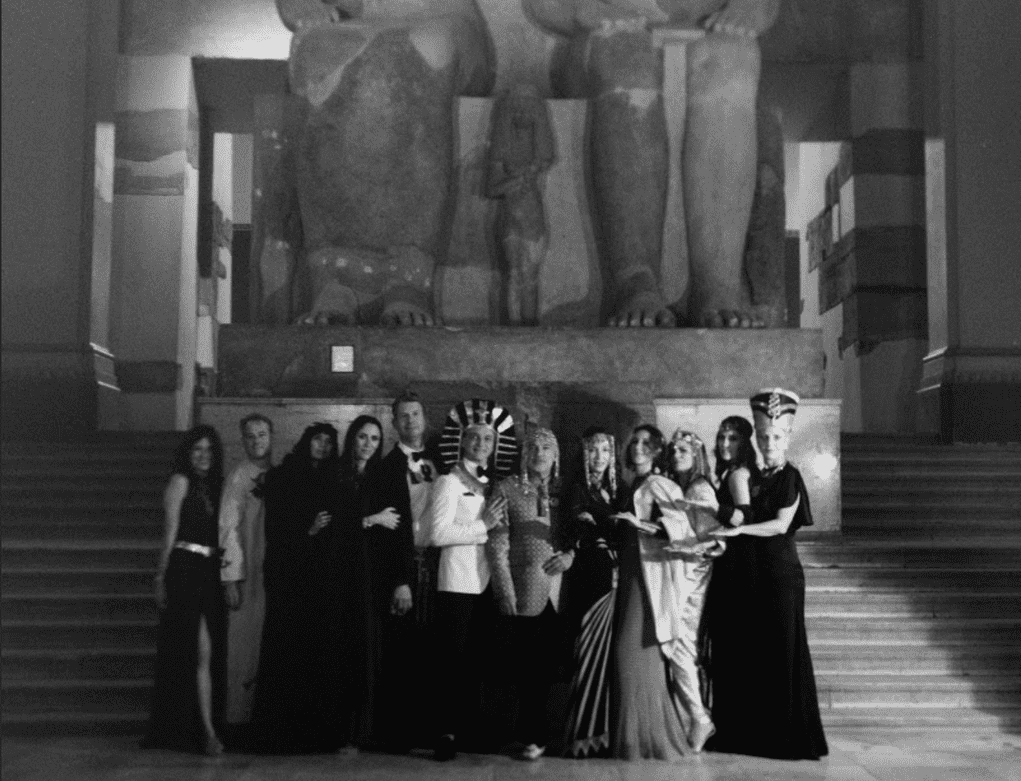
Indeed, on February 11, 2025, ANŪT announced itself boldly. The launch party was held at the Egyptian Museum in Tahrir Square, a night of gallivanting in “theatrical Ancient Egyptian dress” among historic artefacts, with bespoke food structures designed by Egyptian-American artist Laila Gohar and custom headdresses crafted by Cairo-based artist Georgina Sleap.
The location of the launch was no accident. “The place that most connects me to Cairo,” Goya tells me. “Is the Egyptian Museum of Antiquities in Downtown.”
ANŪT was born from Goya’s love of Egypt, a love rooted in 1990s Downtown Cairo, where she plunged into the city’s creative world and co-founded Pose magazine with one Sudanese and three Egyptian partners.
It was a vibrant melting pot of young, eager creatives, a world she was determined to join. That same intrinsically Cairene energy still fuels ANŪT today, an energy the company now seeks to broadcast beyond Egypt.
Goya describes herself as a mosaic of nationalities — a bit Ecuadorian, a bit Chilean, Irish, English. “Being an outsider is part of my DNA!” She exclaims cheerfully. “But when I first came to Egypt, from that first moment I arrived, I felt like I was home. And that has just stayed with me, it hasn’t gone away.”
Special and moving for her personally, the museum also speaks to her on a broader human level. “Surrounded by handmade objects, some over 4000 years old yet so similar to the crafts we still make today,” she explains, “You feel that thread of humanity that holds all of us together across time.”
This belief — that the handmade tells a story, sparks conversation, and brings people together across time and space — is at the heart of not only ANŪT’s vision but also its success.
Today, sustainable craft is in the midst of a global moment. In an overly commodified world of distant and detached production lines, many have developed a newfound appreciation for slow processes, for the handmade.
“All around the world, people are starting to really appreciate craftsmanship and things made by hand,” Goya acknowledges. “And Egypt is at the heart of it. It’s where it all started.”
The People
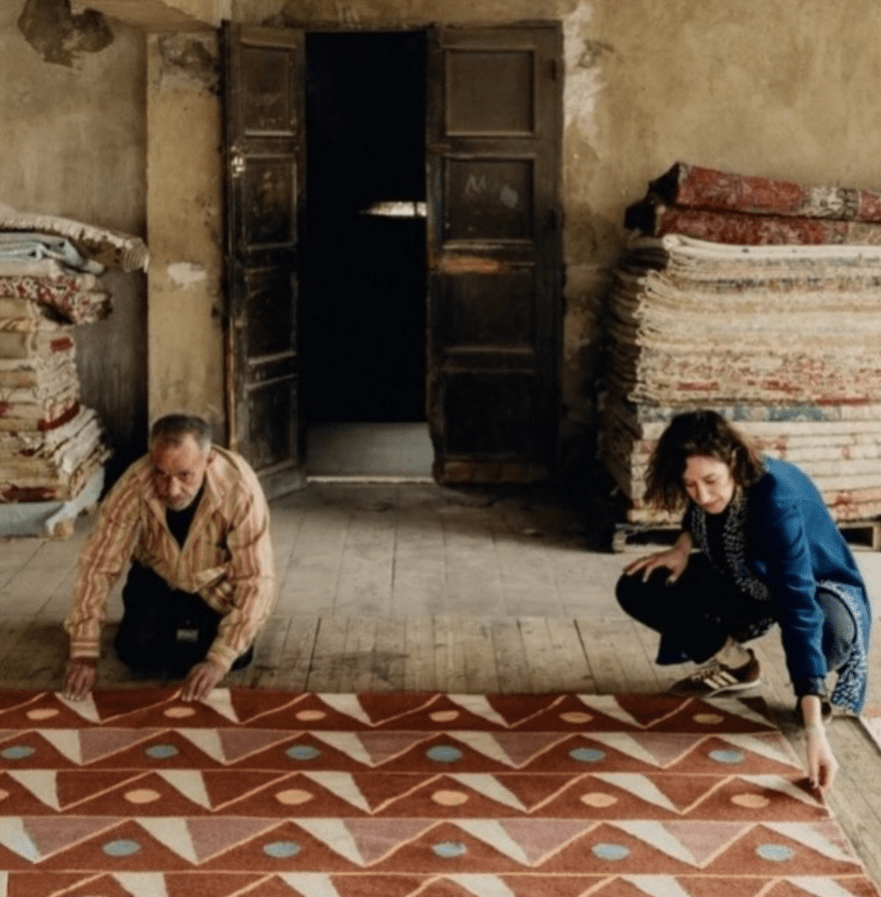
ANŪT has ridden this global wave by placing the artisans it works with at the front and centre of the brand. They are not faceless, nameless makers but talented individuals worthy of public recognition.
Goya and Cruz personally know every single freelance artisan who works for them. “For us, it’s about chemistry,” they tell me. “About building long-lasting relationships.”
It is intentional, too. “We always make sure that we collaborate with like-minded people, with people who are open, who want to dig a little deeper, who are willing to end up in a different place than where we started or expected.”
That the company is people–driven is clear in how quickly the two women drop names, projects, and ideas into conversation. It is almost impossible to follow. A collaboration with Egyptian photographer and poet Mahmoud Khattab has been quietly developing for over a year. Another project with Cairo-based Greek-American visual artist Leah Manatis is set to launch in Athens. A third with Palestinian architect, artist, and researcher Dima Srouji started from a conversation about Milan Design Week in Cairo and quickly became a meeting in Cairo.
They have an extraordinary capacity to bring together different media, artists, artisans, collaborators – to funnel all their disparate energies into a cohesive direction.
The Philosophy
It is this eagerness to experiment that keeps ANŪT exciting and its results unexpected. “On one level,” Cruz explains. “We have this fast-paced, product-selling company where things need to be in production, in stock, up-to-date on the website.”
The business needs to make money, to stay afloat, to pay its artisans properly, to keep things moving.
“But in parallel,” she goes on. “We never want to lose sight of experimentation, of long-term projects which will feed into the products on sale eventually… Somehow!”
They both laugh as she says this, but it is an integral part of how ANŪT works. It is a persistent optimism: that, surrounded by the right people, with the right mindset, things will work out – somehow.
A big part of the brand’s strategy is that it is not overly defined. When I ask them how the company came to be, I’m told it happened almost by accident.
“It started about five years ago, without us even knowing!” They go on between chuckles. “Nūt —the Ancient Egyptian goddess who inspired the brand’s name—knew what was happening and then we kind of tuned in.”
Even now, Goya and Cruz are happy for ANŪT to be open-ended. In fact, they encourage it. “We don’t really believe in making mistakes, in constraints or set out rules, in things having to be done in a certain way.”
The Future
Looking forward, they are channelling this same philosophy. Alongside the exciting news that their website is finally live and taking orders in Egypt — a step that was more bureaucratically challenging than initially expected — they give me a sneaky preview of some of their upcoming plans.
Whether still embryonic or nearing completion, each project shares a common thread: all are centred around people, collaborators, and creatives who add myriad new dimensions to the company.
The focus is on growth, experimentation, and novelty through the prism of interaction.
“Artists and artisans have different brains, they think differently, approach materials differently,” Cruz tells me, in reference to an upcoming project. “We want to see what comes out of interactions between them, what results can emerge from the slow-paced, in-depth, transfer of skills and ideas.”
The stress is on mutual benefit and meaningful impact for both the artist and the artisan, their understanding of a material and its possibilities.
As we finish our tea and our conversation comes to an end, I’m sworn to secrecy about the finer details of their upcoming projects.
I can only say the two women’s optimism is contagious, and there is a lot to look forward to in the world of Egyptian craftsmanship. If the sketches strewn around us are anything to go by, the new collection looks to be an innovative take on ancient themes, a reminder that the impulse to make — by hand, in community — has always bound people together and still does.




Comments (0)