


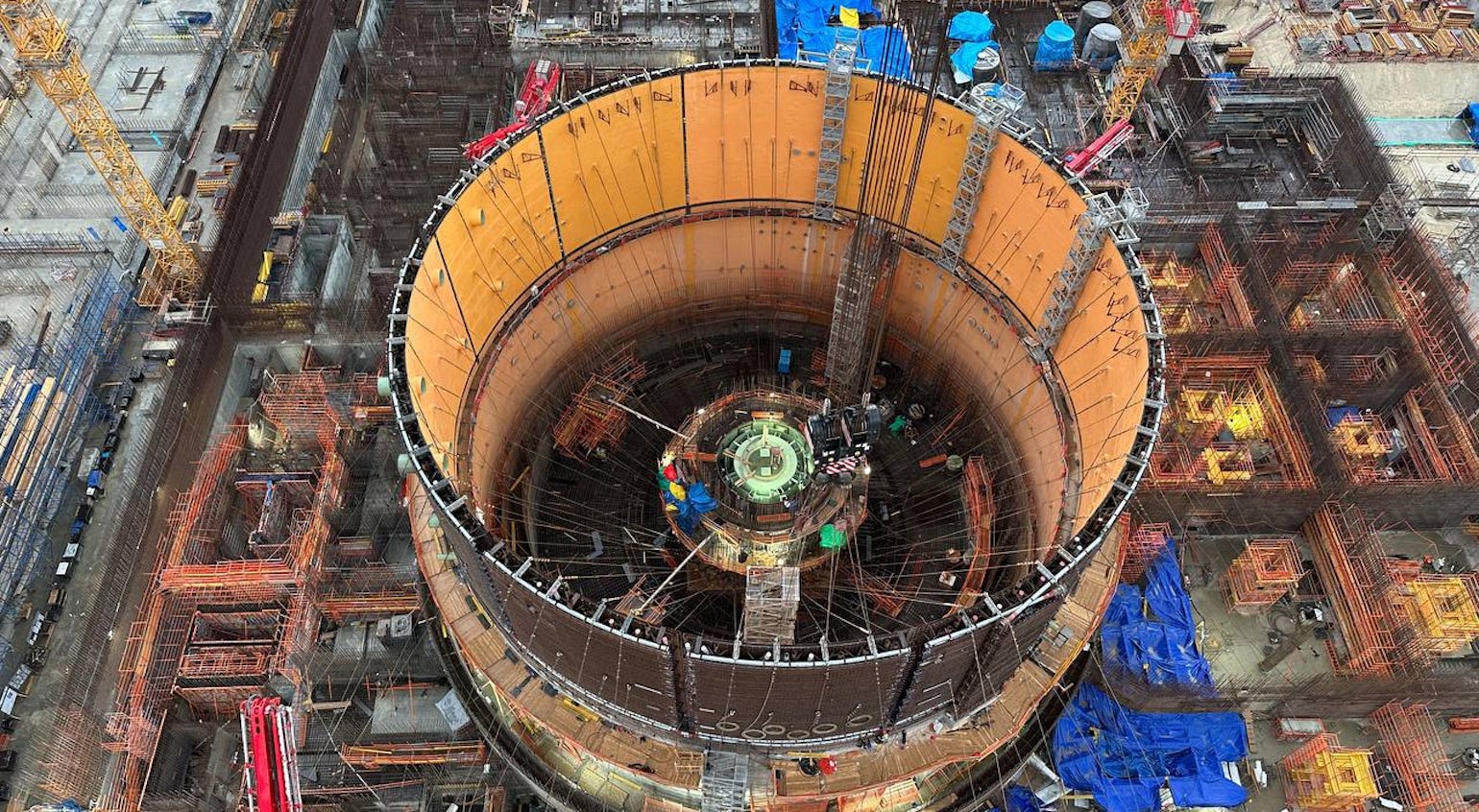
Egypt and Russia are seeking to accelerate work on the El Dabaa nuclear power plant, reaffirming their commitment to keeping the project on track as part of ongoing energy cooperation between the two countries.
During a meeting in Cairo on Friday 10 April, Egypt’s Minister of Electricity and Renewable Energy, Mahmoud Esmat, emphasized the importance of enhanced coordination between Egyptian and Russian institutions to ensure timely delivery of the project. He described the El Dabaa facility as a cornerstone of Egypt’s peaceful nuclear energy program aimed at electricity generation.
The discussions took place with a Russian parliamentary delegation headed by Nikolai Shulginov, chairman of the State Duma Committee on Energy. According to Egypt’s Ministry of Electricity, the talks addressed progress at the construction site as well as broader opportunities for collaboration in clean and renewable energy sectors.
The Russian delegation also visited the El Dabaa site, located on Egypt’s northern coast. In a statement, the Russian Embassy in Cairo highlighted the project’s strategic significance and described it as a reflection of sustained bilateral cooperation in the peaceful use of nuclear technology.
Both sides reviewed timelines for the project’s various phases, coordination between joint teams, and preparations for transitioning between construction stages. The plant is being developed under a 2015 agreement between Egypt and Russia, with final contracts signed in 2017. The estimated cost stands at USD 25 billion (EGP 1.3 trillion), largely financed through a Russian state loan on concessional terms.
Once completed, the facility will consist of four nuclear reactors with a combined capacity of 4,800 megawatts. Each unit is expected to generate 1,200 megawatts of electricity. The first reactor is currently scheduled to begin operations in 2028, with the remaining units planned to come online by 2030.
Egyptian officials say the project plays a key role in diversifying the country’s energy sources and increasing reliance on low-carbon power generation. Russian representatives have also framed the initiative as an opportunity to support the development of advanced technological infrastructure, contributing to Egypt’s long-term energy security.
Authorities from both countries state that the plant is being constructed using modern engineering technologies designed to meet international safety and environmental standards.


Comments (0)