


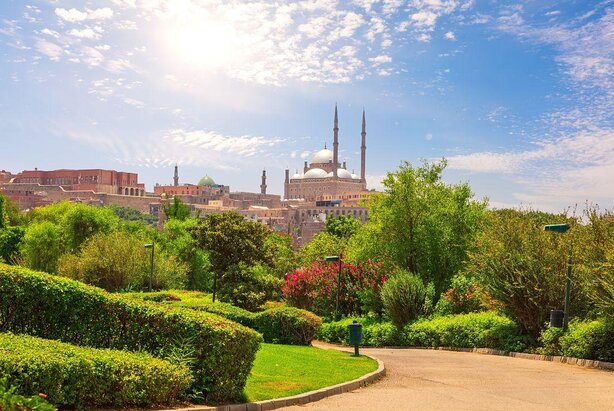
Prime Minister Mostafa Madbouly reaffirmed on Tuesday, 2 June, the Egyptian government’s commitment to reviving Cairo’s historic and heritage landmarks during a meeting reviewing restoration and upgrading efforts across Islamic, Khedivial, and other key city districts, in line with directives from President Abdel Fattah Al-Sisi.
Speaking during the session, Madbouly said the integrated approach is intended to protect Cairo’s distinctive architectural, historical, and cultural character while strengthening the city’s tourism appeal.
Madbouly stated that, once ongoing restoration works and the rehabilitation of surrounding areas are completed, central Cairo is expected to become an open-air destination capable of drawing visitors from around the world.
He pointed to cultural and artistic programming as a key part of this vision, citing the recently launched “Art Street” in downtown Cairo as an example of how public spaces can be activated to support tourism and community engagement.
The meeting also focused on how state agencies are working to restore Islamic and historical landmarks and develop their environs. Madbouly emphasized that these initiatives are meant to preserve the integrity of heritage sites and ensure that the spaces around them are improved in line with official guidance.
Minister of Awqaf Osama Al-Azhari reviewed efforts to restore historical mosques and shrines, highlighting that the work aims to safeguard Islamic heritage and Egypt’s civilisational identity.
Al-Azhari further noted that the projects include the development of integrated tourist routes linking multiple historical sites, designed to offer visitors a more cohesive and comprehensive cultural experience rather than isolated attractions.
At the close of the meeting, Madbouly underscored the importance of both restoration and urban improvement initiatives, calling for the adoption of the “Greening Cairo” initiative. The initiative is aimed at converting evacuated or vacant urban spaces into green areas, with the goal of increasing the per capita share of green spaces and complementing heritage conservation with healthier, more livable public environments.


Comments (0)