


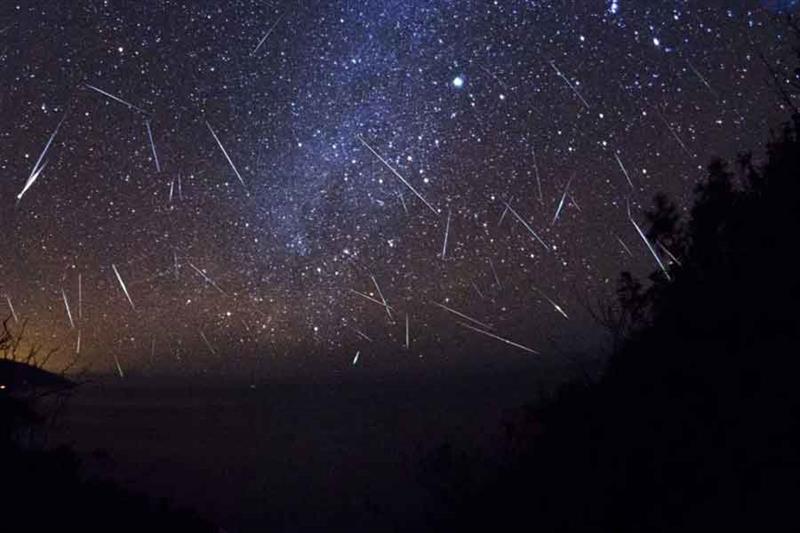
Skywatchers around the world are set to witness a rare combination of four astronomical events on Wednesday, 12 August, including a new moon, a six-planet alignment, a total solar eclipse and the peak of the Perseid meteor shower. While the solar eclipse will not be visible from Egypt, several of the other celestial events will offer opportunities for observation from the country.
The first event is expected to be a new moon, which will occur at 8:36 p.m. Cairo time. With the Moon positioned between Earth and the Sun, its faintness will leave the night sky darker than usual, creating favourable conditions for observing stars and meteors from areas with limited light pollution.
In the hours before dawn, Egyptian skywatchers will also have the chance to look for the six-planet alignment, with Jupiter, Mercury, Mars, Uranus, Saturn and Neptune appearing together in the sky. Jupiter, Mercury, Mars and Saturn should be visible to the naked eye under suitable conditions, while Uranus will require binoculars and Neptune a telescope.
The Perseid meteor shower will also be visible from Egypt, reaching its peak around 12 August. The absence of bright moonlight is expected to make viewing conditions particularly favourable, especially away from Cairo and other areas affected by light pollution.
What about the solar eclipse?
The total solar eclipse will not be visible from Egypt. According to NASA, the path of totality will pass through parts of Greenland, Iceland, northern Russia, northern Spain and a small area of Portugal, while parts of Europe, North America, Canada and northwestern Africa will see a partial eclipse.
For Egyptians hoping to catch the meteor shower and planetary display, dark, open areas away from city lights will offer the best viewing conditions. The country’s deserts and other areas with lower levels of light pollution can provide better conditions than heavily populated urban areas.






Comments (0)