


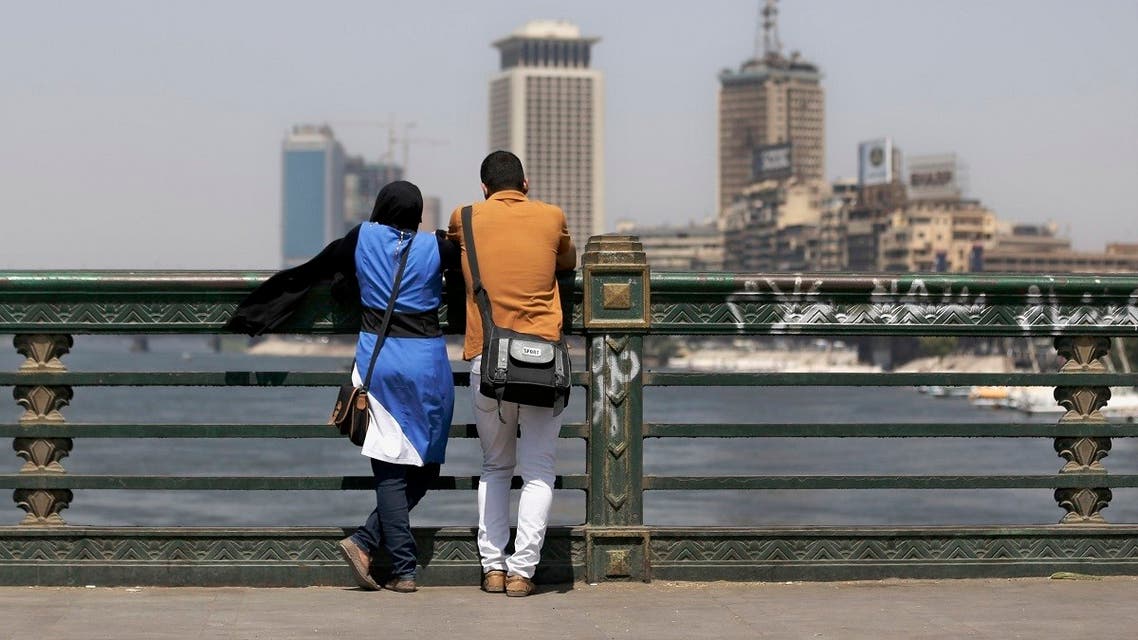
When she was young, Mariam Mohamed, 28, an architect from Cairo, used to clearly picture a big, lively family, a man she loved, and a child she could mold into someone who could make the world a little better. But, as a grown-up, she has let that picture go.
“I can’t bear the idea of doing an okay job,” she told Egyptian Streets. “Or raising someone who does not feel loved, content, or encouraged to reach their potential.”
Mariam is one drop in the bucket.
Across Cairo, a growing number of Egyptians in their late twenties and thirties are arriving at the same conclusion, not out of indifference to having a family, but because of how seriously they take the responsibilities, finances, and realities of raising a child.
Egyptian Streets interviews with several people reveal the common thread of delaying or forgoing parenthood as it is no longer a private lifestyle choice, but a direct response to a national economy in crisis, a widening gap between rich and poor, and a regional landscape rattled by war.
The data backs up their reasoning.
Egypt’s annual urban inflation rate climbed to 15.2 percent in March 2026, and jumped again to 14.9 percent in July after a brief cooling stretch, according to the Central Agency for Public Mobilization and Statistics (CAPMAS). Housing and utility costs alone rose 31.7 percent year-on-year in February 2026.
Rates of population have also dropped. Egypt’s total fertility rate fell to 2.34 children per woman in 2025, down from 2.54 in 2023, while the crude birth rate dropped to 18.1 births per 1,000 people from 19.4, according to Egypt’s Ministry of Health and Population.
For the first time in years, annual births fell below two million. The government credits a family-planning campaign, but experts argue that high inflation, which hit 33.6 percent in 2024, is the real driver.
For the people living through it, the math is simple and unforgiving.
A good life feels unaffordable
Mohamed Alaa, 32, an electrical engineer from Cairo, once assumed fatherhood was in the cards. What changed his mind was recognizing the trade-off it would demand: give a child everything and resent them for the sacrifices that entails, or hold back and risk a child who resents him for it.
“There isn’t enough money and opportunities to create a stable home for myself, let alone a child,” he said.
On the other hand, Donia Ahmed, 29, a creative director, never felt the pull toward motherhood, but says the economics of Egyptian parenthood have only cemented her choice.
“There is no way you could afford giving your child a chance at a good life without paying a lot for their education,” she said. She sees a country splitting further into two tiers of children who are “one of the lucky ones,” living in “complete unawareness of the situation of the other children living in poverty,” and on the other side, everyone else.
Ahmed’s perception tracks with the data as well.
While Egypt’s economy is technically growing, with gross domestic product (GDP) reaching 5.3 percent in the second quarter of fiscal year 2025/2026, accelerating from 4.3 percent in the same period of the previous year —33.5 percent of Egyptians remain in poverty as per a 2025 official report, a rate that has held steady even as persistently high inflation continues to chip away at families’ purchasing power.
A tightening household budget weighs on the decision as heavily as economic instability. Taher Hossam, 34, a procurement manager, said he always imagined becoming a father, but only after he builds the life he wants.
“The world feels less certain, and that makes me want to be even more grounded and prepared before taking on the responsibility of a new life that will depend on me,” he shared.
Mohamed, afraid of failing as a parent, shared similar views.
“The world seems to be very cruel right now, and witnessing it is heartbreaking. Bringing more people into the equation, trying to shield them or lift their spirits, seems impossible.”
Parenthood becomes a choice
What distinguishes this generation’s ambivalence from hardship alone is how deliberately they describe it, as none called their choice a loss. Ahmed expressed certainty in her decision, as did Hossam.
“I don’t see this as giving anything up,” he said, framing his delay as a form of care rather than avoidance.
While Alaa is “mostly at peace,” he can not help but wonder about what could have been. However, even a hypothetical recovery does not change his mind.
Even an improved economy would not make Mohamed reconsider. She said, “I don’t like to regret or imagine hypotheticals that cannot be real. Given the circumstances, I can barely imagine my own future, let alone a dependent’s.”
Alaa said better conditions might help him in the short term, but he is “not sure he would trust it enough to bring his child into it.”
Only Hossam, whose hesitation is tied more to personal timeline than national conditions, said easier circumstances could move his plans forward, though even then, he said, “I’d still want to achieve my main goals first.”
For a country where children under 18 still make up 39.7 percent of the population, this shift in attitude may prove more consequential than any single inflation report. Egypt’s population is still growing. But some of the people expected to drive that growth are increasingly describing parenthood as a risk to be weighed rather than a milestone to expect, and, for now, one that a rising number of them are choosing not to take.


Comments (0)