


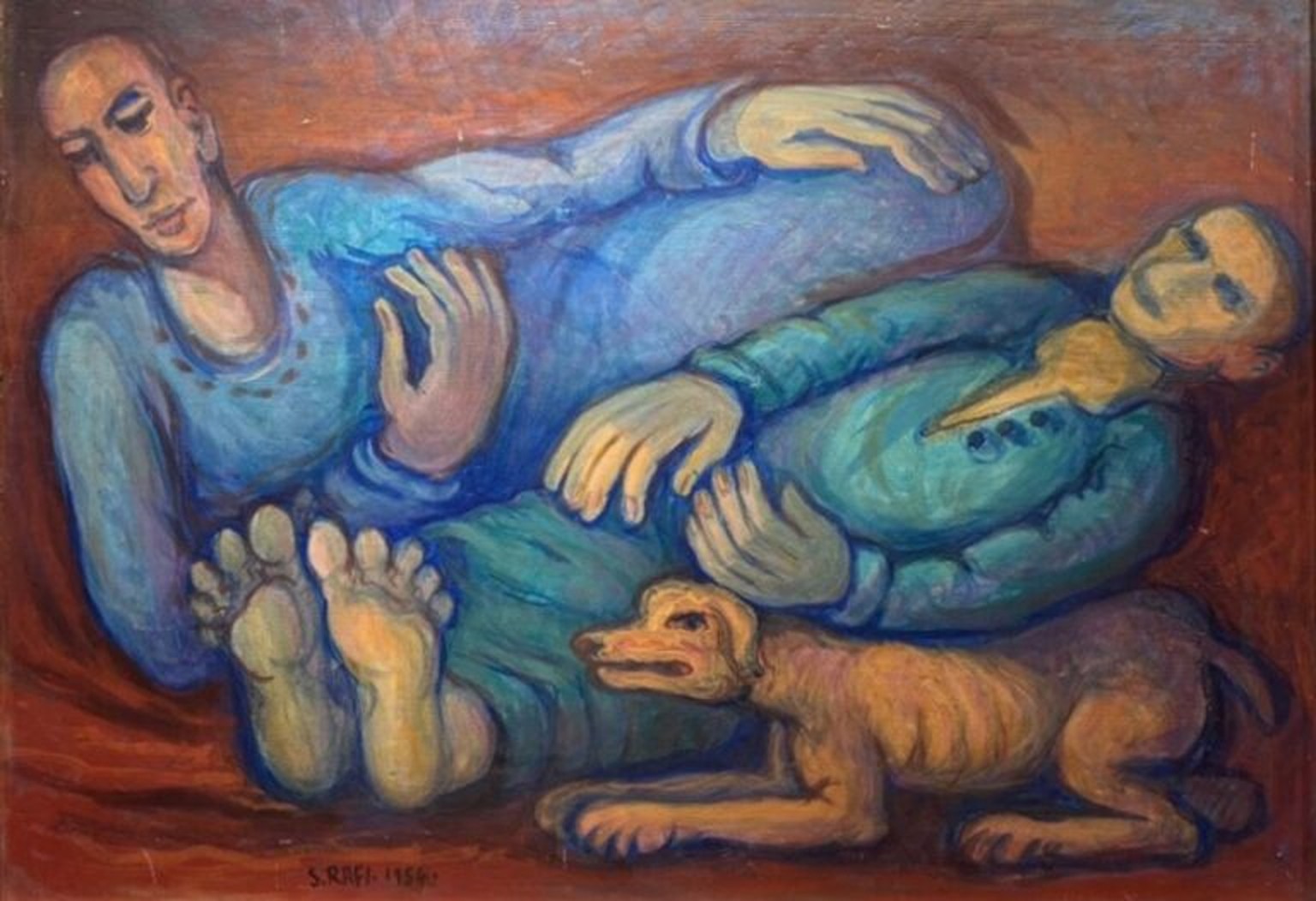
What happens when nearly a century of Egyptian art is brought together in one room?
The answer can be found this fall in Washington, D.C., where “El Marsam: Modern and Contemporary Art from Egypt” will offer American audiences a rare look at the artists, ideas and stories that have shaped Egypt’s modern visual culture.
Opening September 18, 2026, at the Middle East Institute Art Gallery, the exhibition brings together roughly 45 works spanning painting, sculpture, drawing, photography and collage. It will remain on view through December 11.
The exhibition is especially significant because it is among the first gallery exhibitions in the United States devoted exclusively to modern and contemporary Egyptian art.
Curated by Cairo-born curator Heba El Kayal, the exhibition takes its name from the Arabic word El Marsam, meaning “studio.”
An Egyptian story on an international stage
The choice of title is more than a nod to language. In Egypt, marsam has increasingly replaced the French word atelier, once commonly used to describe an artist’s studio. For El Kayal, that shift echoes the evolution of Egyptian art itself; a journey shaped by both international artistic movements and deeply rooted Egyptian traditions.
“This exhibition shows the world what some of us have long known, that Egyptian artists have been shaping modern art for nearly a century, on their own terms,” said curator Heba El Kayal. “Now American audiences can see it firsthand.”
Rather than presenting Egyptian art as a footnote to European or American modernism, El Marsam puts Egyptian artists at the center of their own artistic history.
One of the exhibition’s most compelling features is the way it brings artists from different generations into the same conversation.
Visitors will encounter pioneering modernists such as Abdel Hadi El Gazzar, whose work draws on Egyptian folklore while embracing surrealist imagery, and Inji Efflatoun, whose art was deeply connected to her activism and her advocacy for women and working-class communities.
Alongside them are contemporary artists such as Youssef Nabil, whose hand-painted photographs explore memory, nostalgia, exile, and an imagined golden age of Egypt.
The result is a visual conversation across generations; one that asks how ideas about identity, politics, memory, and belonging change, and what remains constant.
Artist Sherine Guirguis, whose work is included in the exhibition, describes the experience of seeing these generations together as particularly powerful.
“There’s power in placing these generations of artists side by side,” Guirguis said. “You start to see the throughlines, the questions each generation inherited from the one before it, and the ways we’re still answering them.”
Many of the works on display come from private collections, galleries and The American University in Cairo, with support from donors who believe Egyptian art should be more widely seen and understood by audiences in the United States.
The exhibition opens with an invitation-only VIP event on September 17, bringing together diplomats, government officials and leaders from the art world. The evening will feature a curator’s talk and guided tours.
Throughout its run, the exhibition will also host talks and panel discussions examining the intersections of art, heritage and geopolitics in Egypt.

Comments (0)