


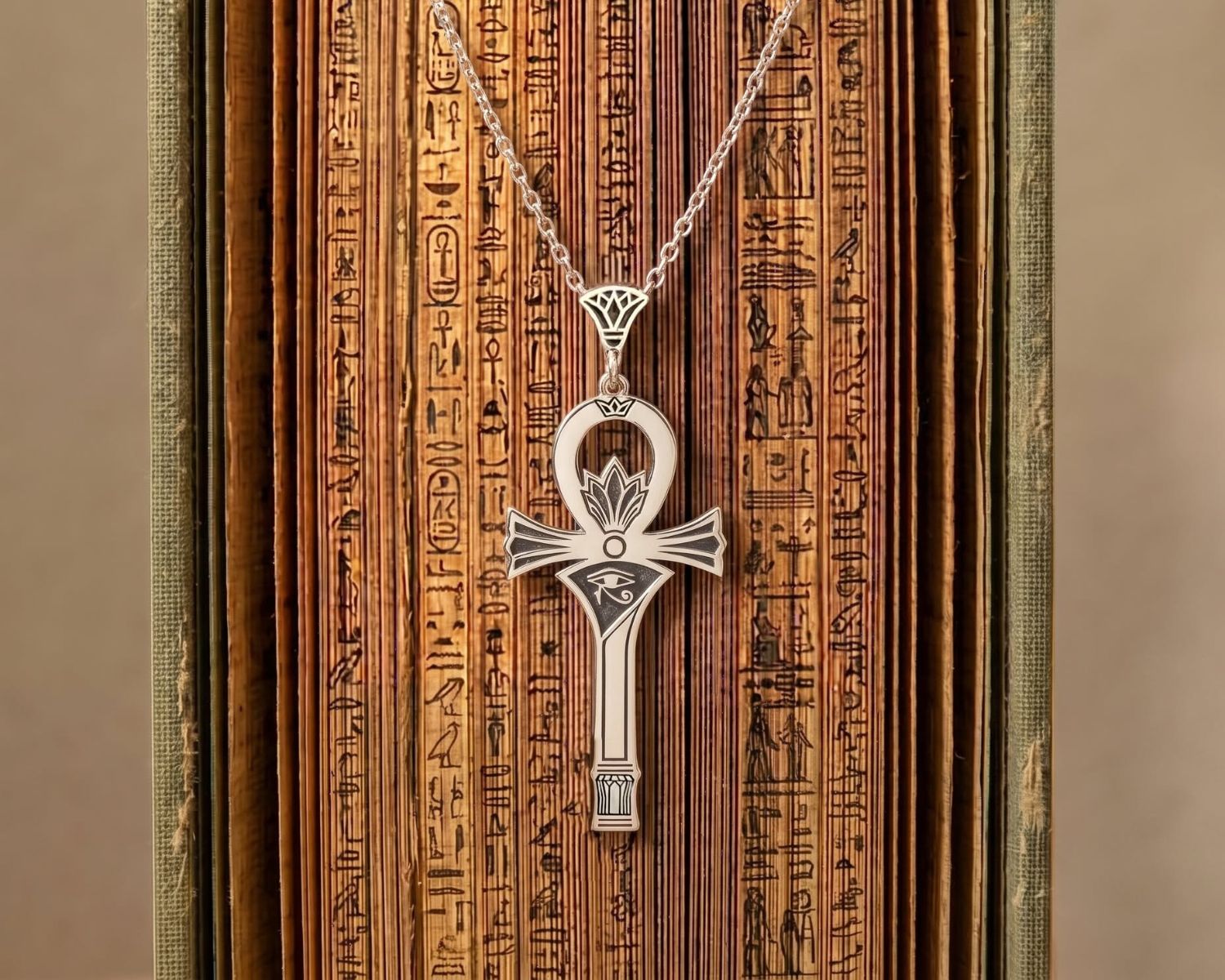
Column of Life starts with an ankh. Atheel Medhat stretched the ancient Egyptian symbol into a tall, narrow column, gave its edges the stepped geometry of Art Deco, and set a blooming lotus and the Eye of Horus into its frame. The finished piece is part pendant, part architectural column.
It is the latest design from CASA DE’ ETHYL, the silver brand Medhat founded. Like all her work, it began with a building style and was refined until it was small enough to wear.
An Architect First
Medhat says that from an early age she was drawn to small details: ornaments, handmade objects and the craftsmanship hidden in them. That interest led her to architecture. She graduated in 2021 from the architecture department of the College of Engineering at the Arab Academy for Science, Technology and Maritime Transport, with RIBA Part I accreditation. Her graduation project, a “Handicrafts HUB” built around reviving traditional crafts and heritage, received a grade of Excellent.
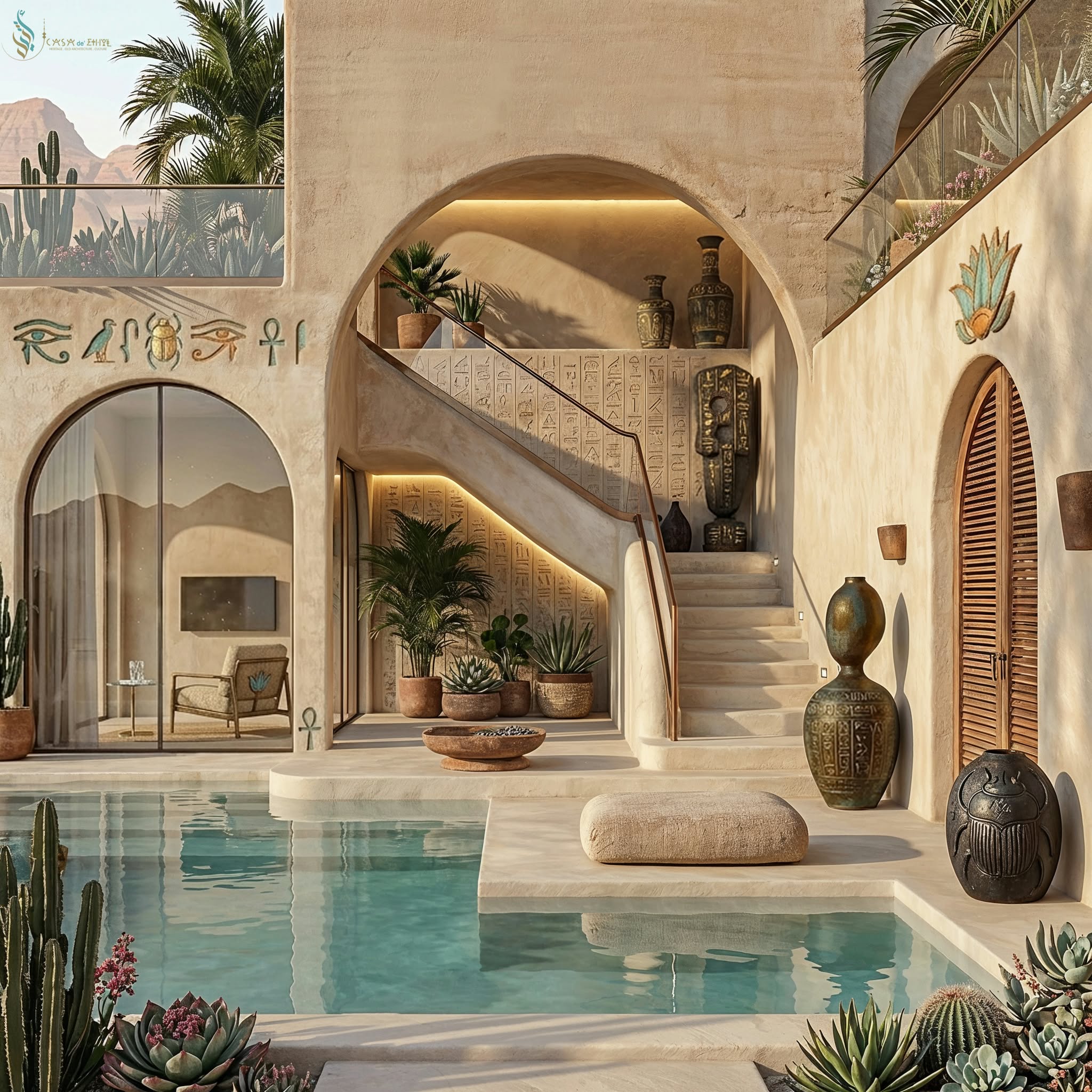
She still practises as an architect, and her building designs follow the same themes as her jewellery. Recent architectural projects include Ancient Nubia, Ancient Egypt Future and The Soul of Old Mashrabeya, each of which reinterprets historical elements through a modern, minimal approach.
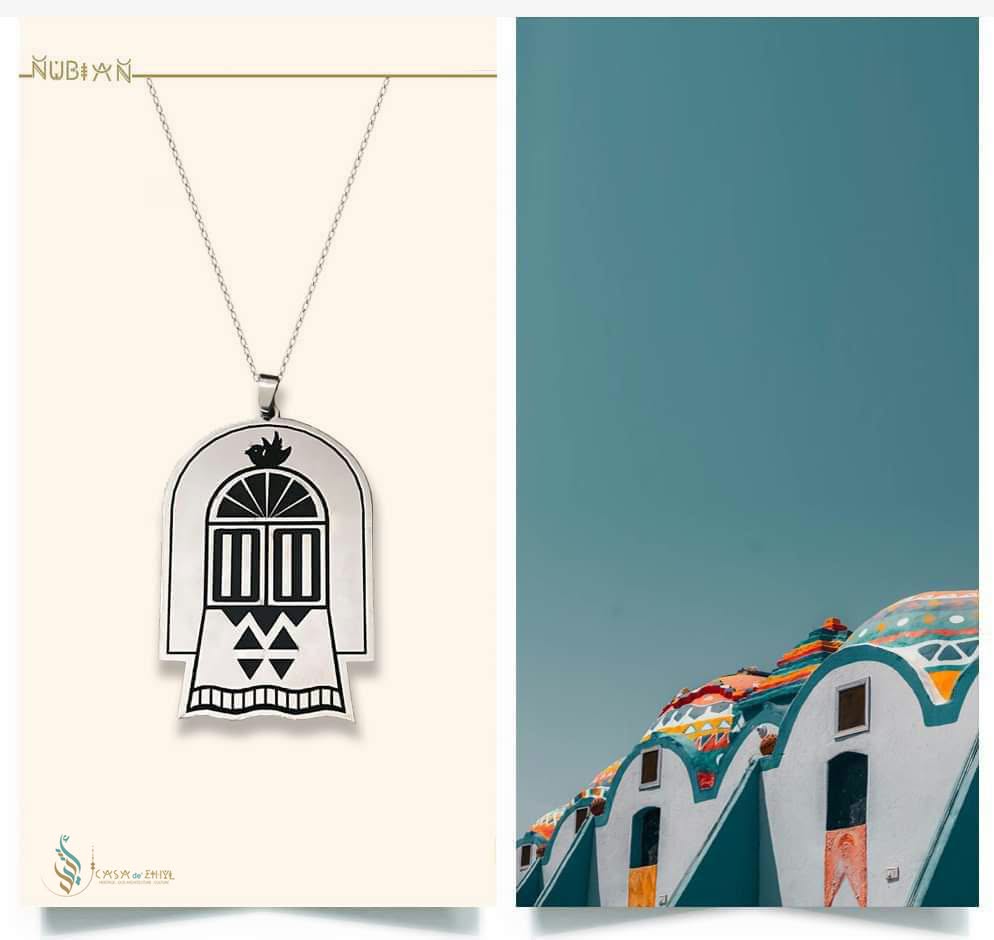
She named the brand CASA, the word for “home”, because she wanted it to stand for a wider project of reinterpreting Egypt’s architectural heritage and cultural identity, beyond the silver pieces themselves.
Buildings in Miniature
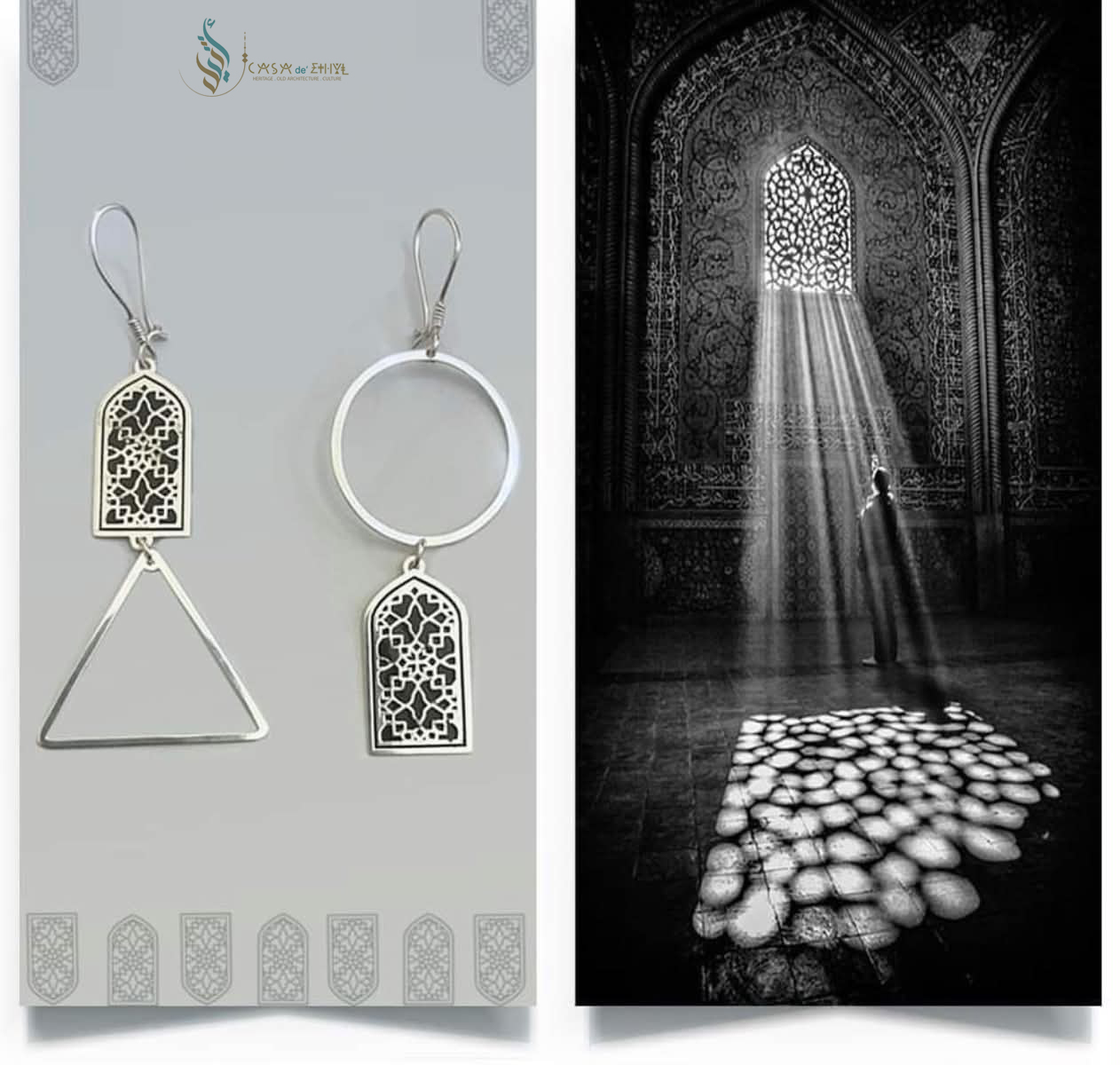
Medhat draws from several periods of Egyptian history, including ancient Egyptian and Islamic architecture, Nubian culture and Art Deco, and often combines them in the same piece.
“I love blending civilizations and architectural styles within a single piece creating a unique fusion of forms and patterns,” she says.
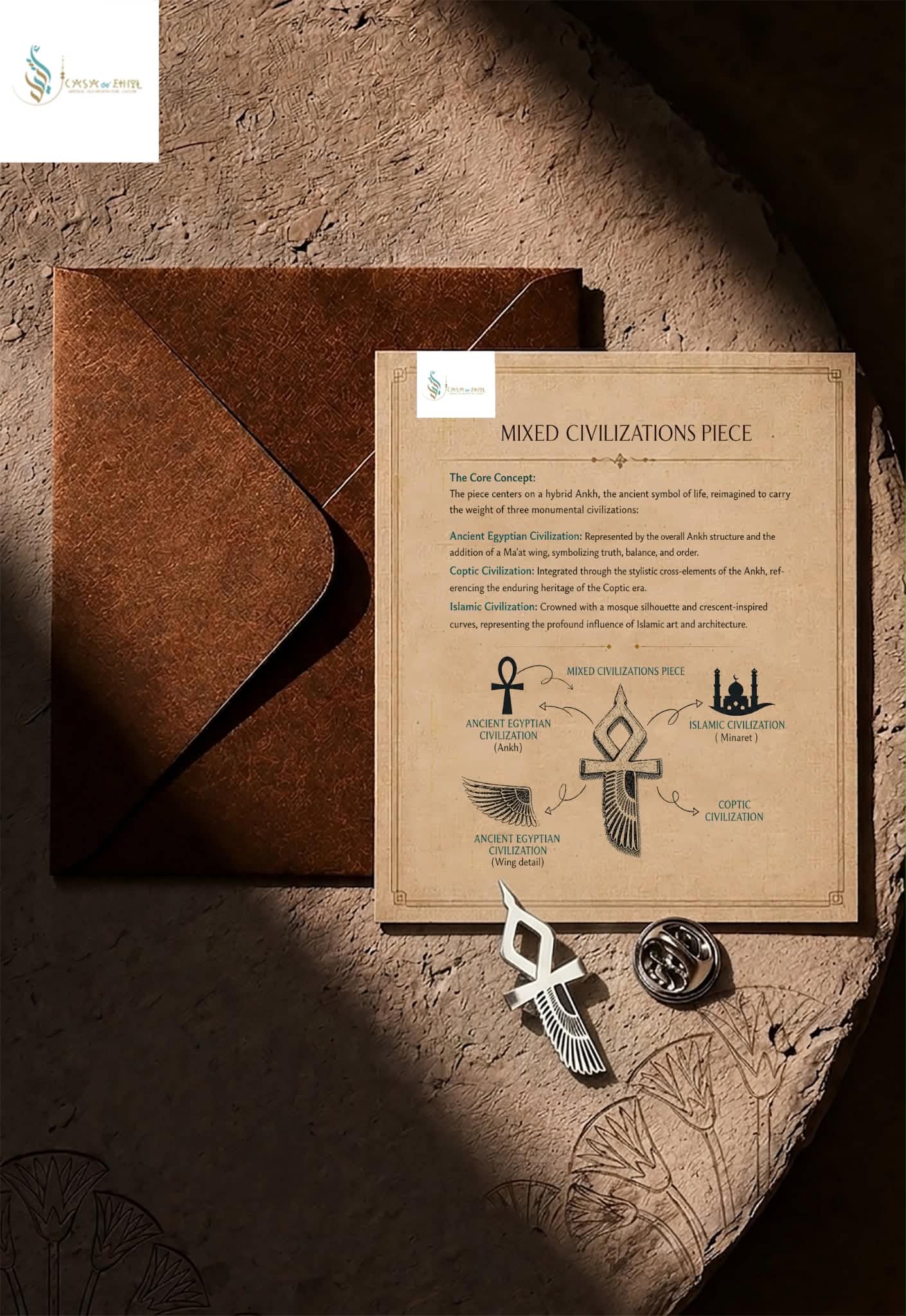
Her first design, Mixed Civilizations, did exactly that. Built around the form of the ankh, it brings together ancient Egyptian, Coptic and Islamic influences in a single piece. She describes her approach in architectural terms. “Every curve may reflect the distinctive facades of Nubian architecture, every arch may draw inspiration from Islamic architecture and every line or ornament serves a purpose rooted in an architectural detail,” she says.
Working at the scale of jewellery has made her rethink the things she deals with as an architect, such as proportion, structure and the balance between solid and empty space, while trying to keep the character of the original building.
A Month for Every Design
Each design takes about a month. Medhat researches the patterns and forms she wants to use, sketches the concept, and then refines it in AutoCAD and 3ds Max, the same software she uses for her architectural work. The final design goes to Egyptian artisans in workshops, who make each piece by hand in pure silver.
The research matters to her because many of the buildings she draws on are disappearing. “When we lose a historic building we lose part of our cultural identity and the stories it carries,” she says. She wants those stories to reach people beyond the places where the buildings stand, and to pass on to future generations.
Buyers often respond to that backstory. “People often become curious when they discover the stories and concepts behind each piece,” she says.
What Comes Next
CASA has already appeared at Egypt Energy and at events at the Grand Egyptian Museum, and Medhat wants to take it further. “I’d love to see CASA grow into an internationally recognized Egyptian design brand, sharing our cultural stories worldwide,” she says. She also hopes to open a physical store eventually, designed by her and reflecting the same architectural identity as the pieces.
For now, CASA DE’ ETHYL sells through its Instagram and Facebook pages, where Medhat shares each collection and the story behind every design. Prices vary by piece, depending on the level of detail, the craftsmanship involved and the depth of the concept behind it.





Comments (0)