


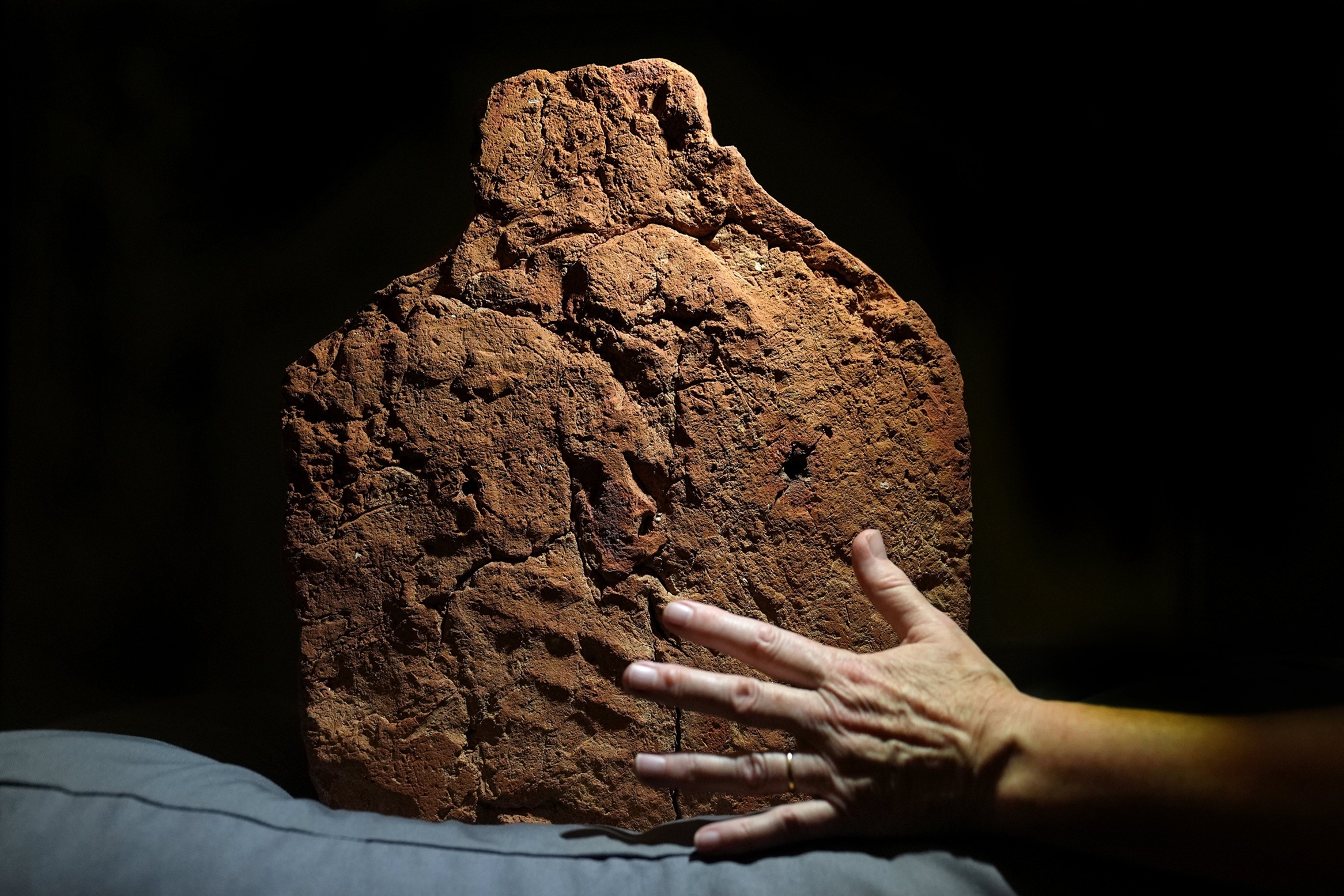
A 4,000-year-old handprint, pressed into clay by an ancient Egyptian artisan and preserved for millennia, was discovered on 27 July on a funerary object during preparations for the Made in Ancient Egypt exhibition at Cambridge’s Fitzwilliam Museum on 3 October. The imprint, hailed by curators as both “rare and exciting”, is believed to have been left inadvertently by the artisan who shaped the object, while touching the clay before it had fully dried. The artifact, known as a “soul house,” is a ceramic model of a dwelling placed in tombs during Egypt’s Middle Kingdom period, around 2055 to 1650 B.C., to offer sustenance and shelter to the dead in the afterlife. Helen Strudwick, lead Egyptologist at the Fitzwilliam Museum and curator of the upcoming exhibition Made in Ancient Egypt, said the full handprint was found on the underside of the model, a place rarely visible to observers. “We’ve spotted traces of fingerprints left in wet varnish or on a coffin in the decoration, but it is rare and exciting to find a complete handprint underneath this soul house,” Strudwick said. The clay soul house features an open forecourt intended for…