

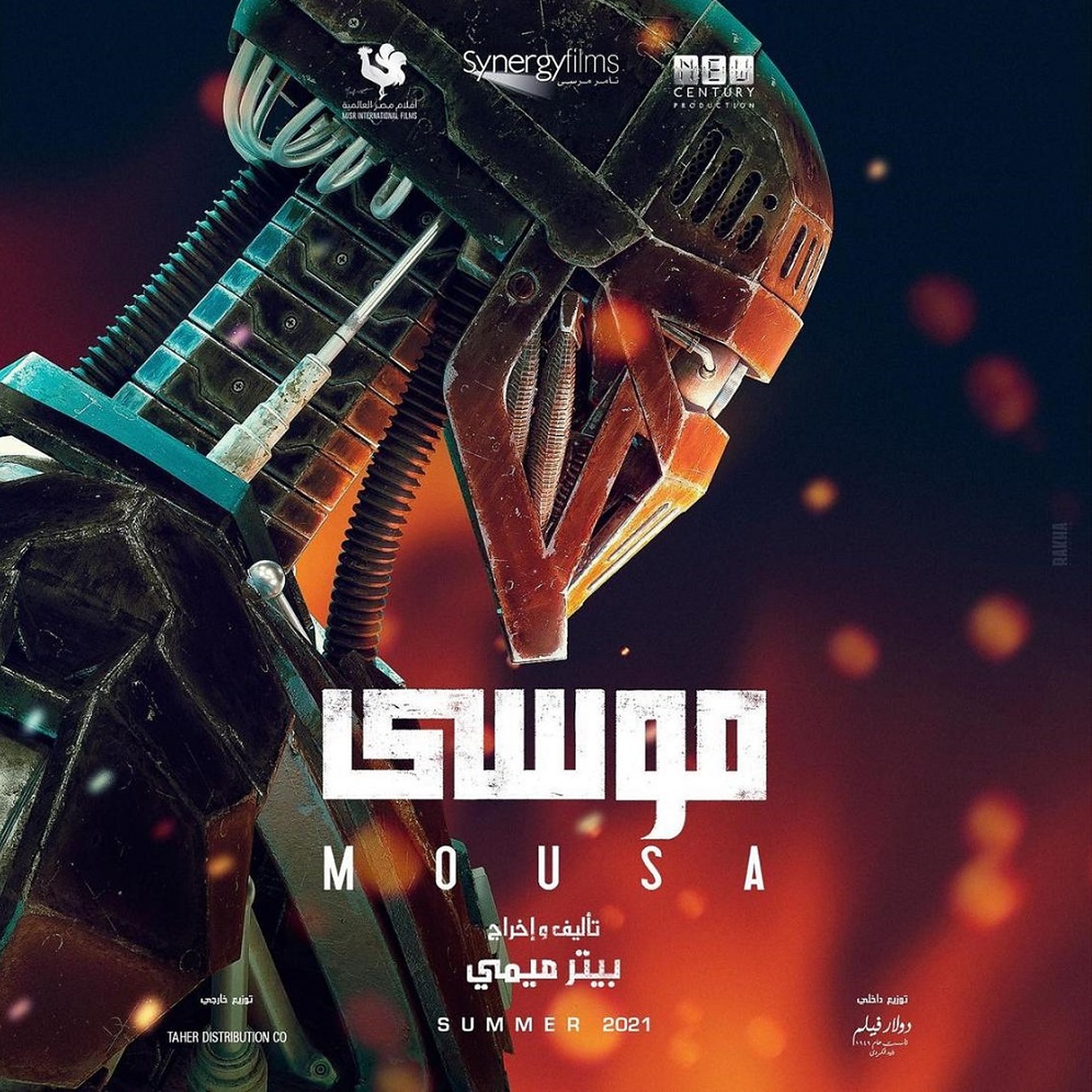
‘Mousa’ might seem like a typical superhero movie at first. But it represents a new chapter in Egyptian cinema that leans more into creative storytelling and science fiction, allowing audiences in the region to become more prepared for what might come to exist in an Artificial Intelligence (AI) and tech-driven future. Directed and written by Peter Mimi, who is also known for other recent successes including Kalabsh, Casablanca, and Harb Karmouz, the film features renowned stars Karim Mahmoud Abdel Aziz, Eyad Nassar, and Asmaa Aboulyazid. It was released in August 2021, and is co-produced by Synergy Films (Tamer Morsi), New Century Productions, and Misr International Films. As the first Arab AI and robotics movie in the Arab world, the film took two years in the writing and preparation phase from October 2019, and also holds the record for the highest-budget sci-fi film in Egypt, which marks a huge shift in Egyptian cinema. The film’s release also comes at a pivotal time where many countries in the Middle East are also taking bold steps to increase investment in emerging technologies, such as the Emirates with its UAE Artificial Intelligence Strategy 2031…

Mohamed Elzayat Wins Egypt’s Seventh Medal at Tokyo 2020 Paralympics

Mohamed Elzayat, 20, has secured Egypt’s seventh medal at the Tokyo 2020 Paralympics in the men’s Taekwondo -61kg K44 event. Elzayat’s achievement marks Egypt’s first non-powerlifting medal at the 2020 Paralympics. Elzayat missed out on a chance for the gold medal against Brazil’s Nathan Torquato after sustaining an injury during his earlier semi-finals bout against Russia’s Daniil Sidorov. Elzayat’s injury saw Sidorov penalised and Elzayat crowned the victor, but meant that Elzayat was unable to compete in the gold medal event and Brazil’s Torquato was automatically awarded the gold medal. Egypt’s delegation at the 2020 Tokyo Paralympics had secured six medals so far. The 2020 Paralympics are being held from 24th of August to the 5th of September, with Egypt participating with 48 athletes. Subscribe to the Egyptian Streets’ weekly newsletter! Catch up on the latest news, arts & culture headlines, exclusive features and more stories that matter, delivered straight to your inbox by clicking here….
Sustainable Brands in Egypt: Supporting the Environment, Community, and Beyond
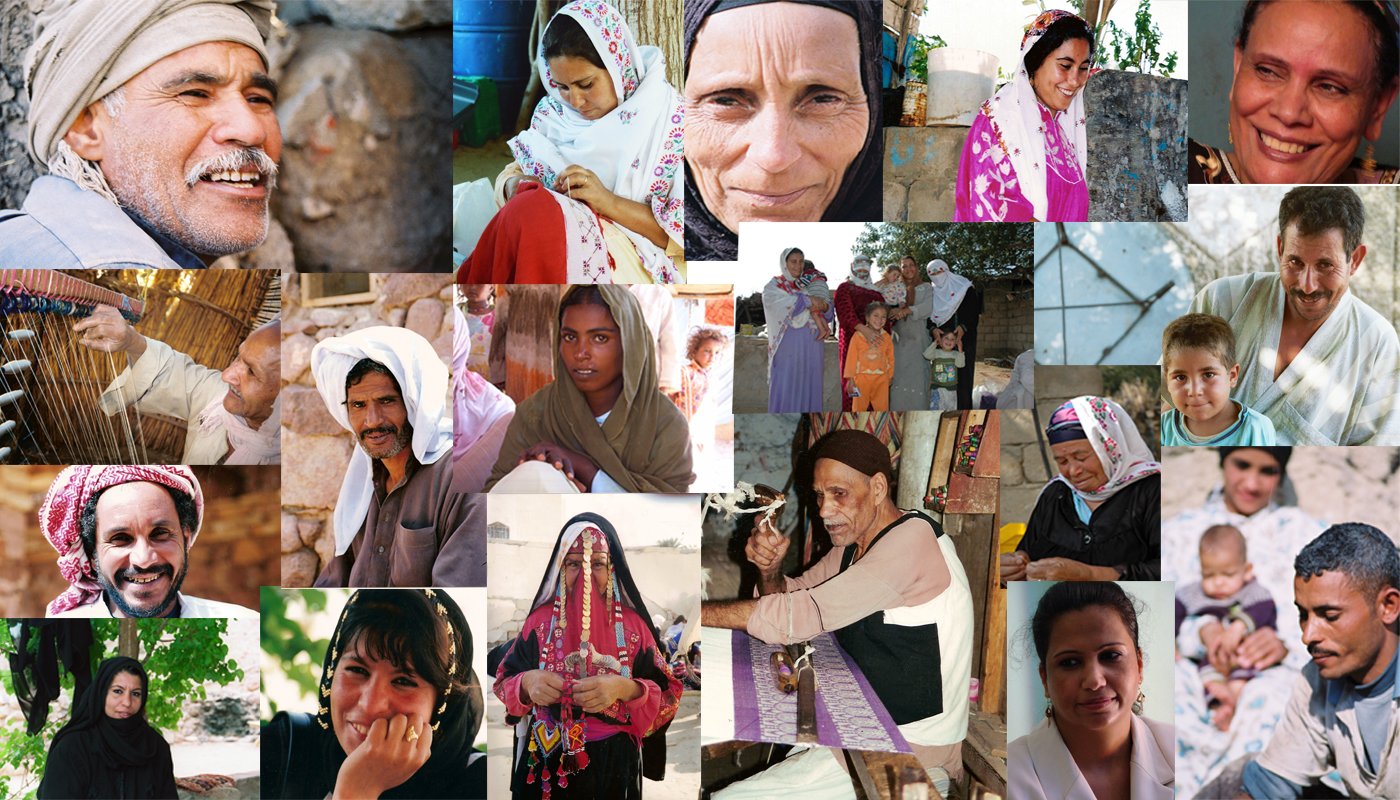
Growing awareness about sustainability has prompted many shoppers to think about where and how they shop, and Egypt’s young entrepreneurs have been happy to oblige. People often think that the term ‘sustainability’ is limited to environmental sustainability, but the concept is far broader than that. Put simply, sustainable shopping entails making purchasing decisions in a way that benefits all parties and elements involved: primarily the community and the environment. Environmental sustainability is the more well-known of the two due to growing awareness of the effects of climate change. However, the term ‘community sustainability’ usually refers to general social welfare and worker rights. Far too often, large clothing brands exploit underprivileged workers by paying them too little in order to maximize profits, so the workers get no reward for their hard work and long – oftentimes inhumane – hours of labor. Although heartbreaking stories of factory workers getting abused or underpaid usually apply to international brands that employ workers in Bangladesh or India, the case in Egypt is sadly not that different. There have been similar incidents in the country, such as the collapse of a factory building in Gesr Al…
The Strangest Superstitions Egyptians Remember from Their Childhoods
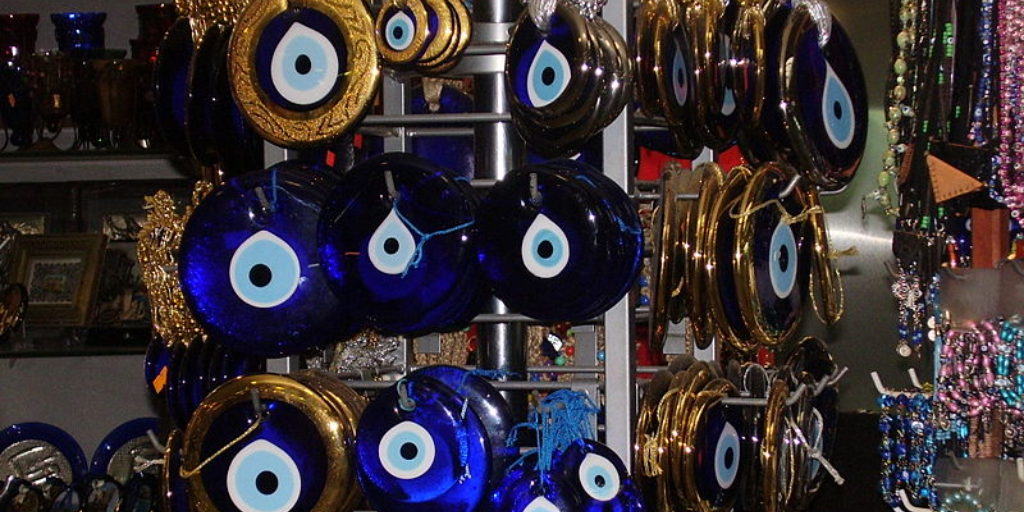
Egyptian culture has been known to humor the idea of superstitions and habits that bring about good or bad luck – many Egyptians remember their parents and grandparents making strange claims that they would just accept at face value to avoid seeming disrespectful. As a child, my late grandmother told me that if I hung my clothes inside out, my day would turn ‘inside out’ as well – meaning I’d stay up all night and end up sleeping all day. Over time, I realized this was just her way of encouraging her grandchildren to hang their clothes neatly. Talk to almost any Egyptian and you’ll hear similar anecdotes – while some are stranger than others, they’re all humorous odes to the odd things we believed as children. We asked some Egyptians about the strangest superstitions they recall hearing during their childhoods and some were rather endearing… “I learned from my grandma that if you walk or pass in between two people while they are chatting, this will cause them to break ties and walk their separate ways. So, every time I walked between her and someone else, she’d hold…