


In the markets of Cairo, glass jars filled with amber and golden honey showcase one of Egypt’s most valued natural products. From the clover fields of the Nile Delta to the citrus groves of the Nile Valley, each jar tells a story of Egypt’s lands and long-standing apiculture traditions.
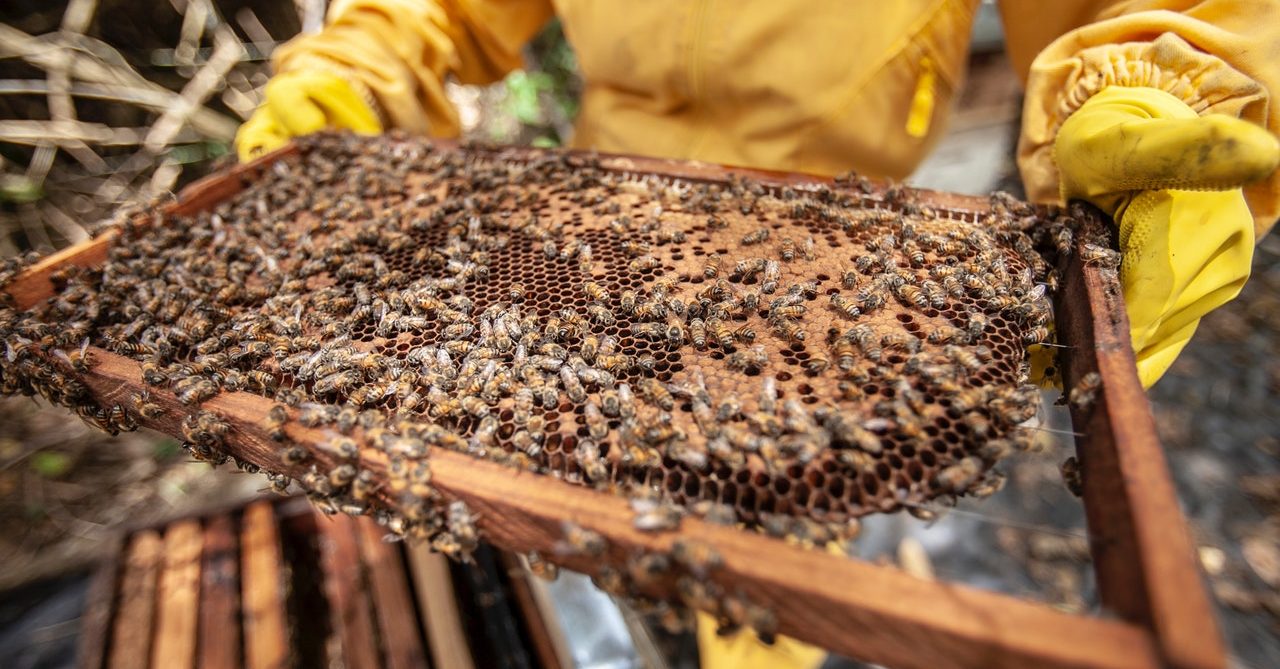
Beekeeping has been practiced in Egypt since the Fifth Dynasty, Old Kingdom, and remains a central part of rural livelihoods. Generations of Egyptian beekeepers have refined specialized methods to align with flowering seasons and sustain steady yields. As of 2022, the number of beekeepers in Egypt was reported at about 270,000, and the number of apiaries was 10,220.
Meanwhile, Saudi Arabia has 16,000 beekeepers as of 2023, Turkey reportedly has about 80,000 beekeepers as of February 2025, and the United States has between 115,000 and 125,000 beekeepers as of 2024.
Egypt’s varied flora offers abundant nectar sources, supporting the production of high-quality honey. With around 300 types of honey worldwide, Egypt’s most famous types include Clover Honey, made from Egyptian clover, widely consumed for its balanced sweetness; Citrus Honey from orange, lemon, and mandarin blossoms, which provides a light, aromatic flavor; and Sidr Honey from the Sidr tree, recognized for its rich taste and therapeutic value.
Other types include Black Seed Honey from black cumin flowers, Cotton Honey from cotton plant blossoms, Sunflower Honey from sunflower fields, Alfalfa Honey from alfalfa flowers, Wildflower Honey from a mix of various wildflowers, and Carob Honey from carob tree blossoms.
For a 2018 study by the Plant Protection Research Institute, Agricultural Research Center, about Egyptian honey, researchers collected eight types of honey from apiaries across Egypt. The samples came from plants such as banana, marjoram, camphor, mastic, sidr, black seed, and several varieties of Egyptian cotton grown in both northern and southern regions.
The findings confirm that the honeys originate from distinct geographic areas, and their flavor, texture, and nutritional makeup are strongly shaped by both the local environment and the plants that supply nectar.
According to the research, the differences highlight Egypt’s rich floral diversity and the potential for its honey to be recognized as a product of regional identity and quality.
With increasing global demand for natural and traceable food products, Egyptian honey is gaining attention in export markets.
In 2023, Egypt exported USD 6.42 million (EGP 306.23 million) of natural honey, while in 2024, its exports were valued at approximately USD 5.69 million (EGP 271.19 million), with a total quantity of 1.32 million kilograms. The top export destination was Saudi Arabia, which received over USD 1.57 million (EGP 74.82 million) worth of honey from Egypt. Other destinations included the United Arab Emirates and Lebanon, with exports valued at USD 606,900 (EGP 28.92 million) and USD 33,210 (EGP 1.58 million), respectively.
In the same year, Egypt’s honey market was valued at about USD 20 million (EGP 953.2 million). The market is expected to rise sharply, reaching approximately USD 50 million (EGP 2.38 billion) by 2032, with an annual growth rate of around 8 percent, reflecting steady demand for honey as both a natural sweetener and an industrial ingredient.
With a range of flavors and a connection to the country’s agricultural heritage, each jar blends nature and the enduring labor of Egypt’s beekeepers.






Comments (0)