


Every month, the salary comes in, and every month, it disappears just as quickly. Rent, groceries, transport, school fees, the list never ends. For many Egyptians, financial stability feels harder to reach, even with full-time work. The math simply does not work the way it used to.
In 2023, average wages rose by roughly 17 percent, and the government later increased the minimum wage to EGP 7,000 (USD 150) in July 2025. But even these adjustments have not kept up with how fast prices have been rising. In March 2023, inflation hit 31.9 percent, almost double the pace of wage growth, with food prices jumping by more than 60 percent.
By August 2024, inflation was still high at 26.2 percent, pushed up by essentials like food, transport, and electricity. In practice, households are earning slightly more on paper, but because prices are rising much faster, their money buys less than it did before, as every jump in salaries is quickly overtaken by another rise in everyday costs.
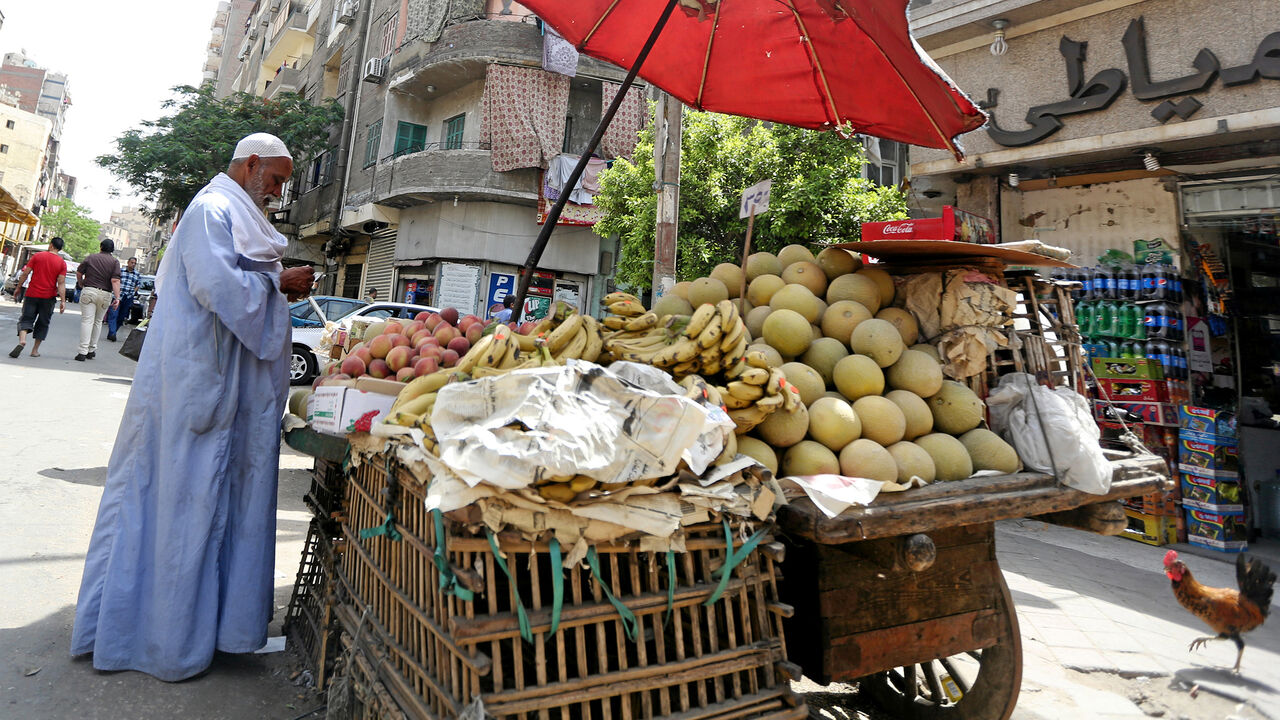
The squeeze has been deeper and more persistent for workers on fixed public salaries and for those in Egypt’s informal sector, roughly 60 percent of the workforce, including jobs without formal contracts, social insurance, or guaranteed benefits, such as street vendors and day laborers.
Minimum wage adjustments were intermittent and small compared with price shocks. The result is a working population that often works full-time yet still struggles to cover basic expenses.
It has been common for both spouses in Egyptian households to work multiple jobs just to get by. Low-income workers, often in insecure positions without social security or guaranteed benefits, are forced to handle heavy workloads and get second jobs. Even young Egyptians from relatively comfortable backgrounds are increasingly taking on side jobs to keep up with rising living costs and high annual inflation.
Numbers tell part of the story. The other part is lived experience. Mariam Ahmed, a marketing associate at Zilla Capital, explained how her salary barely covers the costs of work itself.
“Most of my income goes to fuel to get to and from work, and to cover meals during the day,” she said. “There is very little left for anything else. I feel like I am working just to sustain my job.”
Her experience reflects a wider challenge: fuel prices have risen steadily, with the October 2025 increase averaging about 18 percent. Transportation now consumes a growing share of wages, as Egypt’s system remains heavily road‑based, with over 10 million licensed vehicles on the roads, with private cars making up more than half. Each fuel‑price hike directly reduces take‑home pay.
Rola Ali, 26, a former Human Resources (HR) executive at a school, described similar struggles with financial independence. She continued to rely on her mother for essentials such as food, water, and housing.
“My salary only covered outings and fuel for my car,” she said. “For other personal necessities, I received a monthly allowance from my mother.”
Even with this support, she could save only around EGP 1,000 to 2,000 (USD 21 to 42) per month, often restricting herself significantly to do so.
From her experience in HR, Ali saw the problem from both sides. Around 60 to 70 percent of candidates rejected job offers she presented because the workload did not match the salaries offered. It is a pattern that underscores a broader frustration with pay, and a growing sense that even hard work no longer guarantees financial stability.
Together, these stories illustrate the human side of Egypt’s income reality. Rising living costs, repeated fuel hikes, and wages that fail to keep pace leave many employees navigating a daily tightrope. Even those in full-time, professional positions often struggle to achieve independence or financial stability, relying instead on family support or extreme budgeting just to make ends meet.
Why did this mismatch emerge? The mismatch between pay and prices is rooted in broader economic changes, and official data shows why. Egypt’s pound has been devalued repeatedly since 2022, losing a significant portion of its value against the dollar. In 2022, a USD 1 cost around EGP 19. By late 2025, the rate was about EGP 47.5, a more than 140 percent depreciation of the pound.
That makes imported goods, from food to medicine, much more expensive. At the same time, the government has cut subsidies, government support that kept essentials like fuel and electricity cheaper, reducing its own budgetary burden but passing the cost on to everyday consumers.
The strain on households highlights more than just numbers. It reveals the real limits of daily life under current economic pressures. Families are adjusting, sacrificing, and stretching every pound, while the system around them struggles to keep pace.
Without clear, predictable policies on wages, subsidies, and social protections, the gap between income and living costs is likely to widen further, leaving work as a source of stress rather than stability. The choices made now will determine whether Egyptians can reclaim a sense of financial security or continue navigating life on a precarious tightrope.


Comments (0)