


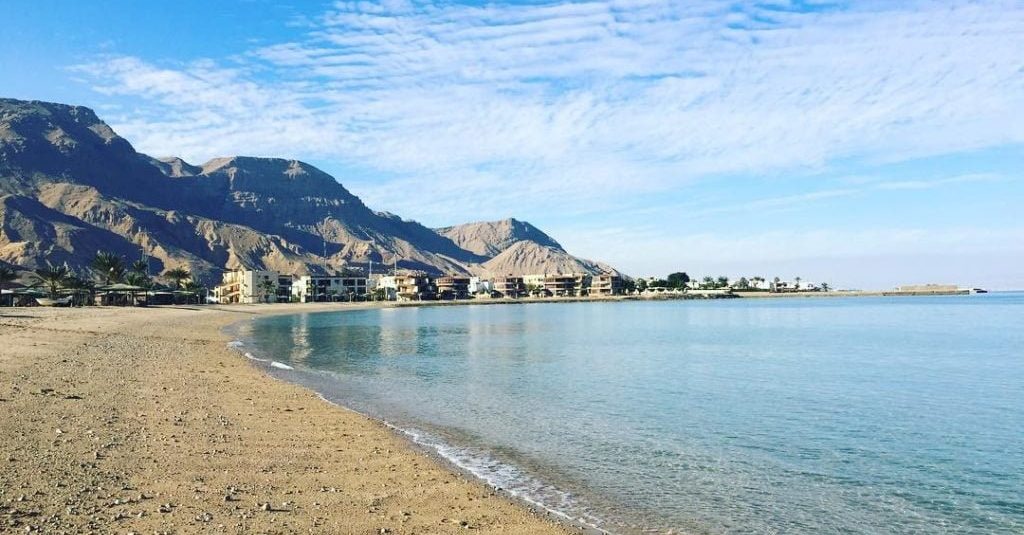
By the third morning of my week-long vacation in Ain Sokhna, I realized I had forgotten what day it was. It was in an unremarkable way that comes from waking up with no urgent task tugging at your sleeve. The sea was a walk away, the jacuzzi was heating, and two of my friends were already negotiating breakfast in the kitchen of our rented chalet. For once, I was not racing against time to go through my to-do list.
I had not intended for the trip, which I took on [date], to become an experiment in slow living. I had been craving a break from my life in Cairo, stuck inside the walls of my apartment, where I work, eat, and relax. My days there are a fast-moving grid, with groceries to restock, work to finish, family visits to plan, friends to catch up with, and laundry to do.
I love the life I have built, but it moves at a pace that rarely pauses long enough for me to catch a breath or look around. A week off by the beach offered unmatched serenity.
Slow living is often displayed in movies and on television as an idyllic retreat with linen sheets, sun-soaked breakfasts, and room service. But sitting in the chalet’s small jacuzzi on the first evening with my friends, I understood it more simply as the suspension of urgency. There was nowhere we needed to go, and nothing we needed to accomplish. The water bubbled, the air turned chilly, and we found ourselves talking, not rushing to finish, not multitasking, not checking our phones mid-sentence.
During the daytime, we wandered toward the beach with no schedule beyond the loose agreement that we would go when the mood struck. At times, we dipped into the water; other times, we sat and stared at it. When we felt like playing ping-pong, shooting hoops, or disappearing into a book under the sun, we simply went ahead and did it.
There were no expectations, just an unspoken agreement among us to let the days unfold as they wished.
At night, we walked outside in hoodies, the air cool enough to make us linger, and went out for food and meals stretched long. The real party began at the chalet, either in front of the television or in the jacuzzi.
By the middle of the week, the simple, repetitive pleasures of beach living had softened me. My thoughts were less fragmented, and my body felt less clenched. Even the act of waking up to no alarm or notifications demanding interpretation felt like a small return to myself.
The ease and simplicity of days spent around the sea and trees reminded me of what I lack back home. We lived in harmony and such reconciliation that is foreign to Cairo, where my friends and I can not agree on a day to go out or a time to meet due to busy schedules.
My vacation week was built around being, as opposed to doing, which is what daily life in Cairo is about. The contrast was sharp. My hypervigilance became dormant by the sea. I stopped going through to-do lists and pacing around the apartment picking up clutter off tables, and tidying before I go back to my desk to work.
Even plans meant to recharge me and help me relax, like seeing my family or drinking coffee with friends, have their own choreography.
Time of arrival is determined by traffic, work messages buzz through conversations, and the quiet moments between obligations feel like accidents rather than choices. We are always preparing for the next activity. One family member or friend is always either dealing with the waiter at a restaurant or hosting at home, tirelessly ensuring everyone is comfortable and well-fed.
This kind of slow living was a recalibration more than an escape. It reminded me of how my mind behaves without constant stimuli, how my body moves when it is not bracing for the next sprint, and how my relationships are when they are not squeezed into the edges of the day.
Not everyone can take a week off and drive to the Red Sea. Yet, the principle is less about location and more about intention. It is about creating time for relaxing in a life that otherwise runs on speed. It could be a quiet breakfast without screens. A walk at dusk. A rule that certain hours belong to rest, not productivity.
Slow living does not seem to be the opposite of fast living, but the antidote that keeps it sustainable. A balance of both, though very hard to achieve, is essential for a fulfilling life.
When I returned to Cairo, the pace did not change. But I did. I had taken mental pictures of the silence, the feeling of bliss, and one lesson back home — life does not slow down on its own, we have to teach it how.
Any opinions and viewpoints expressed in this article are exclusively those of the author. To submit an opinion article, please email [email protected].




Comments (0)