
For years, Egypt’s property market has been a race for size, taller towers, wider compounds, and whole new cities rising from the desert. But a new question is reshaping the conversation. Instead of asking “How big is it?” maybe we should start thinking, “How sustainable is it?”
Around the world, real estate is undergoing a profound transformation. Buyers, investors, and governments are increasingly demanding projects that are not just profitable, but also sustainable. Green real estate developments designed with energy efficiency, eco-friendly materials, and wellness in mind are moving from a niche segment to the new normal.
In Egypt, a country with one of the fastest-growing real estate markets in the region, the question is no longer whether sustainability matters, but how quickly it will reshape the landscape.
A Global Shift Toward Sustainable Living
Globally, demand for green-certified buildings has been rising. Programs like LEED certification (Leadership in Energy and Environmental Design) have become recognized benchmarks of value, showing that eco-friendly design is as much about financial sense as environmental ethics. Energy-efficient buildings lower operating costs, increase resale value, and appeal to a new generation of environmentally conscious buyers.
Egypt is beginning to follow this global trend. The government has developed local standards such as the Green Pyramid Rating System (GPRS) and TARSHEED to encourage sustainable construction. High-profile initiatives are also emerging, such as Africa’s largest solar-powered housing community in Egypt’s New Zayed City, which showcases how international sustainability benchmarks can be achieved locally.
According to the International Finance Corporation (IFC), Egypt’s certified green building market is still small but is “showing early signs of transformation,” driven by a mix of policy, financing initiatives, and shifting consumer awareness.
Why Sustainability Matters for Egypt
Egypt faces pressing environmental challenges. Rapid urbanization has increased energy consumption and strained natural resources, while per-capita freshwater availability has decreased to around 560 meters cubed per year, well below the UN’s 1,000 meters cubed per year threshold for water poverty, and is projected to fall below the 500 meters cubed per year “absolute scarcity” benchmark in the coming years. At the same time, climate change adds new risks to coastal and urban areas. For the real estate sector, this creates both a challenge and an opportunity.
Green building practices, from better insulation and water management to renewable energy and efficient materials, can directly reduce costs for residents and protect long-term value. More importantly, they align with the government’s broader sustainability commitments, positioning the real estate industry as a driver of national development goals.
Alarinova: A Case Study in Conscious Development
One example of this new wave is Alarinova, a developer with roots in the Nasser family’s 175 years of combined expertise in architecture and real estate. The company’s philosophy is centered on what it calls “conscious living”, designing spaces that nurture body, mind, and spirit while minimizing environmental impact.
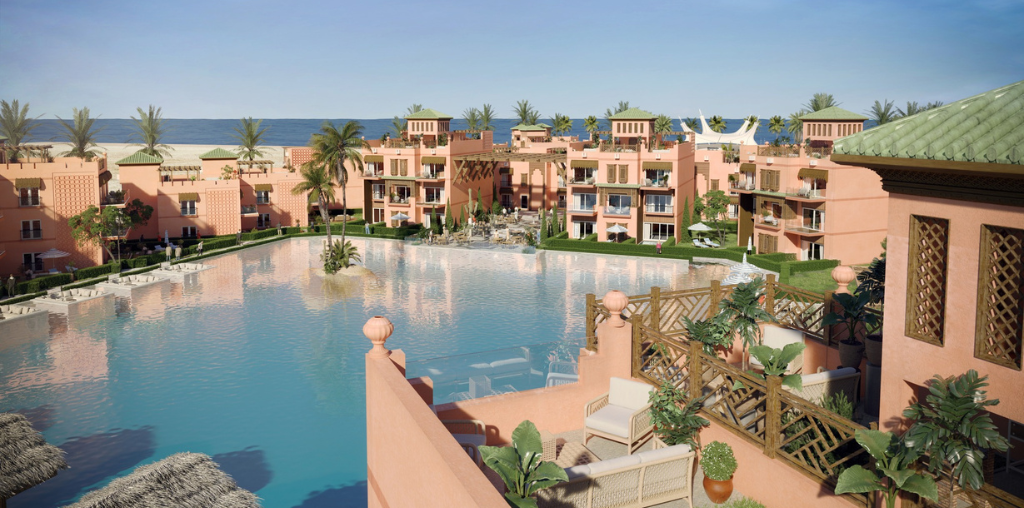
This vision comes to life in its signature project, Steigenberger Resort Ayalora, Al Sokhna — a coastal development in Egypt’s Ain Sokhna.
What truly sets Steigenberger Resort Ayalora apart is its genuine commitment to sustainability. The project incorporates insulated materials, thermal mass construction for energy efficiency, renewable energy systems, and natural aquifers to support water conservation. Unlike many developments that simply claim to be eco-friendly, Alarinova has made sustainability an integral part of its design philosophy.
The company has also tied its approach to cultural authenticity. Furnished chalets are being outfitted with Egyptian-made woodwork from experienced artisans, showcasing the quality of local craftsmanship and reducing reliance on imported materials. To offset its environmental footprint, Alarinova follows a tree replacement policy, planting two to three seeds for every tree it cuts down.
A Market on the Cusp of Change
Egypt’s real estate market is at a crossroads. Developers who embrace sustainability can build trust in a market where skepticism often runs high. Alarinova, for instance, is positioning itself at the forefront of this transformation by weaving sustainability into its core philosophy — a clear signal to buyers and investors that long-term value and environmental responsibility can coexist.
As more buyers begin to prioritize eco-friendly features, green real estate will likely shift from an emerging niche to the mainstream. In this future, projects that combine sustainability with luxury and cultural identity, as Steigenberger Resort Ayalora does, will set the tone for what conscious living means in Egypt.
Click here for more information about Alarinova and their flagship project.
Comments (0)