

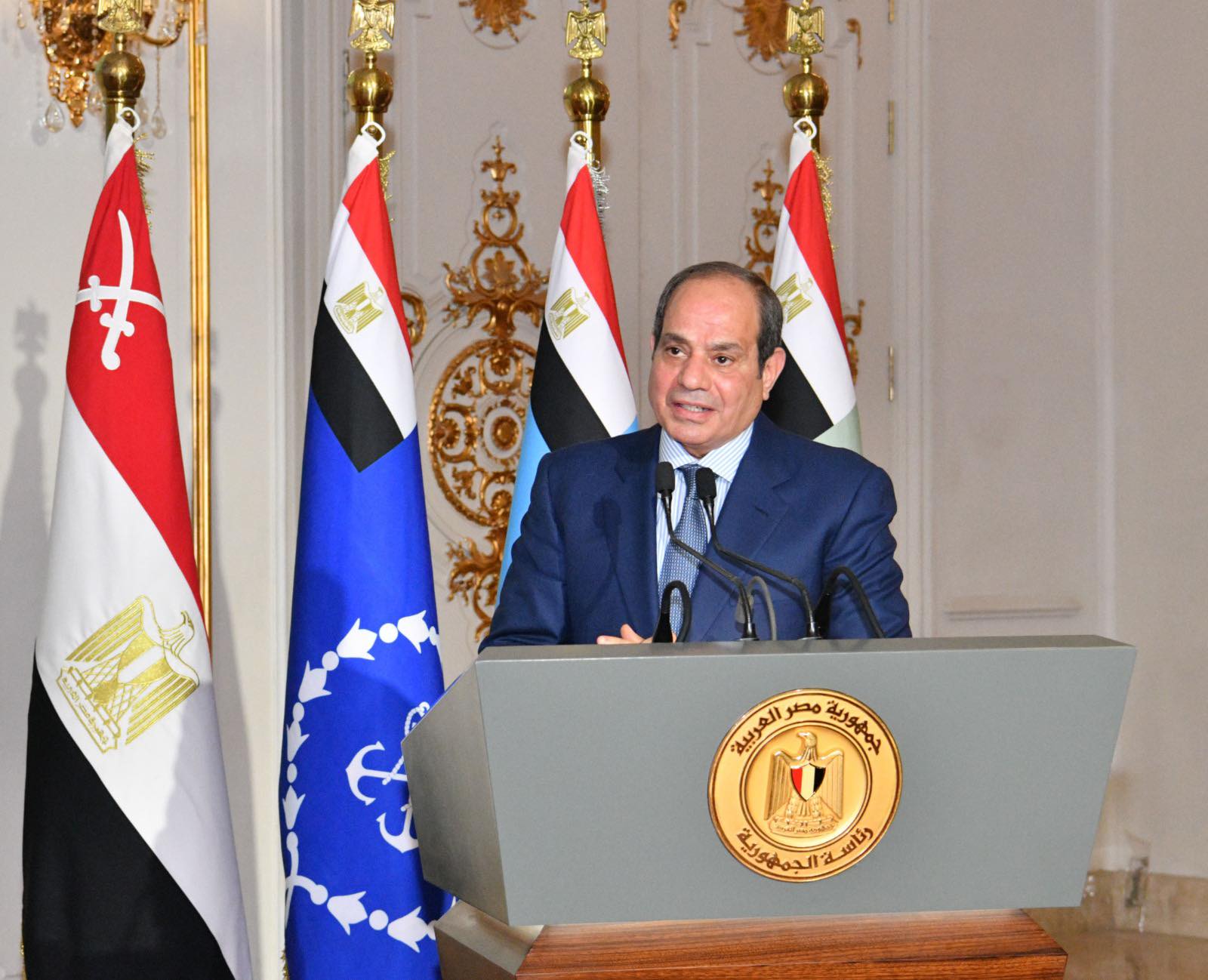
President Abdel Fattah El-Sisi warned on Sunday, 1 March, that any closure of the Strait of Hormuz would disrupt global oil flows, drive up energy prices, and further impact Egypt’s economy, including revenues from the Suez Canal, during the Armed Forces’ annual iftar marking the anniversary of the 10th of Ramadan victory.
Speaking at the event, Al-Sisi said Egypt is closely monitoring the rapidly escalating regional developments and has taken precautionary measures to secure strategic reserves, while studying multiple scenarios to mitigate potential economic fallout.
The president said Egypt had made efforts over recent months to prevent escalation by mediating between the United States and Iran, warning that wars carry serious consequences not only for the countries involved but also for their neighbours, particularly given the evolution of modern warfare.
Al-Sisi noted that developments over the past two days had been “major and rapid,” stressing that Egypt has consistently called for de-escalation and calm, even as he expressed doubt that the fighting would stop in the near term.
He added that Egypt has coordinated with Gulf and Arab leaders to reaffirm its rejection of aggression against states in the region and to express solidarity with countries facing security threats.
Highlighting the economic risks, Al-Sisi said any disruption to navigation through the Strait of Hormuz would affect global oil flows and prices, with repercussions for maritime traffic through the Suez Canal. He noted that shipping through the canal has not returned to normal levels since 7 October, 2023 resulting in financial losses for Egypt.
Reassuring citizens, the president said the state has taken the necessary precautions and secured key reserves, though he acknowledged uncertainty over how long the crisis may last.
Al-Sisi also pointed to the cumulative impact of successive global shocks on Egypt’s economy, urging unity and resilience as the country continues to navigate ongoing regional and economic pressures.


Comments (0)