

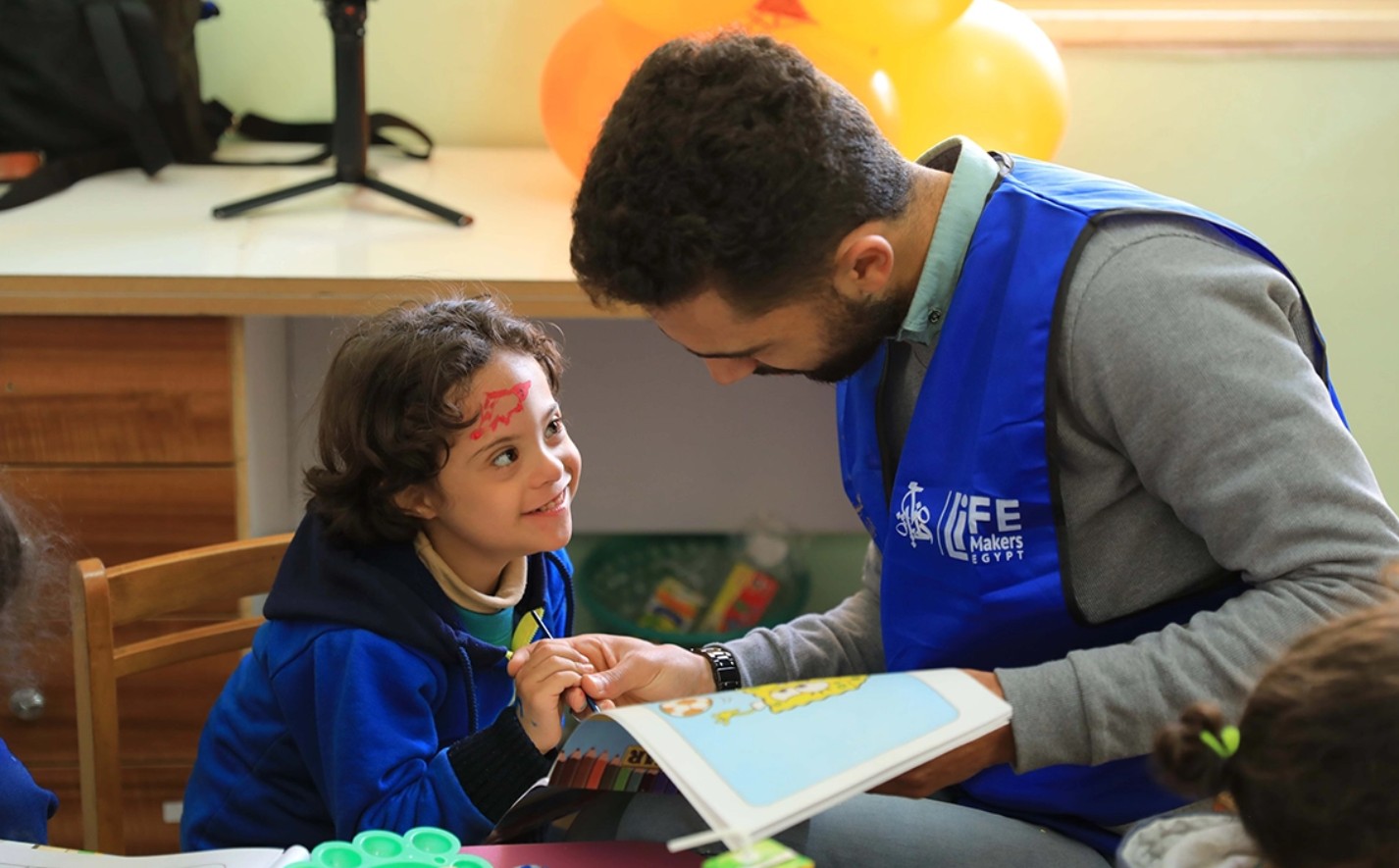
Best Buddies International, a Miami-based nonprofit, has spent more than three decades building friendships between people with and without Intellectual and Developmental Disabilities (IDD). As of May, it launched operations in Egypt, extending its network into North Africa’s most populous country, pushing the organization closer to its goal of reaching 100 nations worldwide.
According to Anthony Shriver, the organization’s founder, “launching in Egypt is an exciting and meaningful step forward for our global movement” that would help build “a powerful platform for connection, dignity, and opportunity.”
“At Best Buddies, we believe friendship is the foundation of inclusion,” he added.
The program arrives in a country where reliable data on disability remain scarce and contested. Egypt’s 2022 census, conducted by the Central Agency for Public Mobilization and Statistics (CAPMAS), found that 11 percent of Egyptians reported having a disability, roughly 12 million people, a figure statisticians said was likely inaccurate.
Researchers attribute the wide information gap partly to stigma, led by stereotypes, society, and a fear of discrimination. A 2010 report by journalist Cam McGrath for Inter Press Service (IPS) found that many Egyptian families conceal their children’s disability even from neighbors, driven by a belief that disabilities, including cerebral palsy, Down syndrome, or blindness, are a form of divine punishment.
At its core, the new program is built around the simple idea that friendship is a form of social change. In its first phase, Best Buddies Egypt will roll out the organization’s flagship Friendship Program, pairing people with IDD with peers without disabilities in one-to-one relationships intended to build trust, confidence, and lasting inclusion in schools and communities.
Organizers say that the friendship component is meant to be a foundation on which broader inclusion can be built, not the endpoint.
Best Buddies has said it intends to expand programming nationwide over time, eventually introducing leadership development, self-advocacy training and employment initiatives modeled on programs the organization already runs in nearly 50 other countries. Those programs around the world have focused on helping people with IDD secure paid jobs, live independently and develop public-speaking and advocacy skills.
In 2018, Egypt passed the Law on the Rights of Persons with Disabilities, its first comprehensive disability-rights legislation, which followed a 2017 census that, for the first time, collected disaggregated data on disability type, severity, gender and geography. That same analysis found that disability is disproportionately concentrated among Egypt’s poorest residents, with roughly 18 percent of people in the poorest fifth of the population reporting a disability.
The new initiative, Best Buddies Egypt, is run in partnership with LifeMakers Foundation, an Egyptian nonprofit with a long record of youth engagement and community development work across the country’s urban centers and rural provinces.
According to the chief executive of LifeMakers Foundation, Ahmed Moussa, the partnership reflects the organization’s commitment to building more impactful and sustainable inclusion initiatives.
The partnership is a step among many others Egypt has taken over the years.
In 2008, the country ratified the United Nations Convention on the Rights of Persons with Disabilities, and its 2014 constitution explicitly guarantees people with disabilities a range of protections, including access to health care, education, and job opportunities.
Best Buddies International, founded in 1989, says its programs have reached nearly 1.5 million people with and without disabilities each year across the United States and dozens of countries. The organization describes itself as the world’s largest group dedicated to ending the social, physical and economic isolation of the roughly 200 million people worldwide who have an intellectual or developmental disability.
Best Buddies Egypt’s work is modest, with volunteer pairings in schools and communities. However, organizers on both sides describe the launch as a first step toward creating a presence in a country where millions of people with disabilities have long lacked the kind of institutional support that could help them build careers, live independently, and participate fully in public life.



Comments (0)