


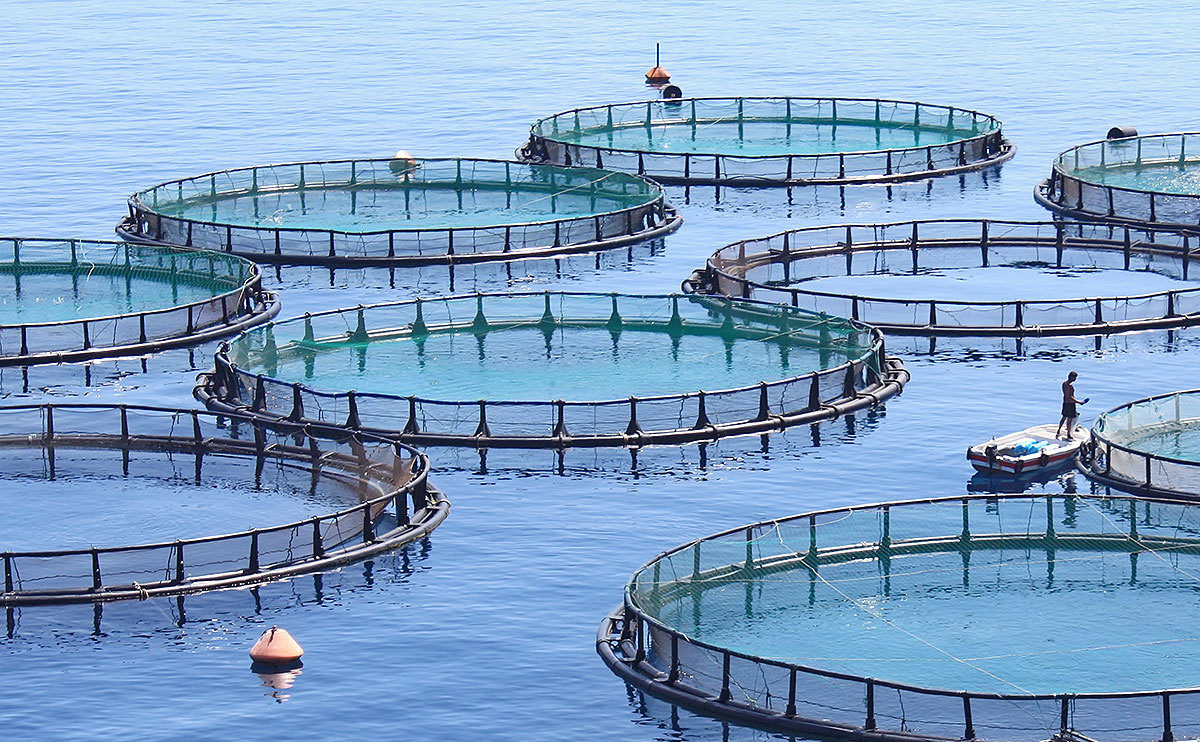
Egyptian farmed fish and crustaceans will be eligible for export to all 27 European Union (EU) member states starting 4 November, following Brussels approval of the country’s aquaculture monitoring plan, opening a lucrative market to Africa’s largest fish-farming nation, on 14 October by adopting Implementing Regulation 2026/2228.
The approval comes as ties between Cairo and Brussels deepen. In March 2024, the EU and Egypt signed a strategic and comprehensive partnership, backed by a USD 8.5 billion (EGP 430 billion) financial package, and the bloc remains Egypt’s largest trading partner, accounting for more than 22 percent of its trade in goods in 2025.
The new regulation extends Egypt’s existing authorization to export fishery products to cover farmed finfish, finfish products and crustaceans, after Cairo supplied evidence and guarantees that the products meet European standards, including controls on pharmacologically active substances, pesticides and contaminants.
While the approval does not guarantee sales, exporting establishments must meet EU hygiene rules and appear on approved lists maintained by Egyptian authorities through the Commission’s Trade Control and Expert System, New Technology (TRACES-NT) platform. Each shipment will still require official certification and face border checks.
The EU imported 5.9 million tons of seafood from outside the bloc in 2024, worth USD 33.6 billion (EGP 1.8 trillion), according to the European Market Observatory for Fisheries and Aquaculture Products (EUMOFA). The bloc produces only about 38 percent of the seafood it consumes, the Commission has said.
Egypt produced roughly 1.6 million tons of farmed aquatic animals in 2024, about 66 percent of Africa’s total, the Food and Agriculture Organization reported in June. Nigeria ranked a distant second at about 300,000 tons.
Additionally, Egypt shipped about 44,690 tons of fish in 2025, worth an estimated EGP 1.6 billion (USD 29.9 million). Meanwhile, the agency is aiming for about 53,400 tons in 2026.
Analysts, according to Ahram Online, say opportunities could extend to filleting, freezing, packaging and cold storage, areas where the industry has long lagged. Competitiveness, however, will depend on feed, energy and transport costs, as well as the expense of complying with European rules.
The opening supports the government’s goal of raising annual export earnings to USD 115.8 billion (EGP 6.2 trillion) by 2030.






Comments (0)