


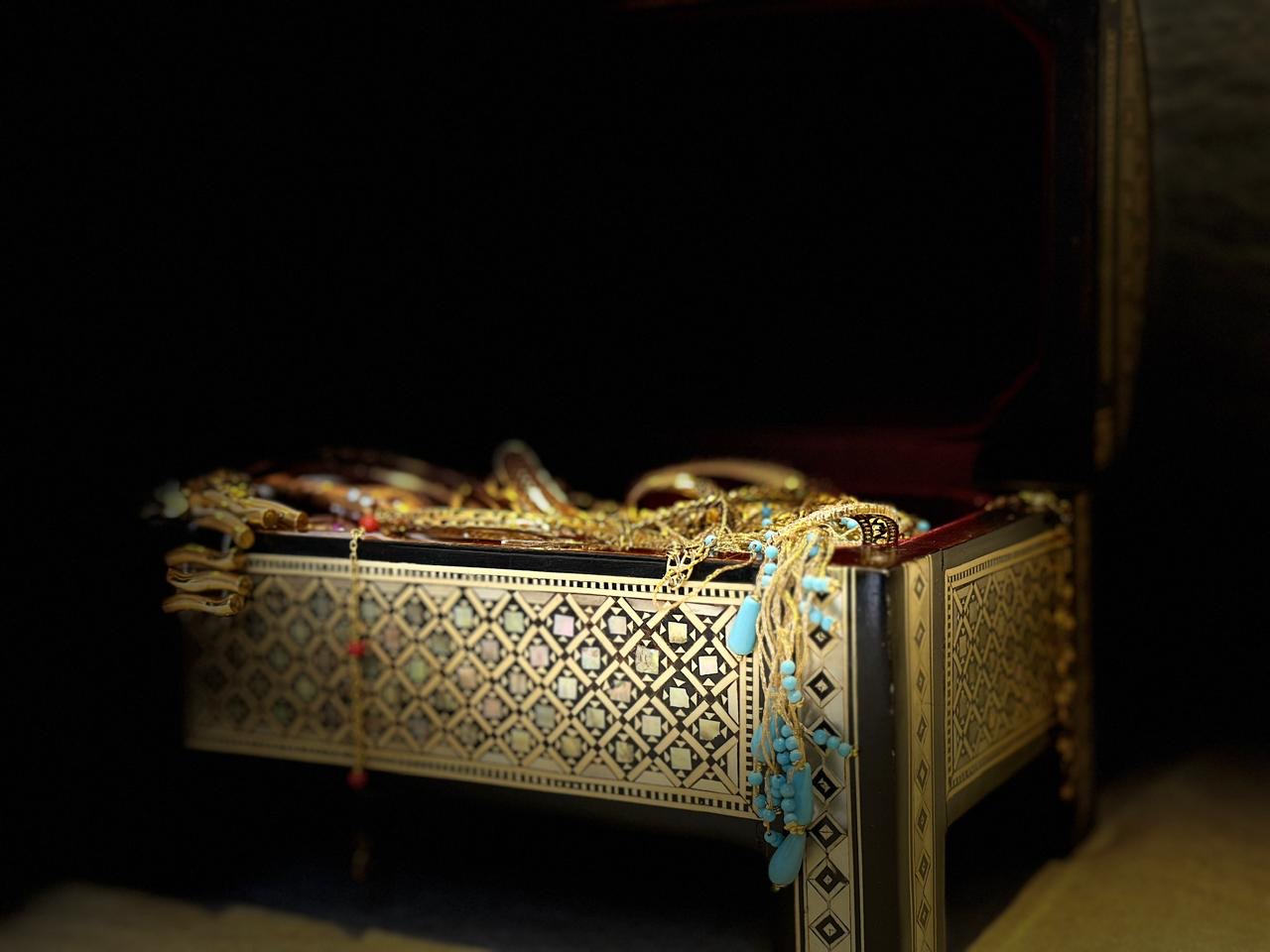
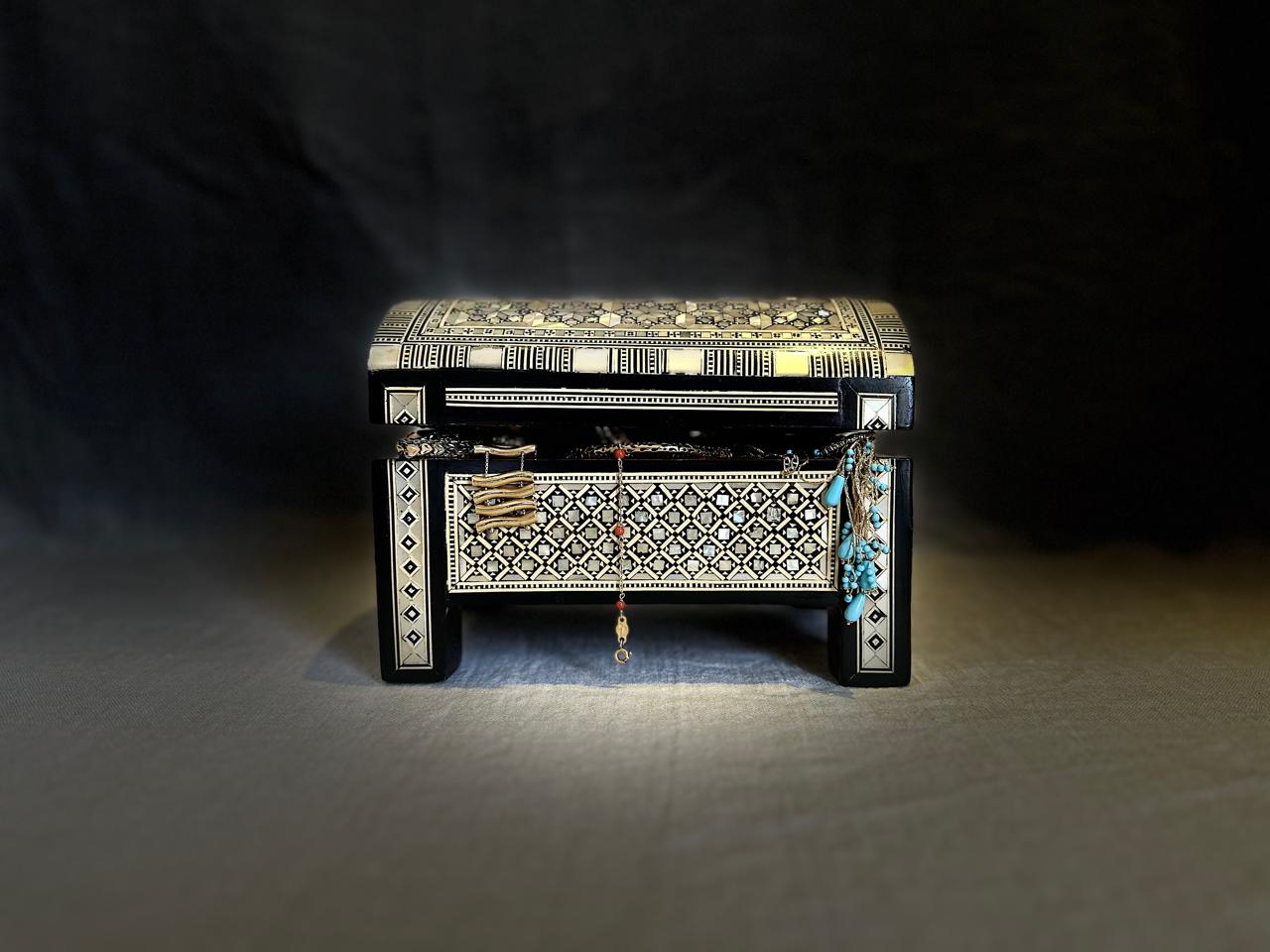
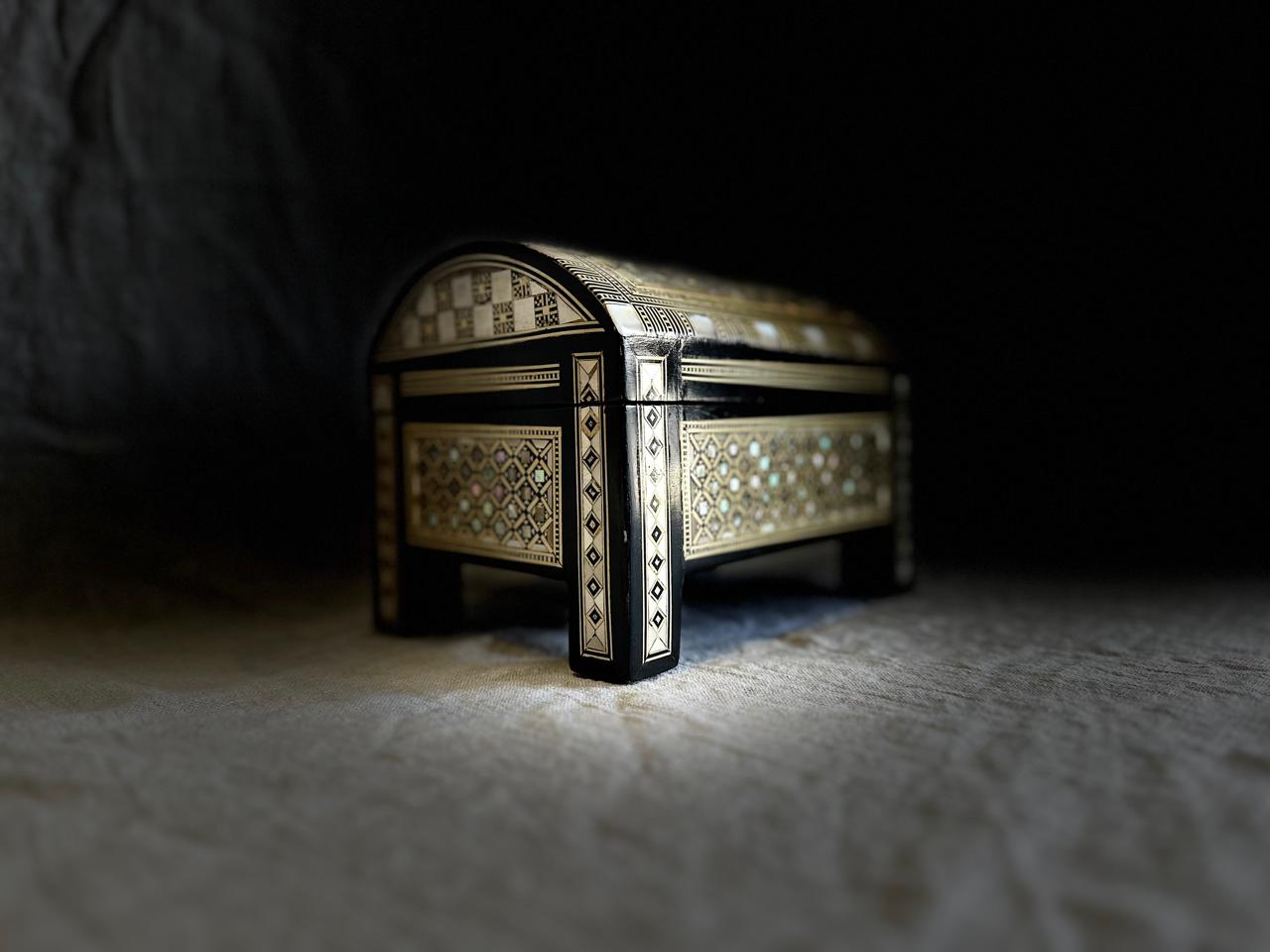
It is the day before my wedding. I flick back the brass latch of the checkered alabaster chest and the light catches the endless hoops, loops, beads and tangles of yellow gold in my grandmothers jewellery. The crimson velvet lining feels scratchy compared to the thick varnish that coats the wooden and pearly geometric shapes on the box’s exterior.
Once I unload the gilded heap onto my grandmothers bed, I begin to wind my fingers through the knots that the finer chains have made around the thicker, bolder pieces. I feel every intricacy embossed under my fingertips: neatly stacked triangles constrained within larger curves of a necklace, golden teardrops shed by every ear and nose ring, florals engraved into most bangles.
My grandmother tells me each design I see before me was once worn by Nubian royalty thousands of years ago. Infallible kingdoms, formidable monarchs: their power and currency in the jewellery on the wrists and necks of their loved ones.
On this Golden Land, whatever catastrophe struck, you could take comfort in shade of the palm trees lining the Nile, indulge in the syrupy dates which fall in ripe, maroon mounds from above your head and into your lap. You could take pride in the plentiful harvest of the season, your shortcomings could be forgotten and forgiven. You prayed to your Giver to show your gratitude, for it was Him who blessed you with the unparalleled fortune of this land, this slice of paradise He has chosen to bestow from up above and unto your people.
But my grandmother never lets us forget how quickly it all went away. What was once a great kingdom which stretched over Southern Egypt and Northern Sudan was submerged under an artificial body of water when she was only young.
At that time the monarchy was long gone, but even when it was the humble homes and farms of our people, it still kept its breath-taking beauty. I see it in her face, how when she is reminded of what used to be, she is reduced to the child she was all those years ago when she was told by a large man in military uniform that her and her family would have to move miles northwards by next week or they would drown. I see how deeply betrayed she still feels that her home was forsaken in the name of modernity. I see how guilt consumes her when she tells me they left her father behind at the Halfa cemetery which now lies somewhere beneath Lake Nasser.
I often imagine what it must have been like for her to sit in her new, sky blue concrete home while her husband worked hundreds of miles northwards in a bustling, congested city as they could no longer live off the land they once had. How her heart must have ached when she looked out of the window, breaking her reverie, and suddenly realised that she was no longer home, but in a forced distortion of it, a different angle of the Nile gliding away from her.
In the midst of their misfortune, my grandmother never sold her gold. It is my right, she would urge. She insisted on keeping it and removing the box from its safe place every once in a while to just look at it, like it was her very own treasure chest she couldn’t even believe she owned. Late at night, she would wrestle with the lengthy masses of abayas in her wardrobe to reach the glossy jewellery box at the very back, release the latch and let the opal moonlight glimmer on the gold. Maybe it reminded her of what used to be, or perhaps of what was still to come.
She was certain that once she is gone, her daughters and their daughters will don her gold at engagements, hennas, weddings. With every day she ages, she is reminded of her own mortality, the way nature takes what it once granted and everything and everyone around her slowly disappears, but the gold remains.
The treasures the ancient monarchs once left beneath the scorching sands thousands of years ago, my grandmother hands to me today in this jewellery box of beech and alabaster – the day before my wedding.
Now that the pieces have been separated from each other, my grandmother begins to tell her stories, as she always does. At points she is hysterical with laughter, unable to stop the stream of anecdotes from her childhood and when she was gifted her first gold necklace. Her eyes shine with the memories and her hands rush through the air as she tells her tales. At other points she is distant, much calmer and struggles to get the words out, at which point I stare at the golden strings between us and she coils a loose thread from the white bed linen around her finger.
“Pick something, please.” She is gesturing towards her gold, but I can’t bring myself to make her part with any of it. Every single piece has a story of hers attached to it, so why should I take that away from her? She can read the reluctance on my face and as I’m shaking my head to refuse her offer, she tells me: “No, I insist. It is what it is here for.”
This entry is the second -place winner of Egyptian Streets’ 2025 “Timeless Tales: Cultural Heritage Writing Competition,” in partnership with FairTrade Egypt and Bibliothek Egypt. Entries featured first-person narratives of Egypt’s cultural heritage through Ancient Egypt, Coptic, Islamic, Jewish traditions, and tangible/intangible expressions. Winners were celebrated at Bibliothek Egypt in October 2025, with 13 top stories set to be published.





Comments (0)