


Truth is a form of resistance. It may not be a weapon in the literal sense, but it is powerful enough to protect you, enough to ground you when faced with injustice, or with external narratives that attempt to distort, misjudge, or erase what is real.
When that truth is tied to who you are and where you come from, it becomes even more potent. It becomes a means of survival, a way to confront misinformation and to reveal what injustice works so hard to conceal: the lived reality of events as they unfolded on the ground.
In today’s world, marked by geopolitical strain and the rapid circulation of misinformation, truth and injustice are inseparable. Each relies on the other to be understood. Injustice can be exposed through truth, and truth is most complete when it reveals discomfort, harm, and inequality. Not all truth is meant to be palatable; often, its purpose is to illuminate what has been deliberately kept in the dark.
Yet how can truth and justice come together in a way that strengthens both? How can truth be honored while also confronting the injustices that shape our world? And how can individuals meaningfully contribute to this work, even from within their own spaces?
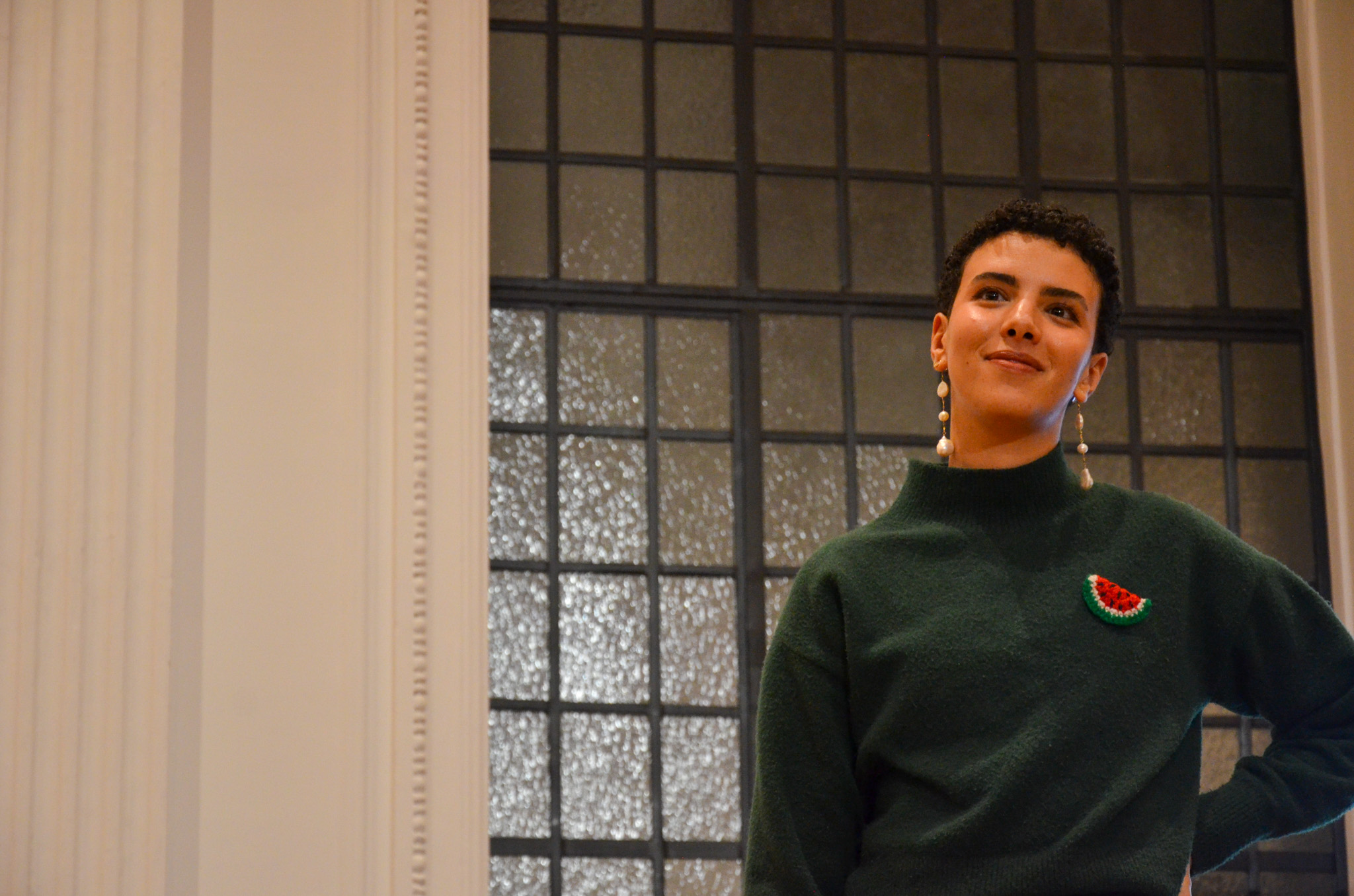
These questions sit at the core of Zeina Dowidar’s work. As co-founder of Hekayyatna (Our Story), a London-based community organisation, Dowidar seeks to create spaces where people are invited to sit with the inherited pain of their histories, and to consider how that pain can be transformed into intention, and how grief can be redirected toward action.
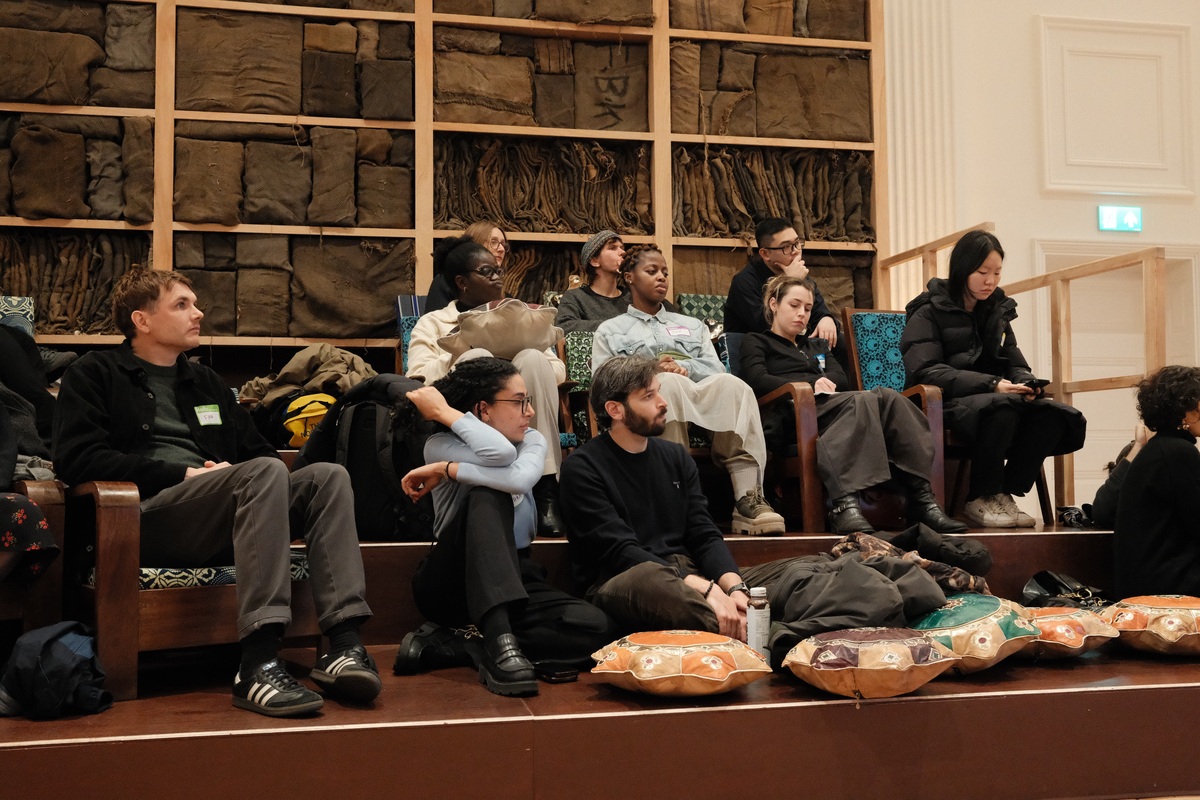
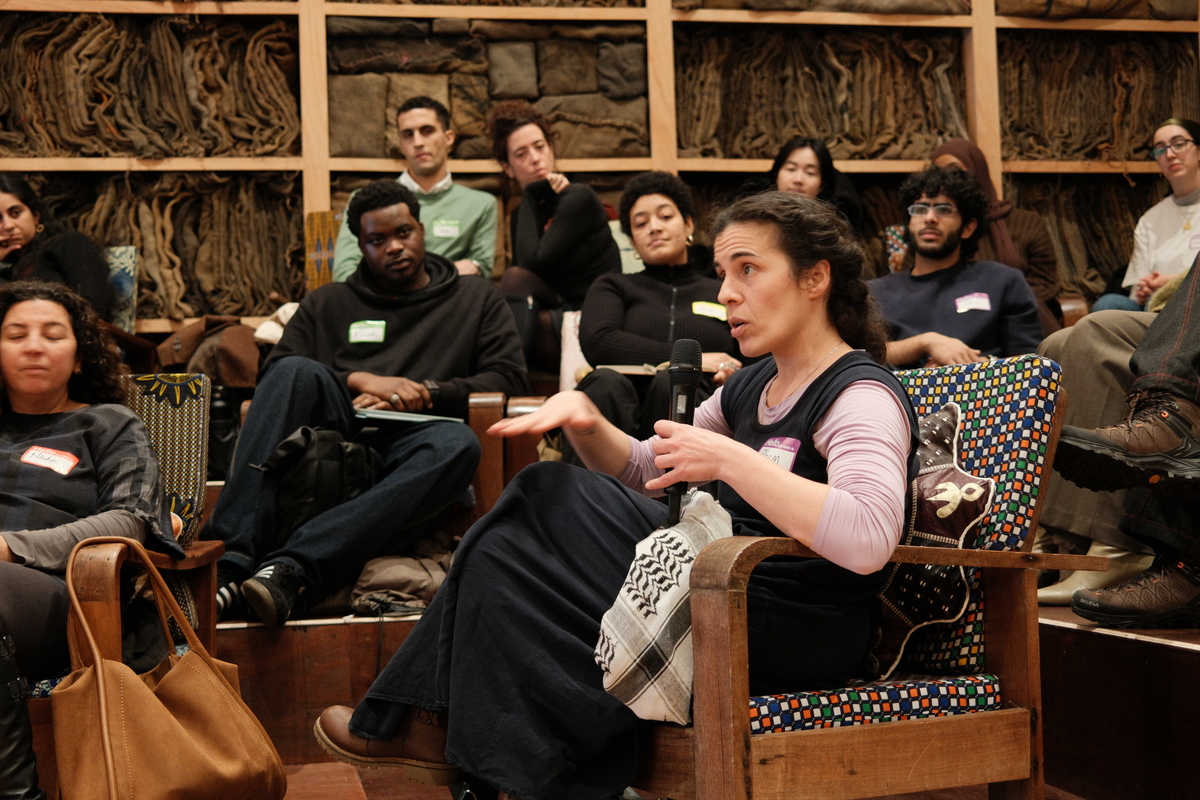
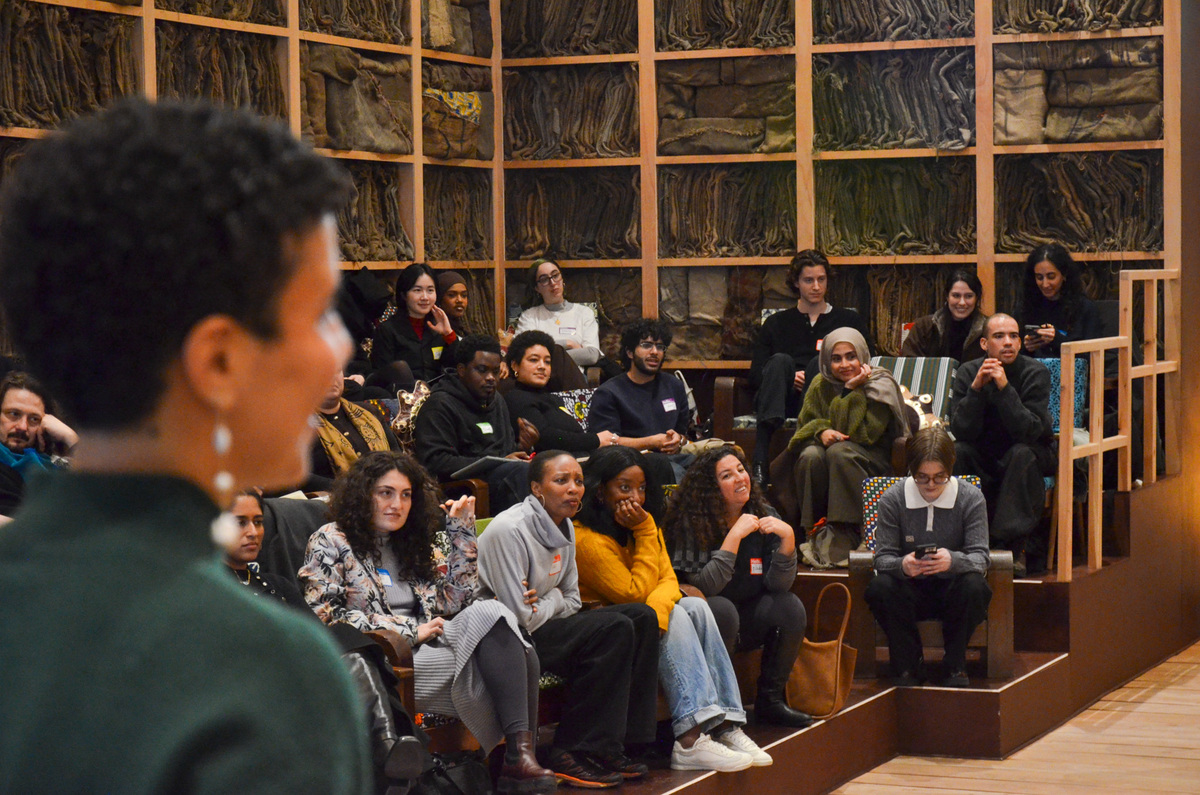
Recently, at Ibraaz, a cultural platform dedicated to art, ideas, and voices from the global South, Dowidar organized an event centered on the question, “Are reparations possible in a world still stealing?”
The conversation invited participants to reflect on the injustices unfolding around us today, and to rethink what it means to be responsible global citizens, ones who give back to their communities, their countries, and the identities they carry.
In an interview with Egyptian Streets, Dowidar reflects on the essence of the event, revisiting its conversations as if reliving them, and passing that knowledge forward so a wider audience can better understand the connection between truth and injustice, and how that responsibility can be carried by future generations.
Q: To start, can you tell us why you created Hekayyatna and how it connects to you on a personal level?
I started Hekayyatna with my co-founder, Al Shaibani, in the summer of 2023. At the time, we were both working as producers on audio documentaries. Storytelling has always been at the heart of what we do, and we genuinely love telling stories, researching them deeply, and thinking about how they move people.
But, very often, we’d spend six months researching and producing a story, put it out into the world, and then… silence.
You publish it, you’re incredibly passionate about it, you’ve poured so much time and care into it, and then you’re left wondering, is anyone listening?
We wanted to find a way to bring these stories to life, not just to tell them, but to open them up. To get people engaged, talking, questioning, and thinking together. That impulse is what led to the creation of Hekayyatna.
Hekayyatna began as a community organization, built around a series of core events we call ‘Hekayyatna Asks’. Each event is anchored by one big, guiding question. That question might be something like: How do archives shape our personal identities? What does justice really mean? How do we restore lost or stolen heritage? Or, in some cases, are reparations even possible in a world that is still actively stealing?
Rather than offering fixed answers, each event becomes a shared inquiry. We come in with stories we’ve uncovered, research we’ve done, and histories that demand attention, and then we explore them together with the audience. The space is designed as a collective conversation, blending discussion, reflection, and participatory activities.
At its core, Hekayyatna is about exchange. The goal is that every time you attend an event, you learn something new, meet someone new, and try something new. That’s the heart of what we do.
Q: And for this particular event, ‘Are Reparations Possible in a World Still Stealing?’ It feels especially resonant given the moment we’re living in. Why was this the right topic to explore now? What made this question feel urgent at this particular moment?
Two years ago, we opened our year with an event titled Can We Find Justice? in January 2024. At the time, it was only two or three months into the genocide in Gaza, and many of us were grappling with the terrifying possibility that we live in a world that simply does not care about justice.
We wanted to look outward, to learn from experiences across different contexts, and ask what happens after conflict supposedly ends. How is justice pursued? What does it actually look like in practice? And what are the good, the bad, and the deeply uncomfortable realities that come with it?
Two years on, it feels like the world is unraveling even further. Rather than moving toward repair, things seem to be deteriorating. In this context, the language of reparations has become increasingly prominent. We hear it everywhere: reparations as financial compensation for colonialism, reparations as the return of stolen artifacts from museums, and reparations in countless forms.
Yet, what’s often missing is a critical examination of what reparations truly mean, what they look like in practice, who they actually benefit, and whether they deliver the kind of justice that victims on the ground are asking for.
As my co-founder and I began researching this theme, we found ourselves wrestling with a more fundamental question: can reparations even work as they are currently imagined? Or is the existing framework itself broken? How do we demand reparations for colonial violence in a place like Sudan, for example, when foreign powers are still actively invested in its destruction today?
This led us to interrogate the broader colonial-capitalist system we continue to live within. Are reparations genuinely a tool for the oppressed? Or have they become a mechanism for perpetrators, a way to absolve themselves, to pay a debt, close the file, and move on without being held accountable for ongoing harm?
Q: Were there any particularly striking points or remarks that stood out to you during the event?
There was a wide range of responses from the audience. At the event, I shared two case studies to help ground our understanding of reparations, and then we explored the topic more hypothetically through scenarios and group discussions.
One of the case studies I presented was about Libya. Libya was colonized by Italy from 1911 to 1943, effectively treated as an extension of Italy, much like France and Algeria. During this time, the Italian government planned to relocate between half a million and a million Italians to Eastern Libya.
But since people were already living there, the authorities decided to clear the land forcibly. Under Mussolini, around 100,000 Libyans were killed, and half of the population was also deported to concentration camps. It was a brutal period of colonial violence that lasted about five years.
Fast forward to 2008: Italy formally apologized for its colonial history in Libya. Prime Minister Berlusconi signed the Treaty of Friendship and Cooperation with Libya, which included a commitment of USD 5 billion (EGP 200 billion) over 20 years in infrastructure projects and the return of a stolen statue. On the surface, it looked like a historic act: Italy became the first European power to officially apologize for colonialism.
But, when you dig deeper, many argue that this was not true reparations. First, the treaty included neo-colonial conditions, like Libya assisting Italy in controlling migration routes and allowing Italian firms to exploit Libyan oil and gas. Second, it was never called reparations; it was framed as a “friendship treaty,” which sidestepped direct acknowledgment of the victims and their suffering. Finally, when Libya’s government fell in 2011, payments stopped, showing how conditional reparations often are on politics and power dynamics.
This led to one of the big discussions of the night: are reparations really meant for the victims, or are they a political tool for governments, North or South, to assert power or gain support?
Another major theme that emerged was what I call the “value paradox” in reparations. Essentially, any number assigned to a crime is too high for politicians to accept and too low for victims to feel justice has been served.
For example, the UK made one of its largest payouts related to colonial-era abuses, paying around GBP 19.9 million (EGP 1.29 billion) for 5,000 Kenyans tortured under British rule. While that sounds substantial, it’s only about GBP 3,800 (EGP 246,000) per person, hardly enough to compensate for a lifetime of suffering, trauma, and intergenerational struggle.
This raises fundamental questions: Can reparations ever truly quantify justice? And if we can’t put a price on historical crimes, does that mean the concept of reparations itself loses its meaning? These questions sparked some of the most intense and thought-provoking conversations at the event.
Q: Why do you think so much of the truth about colonialism’s violence and injustice remains hidden, and why does it matter to bring it to light now?
When you begin to look closely, the violence of colonialism becomes impossible to ignore. In Libya, for example, Italian concentration camps were so extreme that senior officials from Hitler’s Nazi regime reportedly visited them to study and draw inspiration for how camps would later be implemented in Eastern Europe. These sites helped shape some of the most infamous systems of violence of the twentieth century.
This is why naming these realities matters. When colonial violence isn’t explicitly acknowledged, it allows perpetrators to evade accountability and to continue benefiting from systems built on that harm.
That recognition also shaped one of the most important conversations of the evening: if reparations, as currently structured, are insufficient or compromised, what other paths to justice exist? Many participants argued that justice may lie in reclaiming sovereignty over land and resources, over knowledge production, and over scientific and cultural capacity.
Rather than relying on vertical systems of validation from the Global North, there was a strong call to rebuild horizontal connections across the Global South, reviving pathways of collaboration, trade, education, and exchange that once existed.
The question, then, becomes whether justice might emerge not from waiting to be compensated, but from building systems in which communities no longer need to ask for reparations at all, because they have reclaimed the power, wealth, and autonomy that were taken from them in the first place.
Q: Did the discussion move people toward rethinking reparations altogether, and were there any moments of self-reflection that stood out to you?
One of the moments that really sparked reflection was a quote I shared about how, as long as we aren’t producing our own scientific knowledge, we remain dependent on other people’s solutions to our problems, and how that dependency ultimately consolidates power in the Global North.
That idea opened up a lot of self-reflection in the room. People began questioning their own roles in perpetuating brain drain and thinking more seriously about how they might contribute back to their countries in tangible ways.
A recurring theme in those reflections was mutual aid, particularly in relation to Palestine, Sudan, and the Congo. Many people spoke about the importance of supporting communities directly, outside of Global North institutions, and imagining what it looks like to build alternative systems of care and solidarity ourselves.
What we aim to do with Hekayyatna is create space for exactly these kinds of conversations. They’re not open-mic town halls, but thoughtfully structured discussions and activities that allow people to reflect together, listen to one another, and sit with complexity without the conversation tipping overwhelmingly in one direction.
The setting itself added another layer. The room we gathered in was an installation by Ghanaian artist Ibrahim Mahanna, built entirely from Ghanaian materials he describes as a form of “reverse restitution.”
Bringing these materials into a UK context was a way of rewriting cultural narratives, physically relocating the Global South into the Global North. It made the space feel like an extension of the conversation itself.
Q: Against the backdrop of the Grand Egyptian Museum’s opening, how do you see institutions like this contributing to countries reclaiming and owning their historical narratives?
I think it plays a crucial role in this conversation because it directly challenges long-standing Global North narratives around the restitution of artifacts. For decades, when countries have demanded the return of stolen objects, the response has often been the same: you don’t have the capacity to care for them; they’re safer here; they’re more accessible here.
Investments like the Grand Egyptian Museum fundamentally dismantle that argument. They demonstrate not only the existence of world-class physical infrastructure, but also scientific expertise, and the ability to conserve, restore, and exhibit artifacts at the highest international standards.
Perhaps most importantly, museums like this shift control over narrative. When a country holds its own artifacts, it controls how they are contextualized, interpreted, and presented. It decides the stories told on the wall texts, the relationships drawn between objects, and the paths visitors follow through history. Those curatorial choices shape how a culture is understood.
And when that power sits with the country itself, the story being told is no longer filtered through an external gaze; it becomes a narrative authored from within.
Q: Could you explain what narrative means to you, and how it operates both on a large scale, like shaping economic or political power, and on smaller scales, like telling local stories or sharing cultural knowledge?
Being a storyteller means controlling the narrative. Every story I tell carries my intentions, and my biases, whether I’m conscious of them or not. The way you experience a story from me will inevitably be different from how you might experience it from someone else, or from an alternative source, or even by discovering it yourself.
Whoever is telling the story, whether you’re listening, reading, scrolling, or watching, shapes the narrative. They decide what to highlight, what to leave out, what matters, and what doesn’t. They are in control of how the story is framed and understood.
With Hekayyatna, what we’re trying to do is introduce alternative storytelling, such as community storytelling, which are stories from perspectives that often go unheard, whether in London, in our physical spaces, or in online and public spaces.
It’s about telling our own stories, our histories, our truths, instead of only hearing them through the lens of others. To me, that’s what it means to truly control the narrative: to tell your story, or to hear it from someone you trust.
Q: What is interesting about Hekayyatna is that it’s community and network-based, rather than just individual projects. Can you talk about why building that collective approach to storytelling is important to you?
I think that’s what makes it special. It’s one thing to watch a documentary about reparations, but it’s another to be in a room with people, discussing it, reflecting on it, and connecting it to your own life, even role-playing scenarios and really digging into the topic. That kind of engagement tends to stick with people much longer.
The feedback we’ve received shows that attendees were still thinking about the event days afterwards, reflecting on its implications for their own lives and communities. That’s exactly what we hope people leave with: a sense of responsibility, a spark to think critically about their own role, and an inspiration to take action in some way. When that happens, we can look back on the work and feel genuinely excited about its impact.
Q: What final message would you give to the younger generation about reparations and taking responsibility for their own narratives?
For me, the most important thing isn’t always about fighting for historical reparations. It’s about identifying the injustices happening around you and thinking about how you can help. That injustice could be economic; maybe you can support an organization or donate resources. It could be educational, and maybe you can teach someone a skill they don’t have, whether it’s English or something else. It could be cultural, social, or even environmental. The key is to notice the injustice, learn about it, and see where you can make a difference.
At our events, I try to encourage people to find the issues that resonate with them. If historical reparations don’t spark your interest, maybe climate justice does.
For example, understanding climate injustices in Egypt and thinking about accountability or solutions. Or perhaps social justice issues are more compelling to you. Whatever it is, dive into it, read about it, talk about it with friends and neighbors, and take action where you can.





Comments (0)