


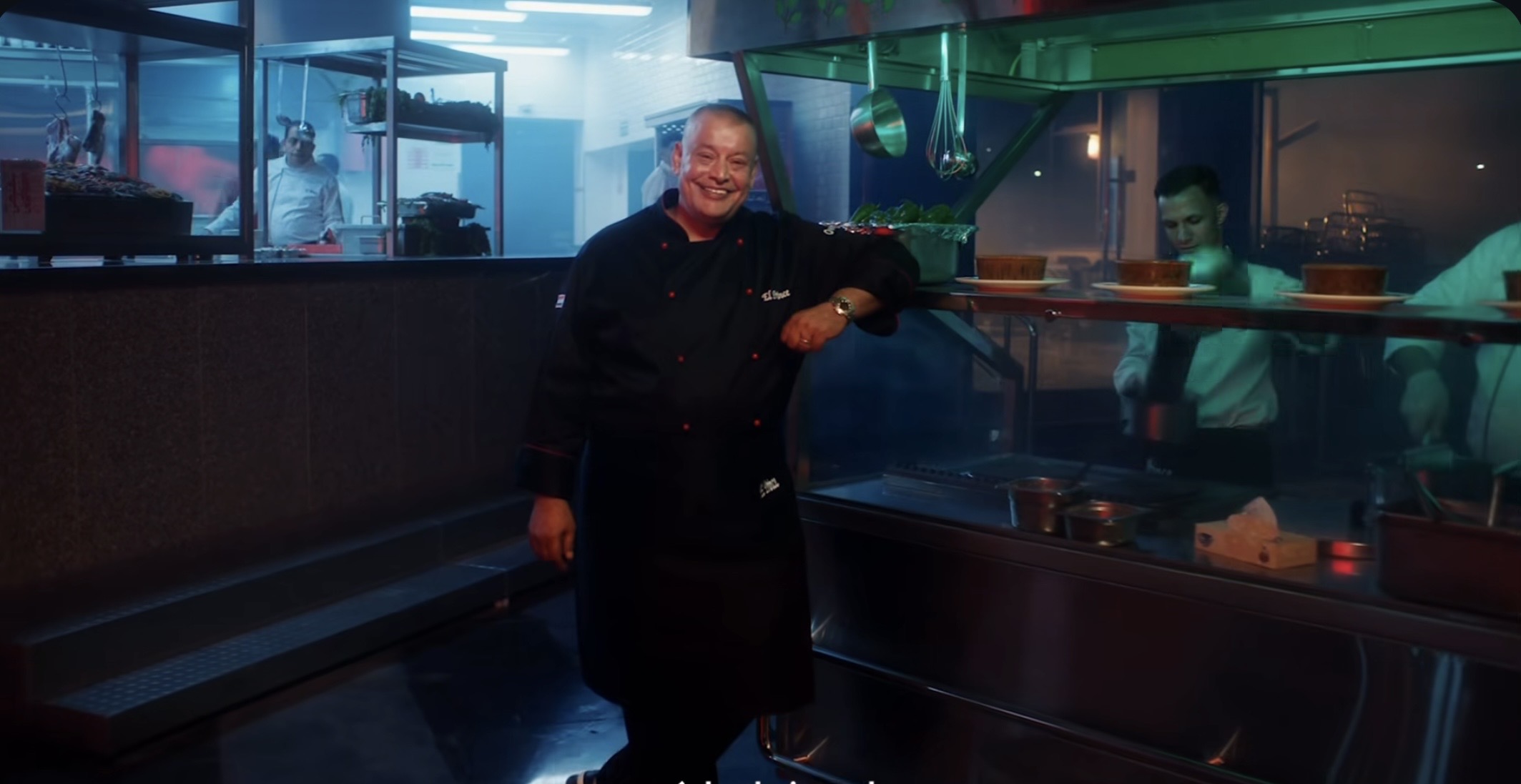
After years of silence and speculation, one of Cairo’s most talked-about kitchens is back. El-Prince Restaurant, a name long associated with crowded sidewalks, sizzling liver sandwiches, and late-night queues, officially reopened in December 2025.
Its return marks the revival of one of Egypt’s most recognizable local food institutions. Almost immediately, the announcement stirred nostalgia among longtime fans, while also raising questions about how a legendary street-food destination fits into a changing city and an evolving dining landscape.
El-Prince first became popular in Imbaba, a densely populated district near central Cairo known for its vibrant street life and local eateries.
It opened in 1980, and for more than three decades, the restaurant operated as a no-frills, street-side establishment where customers gathered shoulder to shoulder, waiting patiently for plates of liver, grilled meats, and classic Egyptian comfort dishes such as molokhia.
Long lines were not just common but expected, especially late at night. The restaurant earned a reputation for generous portions, bold flavors, and consistency, making it a destination not only for local residents but also for visitors willing to cross the city for a meal.
Over time, El-Prince became a widely recognized name across Egypt. Its owner, Nasser El-Prince, grew closely associated with the brand’s identity, often appearing in media interviews and online videos that highlight the intensity and rhythm of the kitchen.
That chapter came to an end in 2022, when the original Imbaba branch closed its doors. According to Nasser El-Prince, the closure was linked to road expansion and infrastructure development in the area.
New regulations and changes to traffic flow made it increasingly difficult to operate a crowded street-facing restaurant in its original form. At the time, he stated publicly that El-Prince would return in a new and more organized setting, though no timeline or location was announced.
The uncertainty ended in December 2025, when El-Prince officially announced its return with the opening of a new branch in Sheikh Zayed City, a planned residential area west of Cairo.
The announcement was shared through social media and quickly circulated online. Many former customers welcomed the news, while others waited to see whether the new location would maintain the character and food quality associated with the original branch.
The Sheikh Zayed branch is significantly different from the original Imbaba location. Instead of a street-based setup, the new restaurant operates indoors in a larger and more modern space. Some customers view this as a practical update that improves comfort and organization, while others feel it changes the informal atmosphere that made the restaurant well-known.
Another topic of discussion has been the increased prices. According to the published menu of the Sheikh Zayed branch, main meat dishes are priced by weight, with half-kilogram portions of mixed liver costing around EGP 550 (USD 12), while similar portions of fried or grilled beef range from EGP 650 to 750 (USD 14 to 16).
A comparison between El Prince’s 2022 menu and current prices shows a clear and significant increase across most items, with average rises reaching around 130 percent for many core dishes. For example, a quarter kilo of mixed liver jumped from EGP 55 (USD 1) to EGP 275 (USD 6), while grilled camel liver increased from EGP 60 (USD 1.3) to EGP 375 (USD 8). Signature dishes such as War’it Lahma (Beef wrap) rose from EGP 80 (USD 1.7) to EGP 350 (USD 7.5), and lahma mohamara (Fried meat) climbed from EGP 60 (USD 1.5) to EGP 325 (USD 7).
Traditional casseroles followed the same trend, with tagine akawy (Oxtail casserole with onions) increasing from EGP 125 (USD 2.7) to EGP 500 (USD 11), and large molokhia doubling from EGP 35 (USD 0.8) to EGP 100 (USD 2).
While these figures clearly show substantial price growth compared to 2022, it is also important to keep in mind the high inflation Egypt has experienced during this period, which has significantly contributed to rising food and operating costs.
Despite mixed reactions, the reopening of El Prince has been widely noted within Egypt’s food sector.
Several restaurant owners publicly welcomed the return, describing it as an example of how long-standing local businesses adapt to changing urban conditions.
Whether the new El-Prince can balance modernization with the legacy that made it famous remains an open question, but its return has already secured its place once again in Cairo’s food conversation.




Comments (0)