


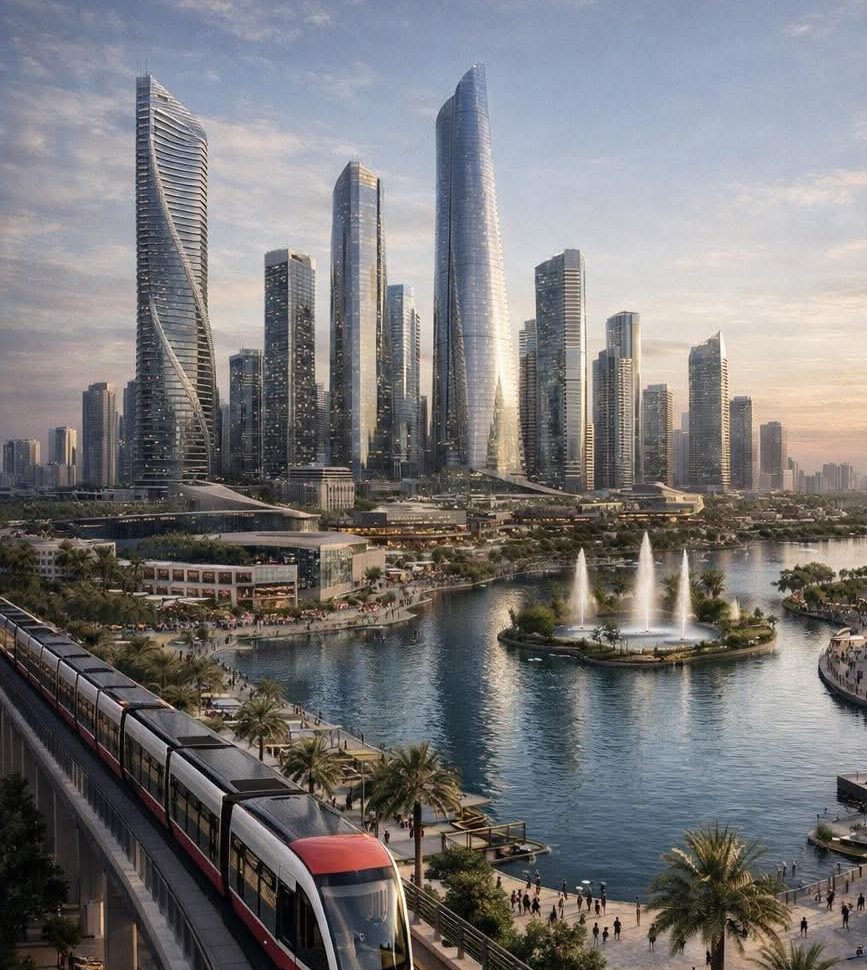
East Cairo has become one of the most consequential stretches of land in Egypt’s modern history. Over the past three decades, what was once desert fringe has quietly transformed into the country’s most ambitious urban frontier, home to new cities, new roads, a new capital, and increasingly, a new way of thinking about what cities can and should do.
It is against this backdrop that Talaat Moustafa Group (TMG), the country’s largest listed real estate developer, is preparing to unveil its most technically complex project to date: The Spine.
Planned across a footprint of 2.4 million square metres within TMG’s flagship Madinaty development, The Spine is far more than an extension of an existing community. It is being positioned, both by the developer and by observers of Egypt’s evolving property market, as a blueprint for what the next generation of urban mixed-use development might look like when artificial intelligence is woven into the fabric of planning itself.
A City Within a City
To understand the significance of The Spine, it helps to understand Madinaty first. Conceived in the early 2000s and brought to life through a collaboration between three American urban planning firms, HHCP, SWA and SASKI, Madinaty sits on the Cairo-Suez Road, acting as the geographical hinge between the old capital and the New Capital, which was officially inaugurated in 2024 as Egypt’s seat of government. Madinaty’s master plan spans over 8,000 feddans, designed to provide a contemporary lifestyle for 700,000 inhabitants across 120,000 housing units.
It is within this already substantial city that The Spine will take root. Designed to incorporate a mix of residential, administrative, commercial, and hotel zones, the development is explicitly positioned as an international hub for Madinaty residents and investors alike. TMG’s own materials describe it as “the rising future and international hub,” language that reflects the ambition driving the project rather than mere marketing shorthand.
The scale is striking. At 2.4 million square metres, The Spine would dwarf most standalone developments in the region. But the figure that has drawn the most attention is not the size. It is the technology.
What Does ‘Post-AI’ Actually Mean?
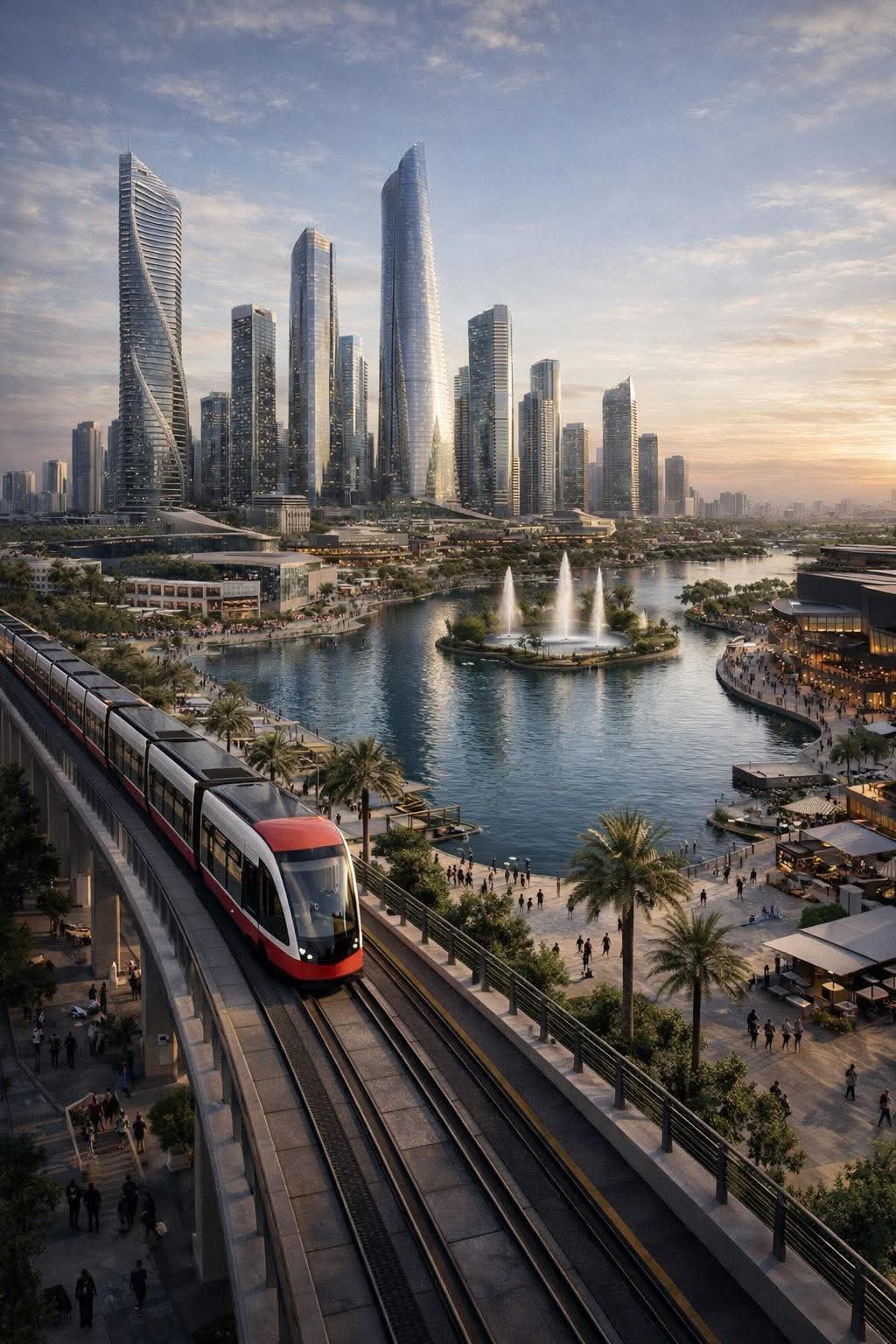
TMG has described The Spine as a project that will utilise what it calls “post-AI technologies” in its urban planning and design processes. The phrase is deliberately forward-looking: not simply artificial intelligence as it exists today, but the next stage of its application to the built environment, where machine intelligence is used not just to automate processes but to understand, predict and tailor the physical design of spaces to the people who will actually use them.
According to TMG, the application of these technologies is intended to enhance innovation and creative capabilities in urban planning and design, meeting the specific requirements of residents and investors rather than defaulting to standardised solutions. In practice, this means moving away from the traditional top-down master plan model toward something more responsive: environments that adapt to patterns of use, that optimise the relationship between residential density and green space, and that allow commercial zones to evolve in step with demand rather than lagging behind it.
The concept is not entirely new. Smart city developments across the Gulf and Southeast Asia have experimented with AI-assisted planning tools for years. But applying them within a large-scale, already-functioning urban community like Madinaty, rather than on a greenfield site, presents a different and arguably more meaningful challenge. The Spine will have to integrate with what already exists while pushing beyond it.
A Broader Moment for TMG
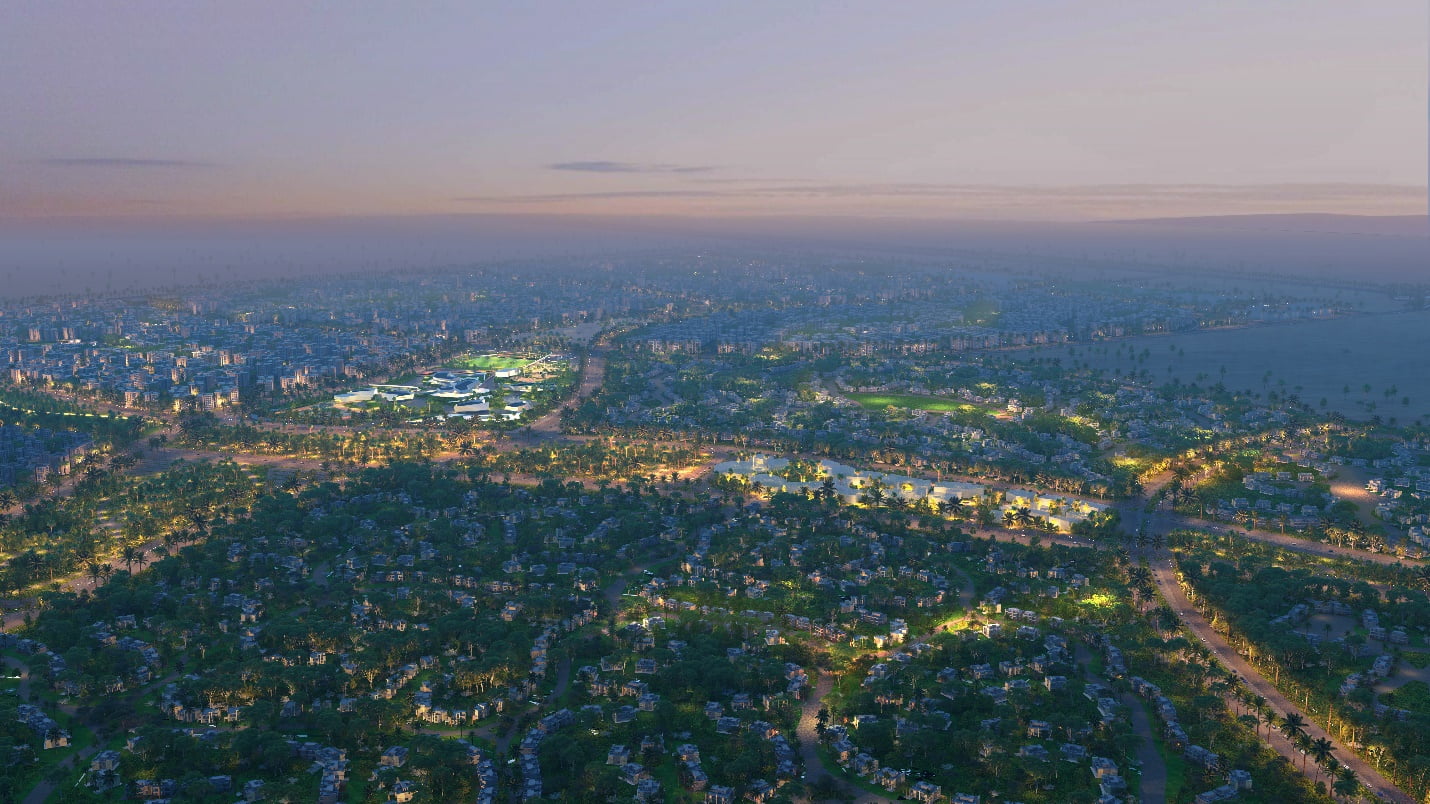
The announcement of The Spine arrives at a particularly active moment for TMG. The group confirmed that units within the first phase of its Noor City development are scheduled for handover in 2026, a milestone that marks the beginning of deliveries for one of Egypt’s most ambitious private-sector smart city projects. Noor is located near the New Capital over 5,000 feddans and has been positioned by TMG as a project that will take Egypt’s real estate sector to a new level.
In hospitality, the group is continuing construction on the Four Seasons Madinaty and Four Seasons Luxor hotels throughout 2026, while also working with the Ministry of Public Business Sector to expand the hotel capacity of the Mena House at the Pyramids. TMG has stated these initiatives are part of a strategy to enhance the luxury tourism experience and increase the hospitality sector’s contribution to Egypt’s GDP.
The picture that emerges is of a company deliberately broadening its footprint at the very moment Egypt is expanding eastward. Studies conducted by the group suggest the population of the East Cairo axis will reach ten million by 2030, a projection that underpins nearly every major land and development decision TMG has made over the past decade.
The Stakes of Scale
Egypt’s eastward urban expansion has created enormous demand across market segments, and large-scale mixed-use developments like The Spine are increasingly seen as part of the answer. By combining residential, commercial, hotel and administrative zones within a single master-planned environment, the project reflects a model of urban development that aims to serve a broad community of residents, businesses and visitors within one connected space.
Importantly, what the project does represent, though, is a genuine effort to think about urban design differently. The integration of AI in planning is not cosmetic if applied rigorously. It could mean spaces genuinely calibrated to the rhythms of real life: better pedestrian connectivity, commercial units sized to actual retail demand, green corridors placed where residents will use them.
For now, The Spine stands as the clearest expression yet of where TMG believes the future of Egyptian real estate lies: at the intersection of scale, technology, and the conviction that the desert east of Cairo is still in the early chapters of its story.



Comments (0)