


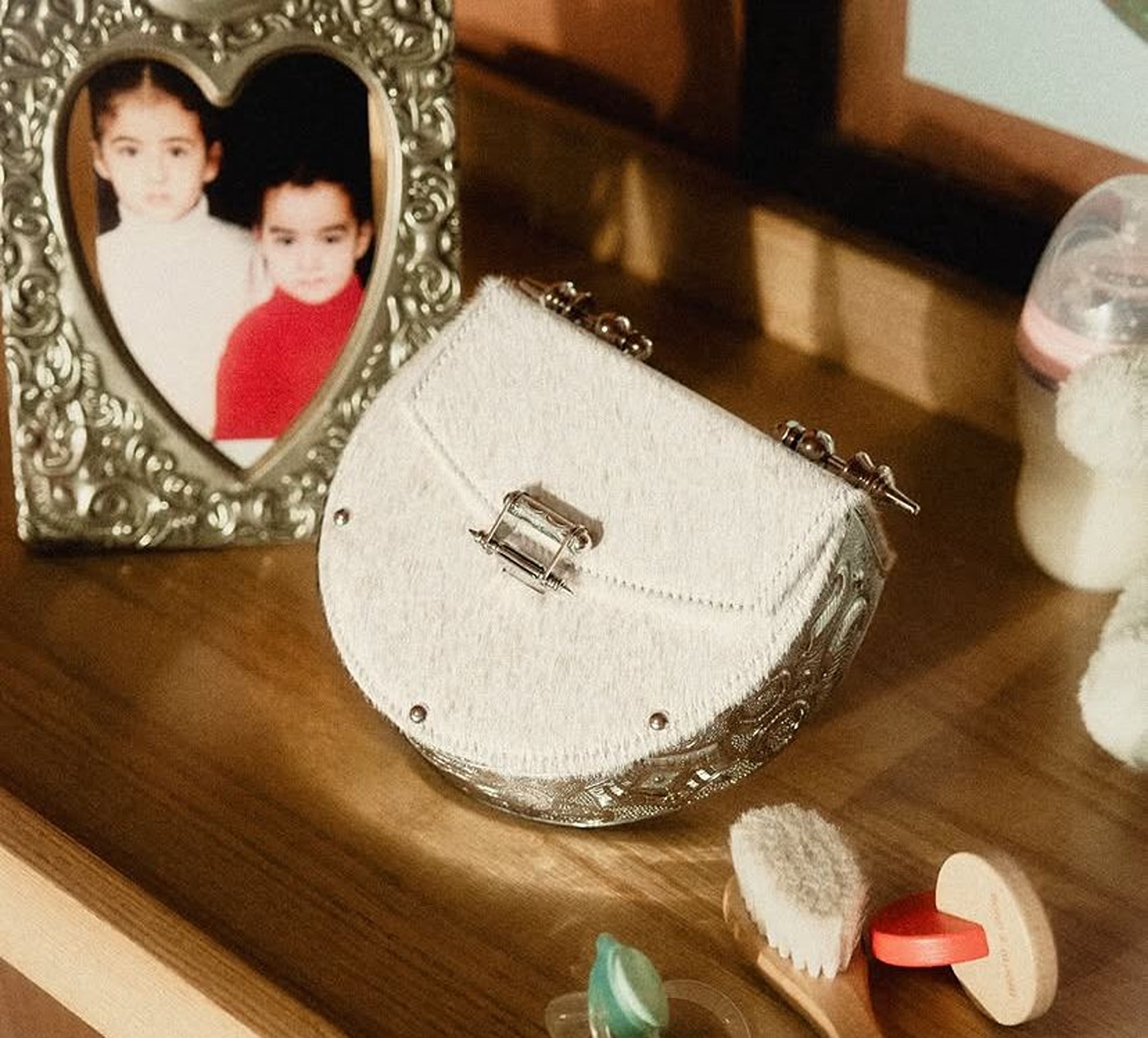
Long before there was any idea of a fashion brand, an Egyptian grandmother had an entire brand of her own, hidden in a place that only she and the other women in her family knew, and that place was her closet.
Her closet, in and of itself, was the brand, and she was both the trendsetter and the curator, dressing and accessorizing out of her love for self-expression, without being tied to or held down by any global trend or external opinion. The only opinion that mattered was the emotional relationship she had with her clothes, and, above all, her bag.
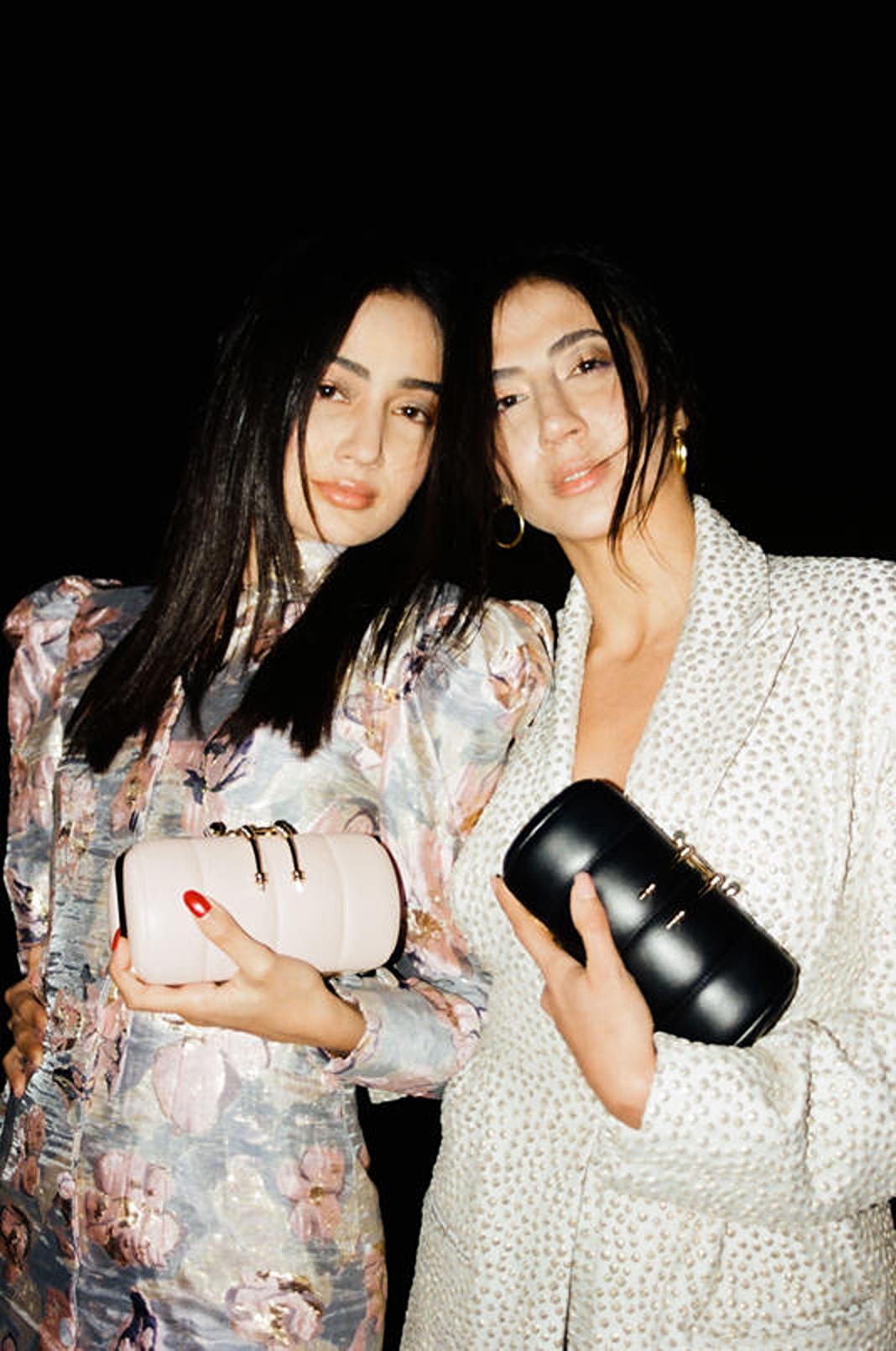
It was here, in their grandmother’s closet, that sisters Mounaz and Aya Abdel Raouf, founders of the renowned brand OKHTEIN, began to build the emotional core of their brand.
It was through the little, often overlooked details that their grandmother paid attention to, such as how a piece of clothing or a pair of vintage eyewear could say so much about a person’s life and character without them ever having to utter a single word.
“My first fashion memory was just sitting with our grandmother. She had this closet where she kept everything, outfits from the ’50s, the ’60s, the ’70s. She saved them all, and we would go through them together,” Mounaz tells Egyptian Streets.
“We would spend hours with her as she spoke about her vintage eyewear, sharing where she had worn each piece, and somehow making us feel as if we were right there beside her in those moments,” she adds.
Before even thinking about launching a brand, the two sisters already understood what it meant to have an emotional durability with a simple product. From the very beginning, they were asking questions like: Why do we love a bag? And how can we take care of it?
It is this kind of emotional durability that makes one truly cherish a fashion product, and in turn, care for it in a way that is sustainable, ethical, and personal.
Just as people care for their pets or loved ones, that same sense of attachment to a fashion item encourages a shift away from quantity-driven consumption toward a more sustainable model designed to last across generations.
As the luxury market continues to be reshaped by rising prices and growing questions around sustainability, the OKHTEIN sisters are navigating it through the idea of emotional durability, where a single bag is passed down from a grandmother to a mother, and finally to a daughter, simply out of love for the bag.
Designed to last, not to replace
In the fashion world, there is always an appetite for the next big drop, the next aesthetic, and the next campaign; an endless hunger for renewal and for innovation for its own sake.
Yet for Mounaz and Aya, the emotional pull of their brand lies less in constant reinvention and more in repurposing, staying true to their family’s past and their grandmother’s fashion heritage, while keeping it relevant to the present.
In doing so, they sustain their brand not by continually changing its character, but by building an emotional world people can return to and live in for years.
“We created this world from our imagination, from storytelling, and from looking at a piece of fabric and envisioning how it could be repurposed,” Aya says.
“I remember taking vests and pieces from my grandmother and transforming them into something more modern, styling them with jeans, making them feel current.”
“In a way,” she says, “it was our own interpretation of what the vintage trend has become today.”
The brand achieves this by celebrating duality: tradition meeting modernity, heritage reshaped for today, and cultural memory transformed into wearable art.
For instance, the structured silhouettes, tactile surfaces (embossed leathers, metallic meshes, intricate hardware), and nostalgic references evoke mid-century elegance or even older artisanal traditions, as if the bag could have been carried by a stylish woman decades ago.
Many designs also avoid fleeting trends, focusing instead on balance, proportion, and emotional depth. As the brand articulates, each creation “exists beyond season, conceived to endure and to deepen in significance over time.”
The result is bags that feel like “carry-able art.” A structured top-handle or a geometric clutch might echo the refined femininity of their grandmother’s era while incorporating bold, contemporary twists.
“The lineage of surreal abstract artists in the family helped us express ourselves through different forms, and to always think through imagination,” Mounaz explains.
For surreal abstract artists, emotion is often the driving force that shapes their work, pushing them to create unusual forms and visual languages that express feelings without being confined by realism.
Surreal art moves beyond logic and speaks directly to emotion, which is also at the heart of the OKHTEIN brand; a deeply emotional identity designed to make people feel something, to sense a certain mood or aura, even when it cannot be easily explained.
“Our goal is to ensure that every bag we design and every family we create speaks a distinct emotional language, leaving no doubt about the feeling it’s meant to evoke,” Mounaz says.
In the same way someone stands before a surrealist painting and feels something untranslatable, returning to it over the years as it lives on their wall, an OKHTEIN bag exists almost like a painting in itself, carrying layered emotions and narratives inspired by Arab heritage.
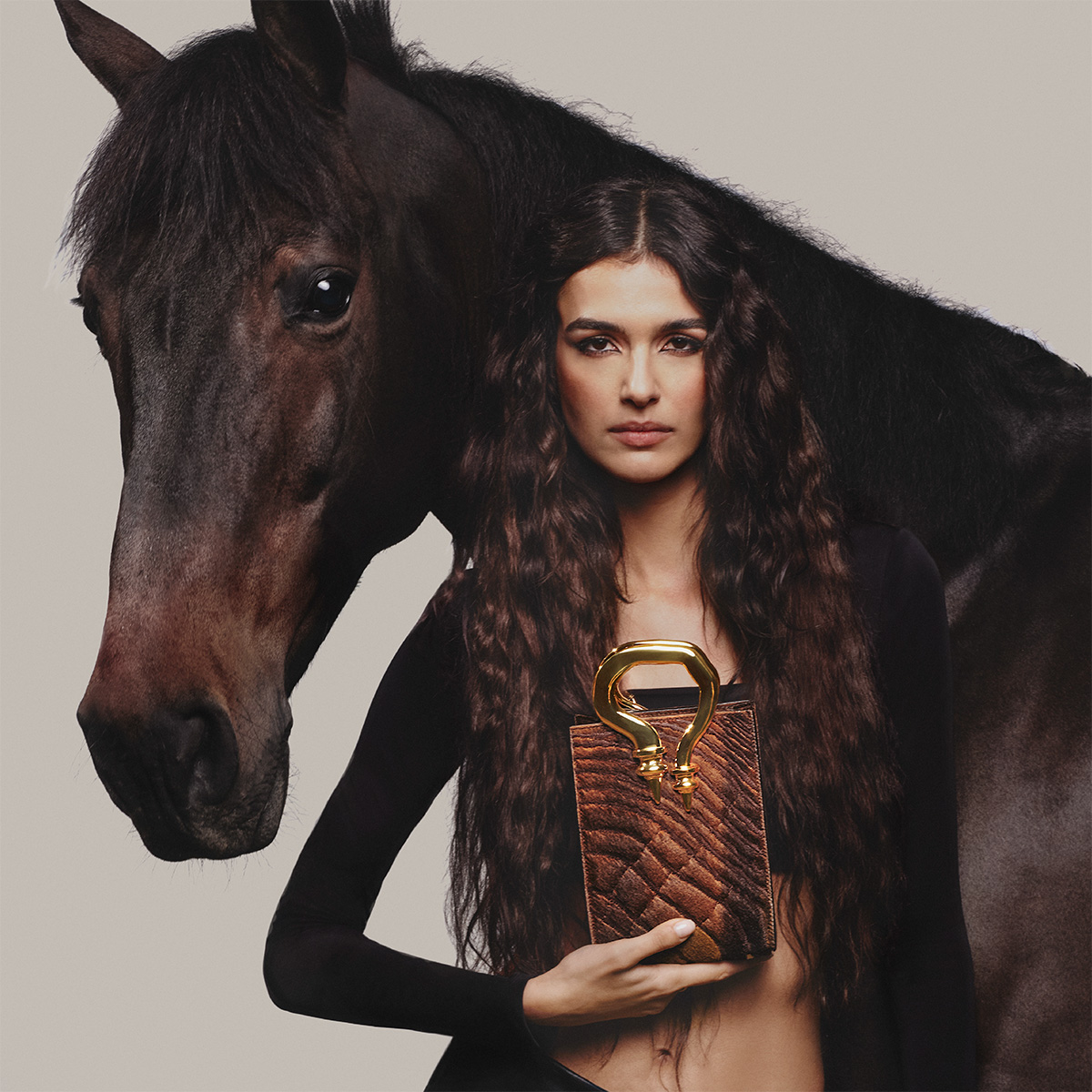
For instance, OKHTEIN hosted Egypt’s first-ever dressage performance in February of this year to mark the launch of its new Equestrian collection, rooted in a region where horses are part of its history, identity, and symbolism.
From beginning to end, the launch felt like an emotional experience; the emotion carried through the horse’s discipline and sensitivity, reflecting the strength of the Arab woman and the way she channels those emotions to navigate the world.
“When you think of horses, in global media, you often think of cowboys. It’s very rare to see the Arabian horse glorified in that same space, especially in fashion. We felt it was underrepresented, even though the horse holds importance in our culture,” Aya explains.
“And then we decided to take it further, to do a full 360. We looked at the horse’s training, its movement, and its dance. We took a very international sport and reimagined it within an Arab context. The horses were also dancing to Arab songs.”
In its very texture, the bag seeks to evoke the emotion of an equestrian bond. The hand-braided rope handle draws from the heritage of Arabian reins and halters, which stand as a subtle expression of both strength and grace.
“International brands have always stayed true to their roots. French houses remain quintessentially French, and Italian brands remain Italian,” Aya adds.
“Now, we are finally seeing an act of expression that is truly original, something that stems authentically from the Middle East.”
The many emotions of the Okhtein Girl
To truly speak to their consumers, particularly young women, the OKHTEIN sisters navigated the tension between staying relevant within Gen Z’s trend-driven landscape and preserving their brand’s artistic soul.
They realized they did not want fashion to be merely something their consumers wear, but rather a medium they could co-create; a symbol of a specific identity or an internal emotion, rather than just an external statement.
It was through this that they built a cult-like following, allowing their consumers to connect with a specific emotion or identify with a piece long before the point of purchase.
They effectively created the ‘OKHTEIN girl,’ much in the same way that successful brands like Rhode have personified their own ‘Rhode girl‘ through a distinct and recognizable vibe.
“Over the past thirteen years, we’ve realized that we don’t just create products; we create icons. Some bags are seasonal visitors, but others stay because they represent a true act of expression,” Mounaz explains.
“While Aya might reach for the Mahogany bag and I might reach for the Bangle clutch bag, we are both the same ‘OKHTEIN girl.’ It’s about recognizing that every woman is multilayered; she isn’t just one thing,” she adds.
They personified these internal moods into what they call ‘personas,’ which are aesthetic expressions of a single, complex character.
The ‘OKHTEIN girl’ is a singular identity, but she contains multitudes. She is not defined by being strictly minimalist or maximalist; she is defined by her different opinions and her changing moods.
To honor that, they have spent the last few months classifying these layers of her personality into six distinct muses: The Air, The Muse, The Nomad, The Modernist, The Poet, and The Goddess.
“Every persona is inspired by the woman herself, allowing two people to wear completely different lines under the same brand umbrella, yet still share the same core spirit,” Mounaz explains.
Traditional brands often try to put women in a box, but women are far more multi-layered and carry more depth. As women designing for women, the OKHTEIN sisters recognized that their work had to be as layered as the women who wear it.
“It’s a family of bags where each line honors a different persona, allowing the brand to grow and change just as we do,” Aya says.
To make each piece even more personal, OKHTEIN now invites its community into the heart of the creative process. With the launch of its Bespoke Service in Dubai and Riyadh, the brand offers a fully personalized pre-order experience that allows clients to co-design their bags.
“We want these pieces to be more than just accessories; we want them to be extremely precious. By embroidering a client’s initials or name inside the bag, we’re creating something meant to be passed down through generations,” Mounaz says.
“Imagine a daughter carrying her mother’s initials. It turns the bag into a living piece of family history.”
Now that both sisters have embraced motherhood, OKHTEIN has become a living tribute to the ‘passing down’ of legacy, from their grandmothers and mother to their own daughters.
It is a brand rooted in the feminine instinct to nurture and protect, weaving the warmth of family into the very fabric of every bag.



Comments (0)